Gov. Wolf: $20 Million to Help Schools Provide Services to Students with Special Needs

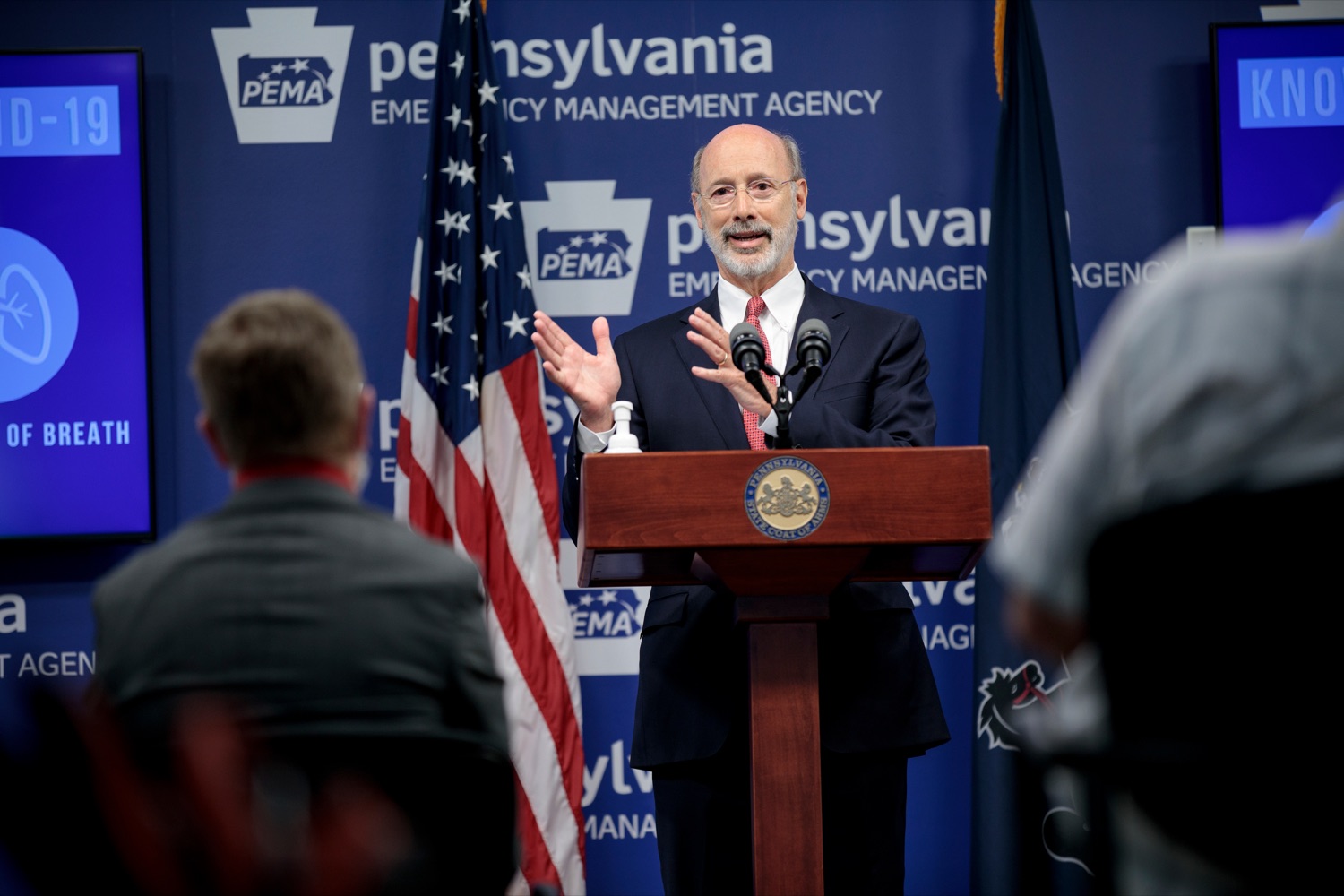
Governor Tom Wolf speaks during a press conference addressing the 2019 Novel Coronavirus (COVID-19) in Pennsylvania, inside PEMA headquarters on Wednesday, June 10, 2020.

Harrisburg, Pa. – Governor Tom Wolf is dedicating approximately $20 million to help 678 local education agencies, including school districts, to provide education services for students with disabilities who may have been negatively impacted by COVID-19 mitigation efforts and may face additional challenges through the new academic year. The funding includes $15 million from Governor’s Emergency Education Relief (GEER) Fund and $5 million from the Department of Education’s (PDE) federal funding through the Individuals with Disabilities Education Act (IDEA).

“While COVID-19 impacted all students this year, it was particularly hard on our children with special needs, who often require additional support and services to assist their learning,” said Gov. Wolf. “This funding will help schools as they put structures in place to help these students while we work to mitigate the spread of this pandemic.”

The Coronavirus Aid, Relief and Economic Security (CARES) Act authorizes governors to determine the educational use of Governor’s Emergency Education Relief (GEER) Funds.

The Special Education COVID-19 Impact Mitigation Grant (SECIM) will provide $15 million in financial support ($10M GEER; $5M IDEA) to local education agencies (LEA) to:

  • Provide enhanced synchronous (real-time) instruction to bolster remote services and supports for students with complex needs; and
  • Provide services and supports to students with disabilities who experienced a loss in skills and behavior and/or a lack of progress due to the mandatory school closures

An additional $5 million in GEER grant funding will be available to Preschool Early Intervention programs to provide compensatory educational services.

“While LEAs transition to implementing reopening plans for the 2020-21 school year, they continue to face challenges in delivering free appropriate public education (FAPE) and providing services to students with disabilities,” said Secretary of Education Pedro A. Rivera. “This critical funding will help schools as they work with their students with special needs to rebuild skills and behaviors that were diminished during the COVID-19 shutdown.”

Grant amounts were calculated using an allocation formula based on the number of students with complex special education needs within each LEA. Distribution of funds to Preschool early intervention programs will be made based on identified needs.

Grant recipients will receive direct communication from PDE with eGrant application instructions.

To date, the Wolf Administration has awarded $70.5 million in GEER funding to help keep students and educators safe, and meet the unique challenges of COVID-19. In addition to the $15 million for special education, the Wolf Administration has directed $28 million to postsecondary institutions and adult basic education providers, $14 million to K-12 schools to support equity in continuity of education, $10.5 million to Career and Technical Education Centers and $3 million for Preschool Early Intervention Programs.

For more information about Pennsylvania’s education policies and programs please visit the Department of Education’s website or follow PDE on FacebookTwitter, or Pinterest.

Breaking News: American Airlines suspending services at Williamsport Airport

American Airlines Suspends Service to 15 Markets in October as CARES Act Service Commitment Expires

These station suspensions will be effective Oct. 7. For now, these changes are only in place for the October schedule period, which runs through Nov. 3.

The airline will continue to re-assess plans for these and other markets as an extension of the Payroll Support Program remains under deliberation. The full, updated October schedule will be released Aug. 29, and American anticipates releasing its updated November schedule by late-September.

The full list of suspensions is below and will be reflected on aa.com Aug. 29.

Service suspensions beginning Oct. 7

City Airport Code
Del Rio, Texas DRT
Dubuque, Iowa DBQ
Florence, S.C. FLO
Greenville, N.C. PGV
Huntington, W.Va. HTS
Joplin, Mo. JLN
Kalamazoo/Battle Creek, Mich. AZO
Lake Charles, La. LCH
New Haven, Conn. HVN
New Windsor, N.Y. SWF
Roswell, N.M. ROW
Sioux City, Iowa SUX
Springfield, Ill. SPI
Stillwater, Okla. SWO
Williamsport, Pa. IPT

About American Airlines Group
American’s purpose is to care for people on life’s journey. Shares of American Airlines Group Inc. trade on Nasdaq under the ticker symbol AAL and the company’s stock is included in the S&P 500. Learn more about what’s happening at American by visiting news.aa.com and connect with American on Twitter @AmericanAir and at Facebook.com/AmericanAirlines.

Wolf Admin. Provides Support to Northumberland County Skilled Nursing Facility with COVID-19 Outbreak 

Harrisburg, PA – Secretary of Health (DOH) Dr. Rachel Levine and Secretary of Human Services (DHS) Teresa Miller today outlined the multiple steps their agencies are taking to contain a COVID-19 outbreak at Milton Nursing and Rehabilitation Center in Milton, Northumberland County.

“First and foremost, our shared goal is to protect the residents and staff at the facility – and all long-term care facilities in the commonwealth – as we battle COVID-19,” Dr. Levine said. “Today, the Department of Health took another step to help Milton by placing a temporary manager at the facility to ensure proper infection control procedures are being followed and that the operators of the facility are doing their job to protect residents and staff. Keeping this virus out of nursing homes is on all of us, and we must all do our part – starting with wearing a mask when we are around other people.”

“We will continue to work closely with our Regional Response Health Collaborative network to assist with stabilizing and managing this outbreak and providing support to facility staff, the National Guard, and temporary management as we work to protect residents in care,” said Sec. Miller.

To assist the operators of Milton Nursing and Rehabilitation Center, the Wolf Administration also has:

  • Worked with the State Long-Term Care Ombudsman to prioritize protection of residents’ rights and quality of care for all residents through mitigation and response efforts;
  • Provided early consultation to the facility, including a review of infection control guidance, cohorting, personal protective equipment (PPE) on August 3;
  • Ensured Milton was in contact with the Regional Response Health Collaboration Program (RRHCP). Geisinger Health System is the RRHC and first contact was  on August 4. Geisinger was first on-site on August 4 and has worked with Milton Nursing and Rehabilitation staff and leadership on proper use and fitting of PPE, cohorting of COVID-positive and exposed residents, care management of patients who are not positive or exposed to COVID, and testing, among others. Geisinger has been on site regularly since the first contact and continues to provide support with nurse educators and infection prevention specialists;
  • Provided staffing assistance through DOH’s contractor, General Healthcare Resources (GHR) since August 8;
  • Performed a site visit with DOH’s Healthcare Acquired Infection (HAI) team, DHS and Geisinger on August 11 and August 18;
  • Remained in daily contact with the facility since the outbreak was identified; and
  • Provided nearly 3,600 masks, 4,000 gloves, 700 gowns, 100 face shields and 50 pieces of eyewear since the beginning of the pandemic.

In addition, the Pennsylvania National Guard, at the direction of PEMA, sent a team to Milton Nursing and Rehabilitation Center today, to conduct an assessment, and provide training and testing on PPE. A second team will be sent tomorrow to provide 24-hour staffing support for the next five days. Their support would include housekeeping and food services to support the Department of Health’s mission.

The temporary manager, Senior Health Care Solutions of Scranton, was placed as a result of a regulatory action taken by the Department of Health due to deficiencies found at the facility, and will remain in place until the department determines it is no longer necessary. The temporary manager reports to the department. The department will pay the fees and costs for the temporary management from the state’s civil monetary penalty fund; however, Milton still remains responsible for all expenses in maintaining the operation of the facility including: payroll; food costs; medications and supplies; payment for contracted services; facility lease, operation and maintenance costs; liability insurance and other operational costs.

Based on test results received by the department, the first linked cases were identified on August 3. Milton completed its mandated universal testing on July 9, with no positive cases. Since the first cases were identified on August 3, there have been at least 109 cases among staff and employees and 13 deaths.

The Wolf Administration has provided long-term care facilities with the resources and expertise in order to prevent or control existing outbreaks. This includes:

  • Providing direct support through RRHCPs; DOH’s HAI team; DOH infection control contractor ECRI; the Patient Safety Authority; General Health Resources; and the Pennsylvania National Guard;
  • Providing PPE regularly to facility operators, as well as education and training on how to safely put it on and take it off;
  • Close coordination between the Pennsylvania Emergency Management Agency (PEMA) and DOH as they evaluate various types of support that may be needed at facilities across the commonwealth.  Once specific needs are identified, PEMA works with agencies, such as the Pennsylvania National Guard, to provide the support needed as quickly as possible.
  • Regularly inspecting facilities and responding to every complaint filed with DOH;
  • Creating rapid response strike teams using the state’s staffing contract with nurses to staff the facilities in need;
  • Providing virtual mental health services to facilities through DHS’s medical reserve corps;
  • CDC teams provided on-site assistance for 13 long-term care facilities using their infection prevention and control expertise and training of U.S. Health and Human Services (HHS) teams
  • Sharing information through bulletin boards, nursing home associations, and our normal channels of communication such as Health Alert Network messages; and
  • Prioritizing nursing homes and other long-term care facilities to receive PPE, and for testing among symptomatic individuals.

The Wolf Administration has taken a three-pillar approach to protecting the vulnerable residents living in nursing homes and other long-term living settings:

  • Ensuring resident safety through testing, education and resources;
  • Preventing and mitigating outbreaks; and
  • Working in partnership with state agencies, local health departments and long-term care facility operators.

The Wolf Administration stresses the role Pennsylvanians play in helping to reduce the spread of COVID-19:

  • Wash your hands with soap and water for at least 20 seconds or use hand sanitizer if soap and water are not available.
  • Cover any coughs or sneezes with your elbow, not your hands.
  • Clean surfaces frequently.
  • Stay home to avoid spreading COVID-19, especially if you are unwell.
  • If you must go out for a life-sustaining reason, please wear a mask.

Updated Coronavirus Links: Press Releases, State Lab Photos, Graphics

All Pennsylvania residents are encouraged to sign up for AlertPA, a text notification system for health, weather, and other important alerts like COVID-19 updates from commonwealth agencies. Residents can sign up online at www.ready.pa.gov/BeInformed/Signup-For-Alerts.

Dept. of Aging Stresses the Importance of Older Adult Participation in the 2020 U.S. Census

Harrisburg, PA – With the September 30 deadline issued by the U.S. Census Bureau to complete work on the 2020 Census quickly approaching, the Pennsylvania Department of Aging is urging all older adults to participate to ensure they are included in the count.

Older adults partaking in the Census benefit their community, whether they live with family, receive in-home care, or reside in a long-term living facility. The population count determines the federal support that aging Pennsylvanians receive through programs such as Medicaid, Medicare Part B, nutrition services, SNAP and more.

“The federally-funded programs supported by the Department of Aging along with the services that we provide are critical for our older Pennsylvanians to help maintain their quality of life. The ramifications of not getting an accurate Census count could be detrimental and result in the loss of federal dollars that are needed to preserve these essential programs for years to come,” said Secretary of Aging Robert Torres. “We must all work together to ensure each and every one of our older adults is counted, no matter where they live.”

With Census workers currently visiting homes of citizens who have yet to complete the Census, Sec. Torres advises older adults to stay alert for potential scam artists. If someone visits an older adult’s home saying they are a Census worker, the homeowner can verify their identity by making sure they have a valid ID badge with their picture, a U.S. Department of Commerce watermark and an expiration date. If anyone still has questions about the worker’s identity, they can call 844-330-2020 and speak with a Census Bureau representative.

Learn more about the 2020 Census here.

Learn more about the various programs offered by the Pennsylvania Department of Aging here.

Wolf Administration Launches Mental Health Resources Guide

Harrisburg, PA – Understanding that mental health is just as important as physical health, the Wolf Administration today launched an online Mental Health Resources Guide intended to provide Pennsylvanians with a full complement of resources available to help everyone with their mental health needs.

“Especially with the stressors of the pandemic, it’s imperative that we also remember that it’s ok to not be ok, and our mental health must be considered just as much as our physical health,” Governor Tom Wolf said. “This online guide is presented to give Pennsylvanians a complete look at the mental health resources available to meet their individual needs. There is no one-size-fits-all for mental health.”

Interspersed with messages of hope and encouragement such as “Go easy on yourself,” and “People care about you,” are sections that include how to access treatment; preventing suicide; current events and mental health; unique challenges for minority and LGBTQ communities, children and teens, service members and veterans; what to do if you have no insurance; coping with trauma, domestic and sexual violence; and coping with substance use disorder.

One section provides “Find the Right Help for You,” where guide visitors can access mental health resources for situations from “I’m feeling stressed,” to “I have a loved one with substance use disorder.”

“This guide is intended to help people find the right help for them,” Gov. Wolf said. “I hope all Pennsylvanians review and use it to know that we want to provide the resources, support and understanding to help everyone live a happy, healthful life here in the commonwealth.”

August 19, 2020 – Department of Health Report

4 new COVID-19 cases added Wednesday in Lycoming County now at 456 cases and no new deaths with 20 total deaths, with 9,738 negatives according to DOH report.

Department of Health Provides Update on COVID-19,

570 Positives Bring Statewide Total to 126,149

Harrisburg, PA – The Pennsylvania Department of Health today confirmed as of 12:00 a.m., August 19, that there are 570 additional positive cases of COVID-19, bringing the statewide total to 126,149 All 67 counties in Pennsylvania have cases of COVID-19.

The number of tests administered within the last 7 days between August 12 and August 18 is 159,689 with 5,298 positive cases. There were 21,835 test results reported to the department through 10 p.m., August 18. These results represent the total number of tests administered.

There are 7,523 total deaths attributed to COVID-19, an increase of 24 new deaths reported. County-specific information and a statewide map are available on the COVID-19 Data Dashboard.

“The mitigation efforts in place now are essential as the new school year approaches and we work to ensure our children can get back to learning,” Secretary of Health Dr. Rachel Levine said. “Wearing a mask, practicing social distancing, and following the requirements set forth in the orders for bars and restaurants, gatherings and telework will help keep our case counts low. Together, as Pennsylvanians, we each have a part to play in working to ensure that cases of COVID-19 remain low.”

Mask-wearing is required in all businesses and whenever leaving home. Consistent mask-wearing is critical to preventing the spread of COVID-19.

There are 644 patients who have a positive serology test and either COVID-19 symptoms or a high-risk exposure, which are considered probable cases and not confirmed cases. There are 1,368,318 patients who have tested negative to date. Of the patients who have tested positive to date the age breakdown is as follows:

  • 1% are ages 0-4;
  • 1% are ages 5-12;
  • Nearly 4% are ages 13-18;
  • Nearly 10% are ages 19-24;
  • Nearly 38% are ages 25-49;
  • Nearly 23% are ages 50-64; and
  • Nearly 24% are ages 65 or older.

Most of the patients hospitalized are ages 65 or older, and most of the deaths have occurred in patients 65 or older. More data is available here.

The department is seeing significant increases in the number of COVID-19 cases among younger age groups, particularly 19 to 24-year-olds. An alert was sent to healthcare providers about the changing COVID-19 case demographics, as there are more cases in younger age groups than in those 50-64 and 65+. The following regions saw significant increases among 19 to 24-year-olds in each month from April to present in August:

  • SE – Nearly 5 percent of cases in April to nearly 17 percent of cases so far in August;
  • NE – 6 percent of cases in April to nearly 17 percent of cases so far in August;
  • SW – Approximately 5 percent of cases in April to nearly 12 percent of cases so far in August;
  • SC – Approximately 7 percent of cases in April to approximately 12 percent of cases so far in August;
  • NW – Nearly 7 percent of cases in April to nearly 10 percent of cases so far in August; and
  • NC – Approximately 7 percent of cases in April to approximately 9 percent of cases so far in August.

In nursing and personal care homes, there are 20,458 resident cases of COVID-19, and 4,298 cases among employees, for a total of 24,756 at 901 distinct facilities in 61 counties. Out of our total deaths, 5,104 have occurred in residents from nursing or personal care facilities. A county breakdown can be found here.

Approximately 9,074 of our total cases are amongst health care workers.

For the latest information for individuals, families, businesses and schools, visit “Responding to COVID-19” on pa.gov.

Currently, all 67 counties are in the green phase of reopening.

Statewide – The Wolf Administration has since noon, August 18:

The Wolf Administration stresses the role Pennsylvanians play in helping to reduce the spread of COVID-19:

  • Wash your hands with soap and water for at least 20 seconds or use hand sanitizer if soap and water are not available.
  • Cover any coughs or sneezes with your elbow, not your hands.
  • Clean surfaces frequently.
  • Stay home to avoid spreading COVID-19, especially if you are unwell.
  • If you must go out, you are required to wear a mask when in a business or where it is difficult to maintain proper social distancing.

Updated Coronavirus Links: Press Releases, State Lab Photos, Graphics

All Pennsylvania residents are encouraged to sign up for AlertPA, a text notification system for health, weather, and other important alerts like COVID-19 updates from commonwealth agencies. Residents can sign up online at www.ready.pa.gov/BeInformed/Signup-For-Alerts.

DOH Pilots COVID-19 Exposure Notification Mobile App to Strengthen Contact Tracing and Mitigation Efforts

Harrisburg, PA – The Pennsylvania Department of Health today announced that it is currently conducting a pilot program for a new COVID-19 exposure-notification mobile app, COVID Alert PA, which will be available to smartphone users starting early September.

The app is designed to help bolster the state’s contact-tracing efforts, not replace them. Case investigations and contact tracing are still needed.

The department is partnering with the state of Delaware, along with NearForm, University of Pennsylvania and MIT’s Lincoln Laboratory, Computer Science and Artificial Intelligence Laboratory (CSAIL) and Internet Privacy Research Institute (PRI) to build the mobile app that will alert individuals of a possible exposure if they have been in a close contact with a COVID-19 positive individual.

“This innovative solution will not replace our traditional contact tracing process, but it will enhance our COVID-19 response and give residents another tool to stay calm, stay alert and stay safe,” Secretary of Health Dr. Rachel Levine said. “By utilizing this technology, we can quickly notify more people who have been exposed to COVID-19. We hope when this app is available, Pennsylvanians will do the right thing and download, use it and continue to remain alert as we continue to fight this virus.”

In September, you can find the COVID Alert PA app for free to download in the Google Play store or Apple App store. This app is voluntary, but the more Pennsylvanians age 18 and older who adopt the app, the more successful efforts can be.

During a COVID-19 case investigation interview, the public health staff will ask if they have the app available and provide a six-digit validation code that the app user can upload and confirm their COVID-19 diagnosis. After the validation is completed, the app will use a push notification and send out an Exposure Alert to any individuals who came in close contact with someone who was diagnosed with COVID-19.

The app does not enable any location services and is designed to be completely anonymous.

This app will further support the more than 1,200 trained contact tracers throughout the state, including 130 state health nurses and county and municipal health departments, leading and conducting COVID-19 contact tracing efforts. Case investigations, contact tracing efforts and ongoing monitoring are proven public health strategies to contain the spread of diseases and are necessary to identify any instances of community spread and prevent larger outbreaks. You can find more information on the state’s contact tracing efforts through our website here.

“We are very committed and conscious of protecting the privacy and security of all Pennsylvanians,” Dr. Levine said. “This app will not use GPS to collect movement or geographic location of individuals. Instead, this app will be using Bluetooth proximity enabled exposure notification service technology provided by Apple and Google. It is important for users to know that we are not collecting any personal information with this app.”

In addition, the app will provide users with the latest information on COVID-19 in Pennsylvanian from the department’s data dashboard.

Pennsylvanians are reminded that mask-wearing is required when visiting businesses or in any setting outside the home where social distancing is difficult. Remember: My mask protects you; your mask protects me.

The Wolf Administration stresses the role Pennsylvanians play in helping to reduce the spread of COVID-19:

  • Wash your hands with soap and water for at least 20 seconds or use hand sanitizer if soap and water are not available.
  • Cover any coughs or sneezes with your elbow, not your hands.
  • Clean surfaces frequently.
  • Stay home to avoid spreading COVID-19, especially if you are unwell.
  • If you must go out, you are required to wear a mask when in a business or where it is difficult to maintain proper social distancing.

Updated Coronavirus Links: Press Releases, State Lab Photos, Graphics

All Pennsylvania residents are encouraged to sign up for AlertPA, a text notification system for health, weather, and other important alerts like COVID-19 updates from commonwealth agencies. Residents can sign up online at www.ready.pa.gov/BeInformed/Signup-For-Alerts.

DOH provides new APP update

Nate Wardle, Department of Health Press Secretary offered clarifying details to the launch of the the new APP launched by DOH.

  • Who manages the data from the app and where will the data live?

Self-reported symptom check-in data and in-app performance metrics data is collected via NearForm, but the data is managed by the DOH. When the app is released more information on the Data and Privacy Policy will be provided.

  • Will location data be used in the case investigation process? Will the app be able to say someone was at a restaurant within 14 days of symptoms?

The app does not enable any location services, therefore it does not collect any location information. The app cannot identify individuals and cannot say if anyone was at a particular location with or without symptoms.

  • How much is the project going to cost?

The total cost of the project involving the app is $1.9 million over 2 years. Funding comes from the CDC ELC grant.

  • Is their geolocating software that matches the individuals, or how does it work if location is not being stored?

Existing manual contact tracing processes rely on an individual being able to remember who they have been in contact with recently, and for how long. In many cases a positive COVID-19 individual may not even know those people (for example, if the contact happened on a bus or train, at a check-out line in a grocery store, a restaurant or some other public venue). The app uses Exposure Notification System technology developed by Apple and Google where if an app user is close to someone (who also uses the app on their phone), and then if one of them subsequently receive a positive COVID-19 diagnosis, they will receive a call from the Department of Health or County and Municipal Health Department’s (CMHD) case investigators within 24-72 hours.

The case investigators will ask if the positive COVID-19 individual is willing to accept a 6-digit validation code from the DOH. If the individual agrees and enters the 6 digit code, it will permit the phone to upload their last 14 days of the random Bluetooth interactions with other app users who were within the exposure criteria (if this individual stayed in close proximity (within six feet) to someone with the app for 15 minutes or more. If there is a match, then the app will notify the close contact letting them know they came in close contact with someone who was diagnosed with COVID-19. This is called an “Exposure Alert”. We recommend watching this video: https://youtu.be/1Cz2Xzm6knM

August 18, 2020 – Department of Health Report

8 new COVID-19 cases added Tuesday in Lycoming County now at 452 cases and no new deaths with 20 total deaths, with 9,661 negatives according to DOH report.

Department of Health Provides Update on COVID-19,

735 Positives Bring Statewide Total to 125,579

Harrisburg, PA – The Pennsylvania Department of Health today confirmed as of 12:00 a.m., August 18, that there are 735 additional positive cases of COVID-19, bringing the statewide total to 125,579 All 67 counties in Pennsylvania have cases of COVID-19.

Philadelphia reported 208 cases – a two-day total for August 17 and August 18.

The number of tests administered within the last 7 days between August 11 and August 17 is 162,293 with 5,992 positive cases. There were 18,926 test results reported to the department through 10 p.m., August 17. These results represent the total number of tests administered.

There are 7,499 total deaths attributed to COVID-19, an increase of 31 new deaths reported. County-specific information and a statewide map are available on the COVID-19 Data Dashboard.

“The mitigation efforts in place now are essential as the new school year approaches and we work to ensure our children can get back to learning,” Secretary of Health Dr. Rachel Levine said. “Wearing a mask, practicing social distancing, and following the requirements set forth in the orders for bars and restaurants, gatherings and telework will help keep our case counts low. Together, as Pennsylvanians, we each have a part to play in working to ensure that cases of COVID-19 remain low.”

Mask-wearing is required in all businesses and whenever leaving home. Consistent mask-wearing is critical to preventing the spread of COVID-19.

There are 644 patients who have a positive serology test and either COVID-19 symptoms or a high-risk exposure, which are considered probable cases and not confirmed cases. There are 1,353,987 patients who have tested negative to date. Of the patients who have tested positive to date the age breakdown is as follows:

  • 1% are ages 0-4;
  • 1% are ages 5-12;
  • Nearly 4% are ages 13-18;
  • Nearly 10% are ages 19-24;
  • Nearly 38% are ages 25-49;
  • Nearly 23% are ages 50-64; and
  • Nearly 24% are ages 65 or older.

Most of the patients hospitalized are ages 65 or older, and most of the deaths have occurred in patients 65 or older. More data is available here.

The department is seeing significant increases in the number of COVID-19 cases among younger age groups, particularly 19 to 24-year-olds. An alert was sent to healthcare providers about the changing COVID-19 case demographics, as there are more cases in younger age groups than in those 50-64 and 65+. The following regions saw significant increases among 19 to 24-year-olds in each month from April to present in August:

  • SE – Nearly 5 percent of cases in April to nearly 17 percent of cases so far in August;
  • NE – 6 percent of cases in April to nearly 17 percent of cases so far in August;
  • SW – Approximately 5 percent of cases in April to nearly 12 percent of cases so far in August;
  • SC – Approximately 7 percent of cases in April to nearly 12 percent of cases so far in August;
  • NW – Nearly 7 percent of cases in April to nearly 10 percent of cases so far in August; and
  • NC – Approximately 7 percent of cases in April to nearly 9 percent of cases so far in August.

In nursing and personal care homes, there are 20,444 resident cases of COVID-19, and 4,261 cases among employees, for a total of 24,705 at 899 distinct facilities in 61 counties. Out of our total deaths, 5,064 have occurred in residents from nursing or personal care facilities. A county breakdown can be found here.

Approximately 8,997 of our total cases are amongst health care workers.

For the latest information for individuals, families, businesses and schools, visit “Responding to COVID-19” on pa.gov.

Currently, all 67 counties are in the green phase of reopening.

Statewide – The Wolf Administration has since noon, August 17:

The Wolf Administration stresses the role Pennsylvanians play in helping to reduce the spread of COVID-19:

  • Wash your hands with soap and water for at least 20 seconds or use hand sanitizer if soap and water are not available.
  • Cover any coughs or sneezes with your elbow, not your hands.
  • Clean surfaces frequently.
  • Stay home to avoid spreading COVID-19, especially if you are unwell.
  • If you must go out, you are required to wear a mask when in a business or where it is difficult to maintain proper social distancing.

Updated Coronavirus Links: Press Releases, State Lab Photos, Graphics

All Pennsylvania residents are encouraged to sign up for AlertPA, a text notification system for health, weather, and other important alerts like COVID-19 updates from commonwealth agencies. Residents can sign up online at www.ready.pa.gov/BeInformed/Signup-For-Alerts.

Top Safety Plans Earn Local Little League® Programs 2020 ASAP Awards

SOUTH WILLIAMSPORT, Pa. (August 18, 2020) – As the world’s largest youth sports organization, the safety and well-being of all Little League® players, volunteers, and fans is of upmost importance for Little League International and all its local leagues. And, as local league volunteers have continued to navigate through the Coronavirus pandemic, that focus on safety has never been more important. In 1995, the A Safety Awareness Program (ASAP) was established to encourage local Little League programs to create safety plans specific to their facilities and league that will help guide that league to a successful year.

Each year, with the support of Musco Sports Lighting and AIG Insurance, Little League recognizes the top two leagues from each of the five U.S. regions who take their ASAP plans to the next level to provide a safe and enjoyable experience for all its members. In addition to honoring those local leagues, their respective Little League District Administrators are recognized for their work in helping local leagues create and execute their ASAP plans. Each of the 10 leagues that are recognized will receive a $500 cash award from Musco, and the first-place league in each region will join with the 2021 winners to be honored at the 2021 Little League Baseball World Series as Little League International celebrates ASAP’s 25th anniversary.

The 10 local Little League programs that were recognized as the 2020 ASAP Award winners in each United States region are:


Central Region

First Place: St. Louis Park (Minn.) Little League

Second Place: Decatur (Ind.) Baseball Little League


East Region

First Place: Havre De Grace (Md.) Little League

Second Place: Rutherford (N.J.) Little League


Southeast Region

First Place: Central Springfield (Va.) Little League*

Second Place: Bristol (Va.) Softball Little League


Southwest Region

First Place: High Plains Little League (Falcon, Colo.)

Second Place: Pearland (Texas) Little League


West Region

First Place: Saint Helena (Calif.) Little League

Second Place: South Tahoe (Calif.) National Little League

*Central Springfield Little League was named the National Little League ASAP Award Winner and will receive a Musco Light Structure Green™ lighting system for a 200-foot field for the honor.

On Sunday, August 30 at 6 p.m. ET, in coordination of what would have been the Championship day of the 2020 Little League Baseball® World Series, Little League International will be going “Lights On” with a compilation video on its official social media channels (@LittleLeague) to celebrate and recognize all the 2020 Regional and National ASAP Award Winners. All local leagues and districts are encouraged to join the celebration by sharing a picture of their turned on stadium lights on Facebook and Twitter by using #LightsOnLittleLeague, along with the league’s name, by August 26 for a chance to have their field’s lights featured along with the 2020 ASAP winners in the celebration video.

ASAP encourages Little League volunteers to submit details of successful safety programs that have been adopted in their league so ideas can be shared nationwide. The program enables local leagues to share concepts and methods of addressing safety issues and help provide possible solutions to safety concerns. For more on ASAP and how your league can get involved and have a chance to win an ASAP Award and a new Musco Light Structure Green lighting system, visit LittleLeague.org/ASAP.

About Little League®

Founded in 1939, Little League® is the world’s largest organized youth sports program, with approximately two million players (ages 4-16) playing baseball and softball in communities across every U.S. state and more than 80 other countries. Operated by more than one million volunteers, Little League believes in the power of youth baseball and softball to teach life lessons that build stronger individuals and communities. From professional athletes and award-winning celebrities, to public officials and other influential members of society, Little League graduates have taken the lessons they learned, both on and off the field, to create the next chapter of the Little League story. Each year, millions of people follow the hard work, dedication, and sportsmanship that Little Leaguers® display at our seven baseball and softball World Series events, the premier tournaments in youth sports. For more information, visit LittleLeague.org, and follow Little League (@LittleLeague) on FacebookTwitterInstagram, and YouTube.