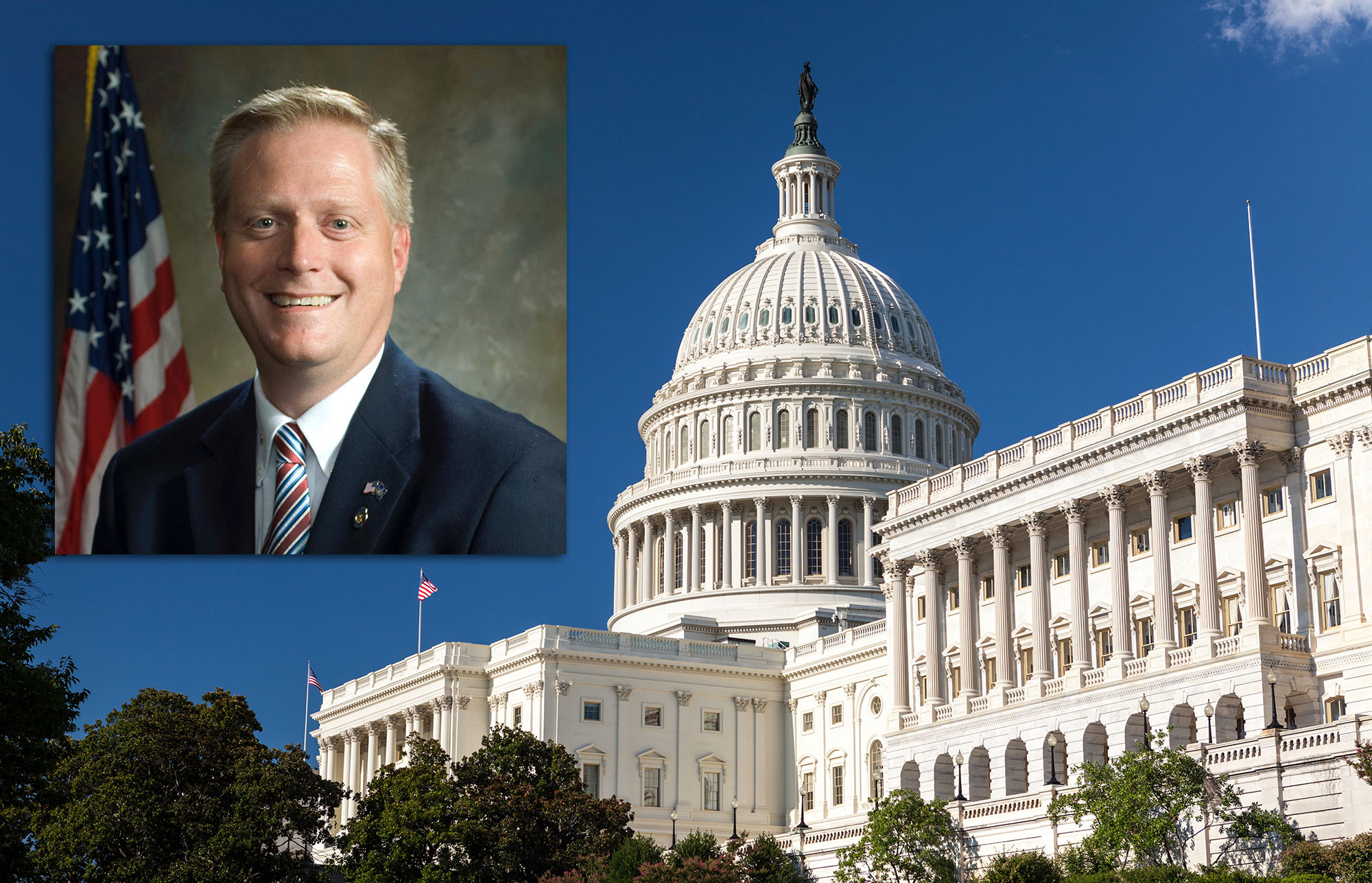
Congressman Fred Keller announces Appalachian Regional Commission grants

Washington, D.C. — Congressman Fred Keller (R-PA) today announced the Appalachian Regional Commission (ARC) has awarded funds for two local projects in central Pennsylvania.

The Central Pennsylvania Workforce Development Corporation (CPWDC) was awarded $1,018,500 for the Reboot Workforce Program: Recovery at Work in Central PA. In partnership with Geisinger and SEDA Council of Governments (SEDA-COG), CPWDC will use these funds to address the opioid epidemic in central Pennsylvania by providing workforce preparation and training services to individuals in recovery and ultimately reintegrate them back into the workforce.

Other local, state, and federal sources contributed an additional $1,104,000 to the project.

Union County was awarded $2,500,000 for the four-county Central Pennsylvania Rural Broadband Deployment Implementation Project. This grant will help bring high speed internet service to underserved locations in Union, Clinton, Lycoming, and Northumberland counties. It is expected that 20 businesses and 270 households will initially benefit from this project.

In addition to ARC’s funds, SEDA Council of Governments (SEDA-COG) Revolving loan fund will provide $4,000,000 and ISPs will provide $1,500,000, bringing the project total to $8,000,000.

On the awarding of the grants, Congressman Fred Keller made the following statement:

Congratulations to the Central Pennsylvania Workforce Development Corporation and Union County for being awarded these grants. What makes these projects special are the outstanding partners—like ARC, SEDA-COG, Geisinger, and other local entities—that come together to address the challenges we face in central Pennsylvania, such as increasing rural access to broadband and combatting the opioid epidemic. I look forward to seeing how these funds are used to develop our workforce and strengthen our communities.”

Wolf Admin. Highlights Benefits of Self-Certification for Pennsylvania Restaurants

Harrisburg, PA — At Appalachian Brewing Company in Harrisburg today, Agriculture Secretary Russell Redding and Department of Community and Economic Development Deputy Secretary Carrie Lepore reminded Pennsylvania restaurants of the benefits of joining Open & Certified Pennsylvania. More than 7,500 restaurants have self-certified – by completing a quick, easy online self-certification application – confirming that they’re taking every precaution, following all health guidelines, and keeping safety a top priority.

“Throughout the pandemic, Pennsylvania’s restaurants have innovated to continue serving our commonwealth,” said Redding. “Now, we’re innovating for them by offering Open & Certified Pennsylvania as a new way to put themselves in front of Pennsylvanians looking for a safe place to dine.”

PA Preferred® Appalachian Brewing Company has self-certified all six of their locations in hopes of instilling confidence in Pennsylvanians looking for a safe, local dining experience. Local businesses are the heartbeat of Pennsylvania’s economy, and Open & Certified Pennsylvania is a way for people to choose an eatery with confidence and support strong local economies.

“In the fight against COVID-19 and in our path to economic recovery, it’s going to take all of us – businesses and consumers alike – doing the right thing, keeping each other safe, and remembering to support our local businesses,” said Lepore. “By self-certifying, restaurants like Appalachian Brewing Company show their commitment to employees, patrons, and surrounding community.”

Those looking for a safe dining experience are encouraged to browse self-certified facilities in the Open & Certified PA Business Directory, where searches can be performed based on county, city, zip code, or restaurant name.

Restaurants interested in being added to the directory can self-certify online at pa.gov/covid. In addition to being added to the searchable database for patrons, self-certifying allows restaurants, private social clubs, and other food service businesses that serve dine-in, sit-down food in a regular, non-event capacity to increase indoor occupancy to 50 percent. Self-certified retail food facilities must continue adhering to mitigation efforts that will keep employees and customers safe, at 50 percent occupancy.

Restaurants that self-certify are not subject to additional food safety inspection or scrutiny. The occurrence of regularly scheduled or complaint-based inspections from enforcement agencies is not affected by certification status. In fact, certifying proves that a business is committed to protecting employees and providing patrons a safe dining experience.

The Wolf Administration has released Frequently Asked Questions as a reference for restaurant owners and the public, along with updated restaurant guidance.

Business owners with additional questions about the self-certification program can contact covidselfcert@pa.gov.

Note: Video available at PACast.com.

Sen. Kamala Harris cancels travel through Sunday after campaign staffers test positive for COVID-19

CBS News Special Report: Sen. Kamala Harris cancels travel through Sunday after two people linked to her campaign test positive for COVID-19.

Two people linked to Kamala Harris’ campaign — her Communications Director Liz Allen and a non-staff flight crew member — have tested positive for the coronavirus. As a result, Harris will suspend in-person events until Monday.

Senator Harris was not in close contact, as defined by the CDC, with either of these individuals during the two days prior to their positive tests; as such, there is no requirement for quarantine.

October 14, 2020 – Department of Health Report

Twelve (12) new cases added Wednesday in Lycoming County now at 847 cases, no new deaths, one new death, 29 total deaths, with 14,684 negatives according to DOH report.

Department of Health Provides Update on COVID-19,

1,276 Positives Bring Statewide Total to 175,922

Pennsylvanians Urged to Download COVID Alert PA App

Harrisburg, PA – The Pennsylvania Department of Health today confirmed as of 12:00 a.m., October 14, that there were 1,276 additional positive cases of COVID-19, bringing the statewide total to 175,922. All 67 counties in Pennsylvania have cases of COVID-19.

The number of tests administered within the last 7 days between October 7 and October 13 is 239,891 with 9,403 positive cases. There were 29,347 test results reported to the department through 10 p.m., October 13.

There are 8,411 total deaths attributed to COVID-19, an increase of 27 new deaths reported. County-specific information and a statewide map are available on the COVID-19 Data Dashboard.

Mask-wearing is required in all businesses and whenever leaving home. Consistent mask-wearing is critical to preventing the spread of COVID-19.

There are 1,395 cases who have a positive viral antigen test and are considered probable cases and 646 patients who have a positive serology test and either COVID-19 symptoms or a high-risk exposure.

There are 2,074,729 patients who have tested negative to date. Of the patients who have tested positive to date the age breakdown is as follows:

  • Approximately 1% are ages 0-4;
  • Nearly 2% are ages 5-12;
  • Nearly 5% are ages 13-18;
  • Nearly 14% are ages 19-24;
  • Nearly 36% are ages 25-49;
  • Approximately 21% are ages 50-64; and
  • Approximately 21% are ages 65 or older.

Most of the patients hospitalized are ages 65 or older, and most of the deaths have occurred in patients 65 or older. More data is available here.

The department is seeing significant increases in the number of COVID-19 cases among younger age groups, particularly 19 to 24-year-olds. An alert was sent to healthcare providers about the changing COVID-19 case demographics, as there are more cases in younger age groups than in those 50-64 and 65+. The following regions saw significant increases among 19 to 24-year-olds in each month from April to present in October:

  • NC – Approximately 7 percent of cases in April to approximately 35 percent of cases so far in October;
  • SE – Nearly 5 percent of cases in April to nearly 18 percent of cases so far in October;
  • NE – 6 percent of cases in April to nearly 20 percent of cases so far in October;
  • NW – Nearly 7 percent of cases in April to nearly 20 percent of cases so far in October;
  • SW – Approximately 5 percent of cases in April to nearly 14 percent of cases so far in October; and
  • SC – Approximately 7 percent of cases in April to nearly 18 percent of cases so far in October.

In nursing and personal care homes, there are 24,111 resident cases of COVID-19, and 5,323 cases among employees, for a total of 29,434 at 1,013 distinct facilities in 61 counties. Out of our total deaths, 5,585 have occurred in residents from nursing or personal care facilities. A county breakdown can be found here.

Approximately 11,456 of our total cases are among health care workers.

Currently, all 67 counties are in the green phase of reopening.

Statewide – The Wolf Administration has since noon, Oct. 13:

The Wolf Administration stresses the role Pennsylvanians play in helping to reduce the spread of COVID-19:

  • Wash your hands with soap and water for at least 20 seconds or use hand sanitizer if soap and water are not available.
  • Cover any coughs or sneezes with your elbow, not your hands.
  • Clean surfaces frequently.
  • Stay home to avoid spreading COVID-19, especially if you are unwell.
  • If you must go out, you are required to wear a mask when in a business or where it is difficult to maintain proper social distancing.
  • Download the COVID Alert PA app and make your phone part of the fight. The free app can be found in the Google Play Store and the Apple App Store by searching for “covid alert pa.

Updated Coronavirus Links: Press Releases, State Lab Photos, Graphics

All Pennsylvania residents are encouraged to sign up for AlertPA, a text notification system for health, weather, and other important alerts like COVID-19 updates from commonwealth agencies. Residents can sign up online at www.ready.pa.gov/BeInformed/Signup-For-Alerts.

Congressman Keller The Hill Op-Ed: “A Judge to Uphold the Constitution”

Defends Judge Barrett’s SCOTUS qualifications, says Senate should confirm her “without hesitation”

WASHINGTON, D.C. — In case you missed it, Congressman Fred Keller (R-PA) published an Op-Ed in The Hill highlighting Judge Amy Coney Barrett’s renowned credentials as a jurist and a brilliant legal scholar worthy of serving on the United States Supreme Court.

The Op-Ed outlines Washington Democrats’ blatant attempts to obstruct Judge Barrett’s path to the Supreme Court in order to fulfill their vision of a partisan, packed court that legislates from the bench.

Here are some excerpts:

The political scuffle that erupted in the aftermath of Judge Amy Coney Barrett’s nomination to the Supreme Court proves that Washington Democrats will misrepresent the role of the judiciary to score political points.

However, unlike Washington Democrats, Republicans do not root for outcomes before the courts. We recognize that judges have a singular responsibility to uphold the Constitution.

Democrats’ criticisms of Judge Barrett are rooted in the specious claim that confirming Judge Barrett to the Supreme Court would ensure the court’s overturning of Obamacare. This is nothing more than an election year scare tactic.

After all, if Washington Democrats truly believed that Obamacare is constitutional, they should have nothing to worry about given Judge Barrett’s strict adherence to the Constitution.

The shameful attacks on Judge Barrett only serve to highlight the left’s predilection for activist judges who seek to usurp the Constitution and legislate from the bench, instead of carrying out the important task with which the judiciary has always been charged.

…Judge Barrett has demonstrated a sound understanding of the Constitutional role of the judiciary and is eminently qualified to serve as a member of the United States Supreme Court. The Senate should confirm her without hesitation.”

You can read the Op-Ed in full HERE.

DOH Announces Rapid Antigen Test Card Distributions Across the Commonwealth


Harrisburg, PA – The Wolf Administration today began distributing the first allotment of 250,000 COVID-19 antigen test kits provided by the federal government to Clinical Laboratory Improvement Amendments (CLIA)-certified institutions across Pennsylvania. Distribution is starting with Bradford, Centre, Lebanon, Montour, Northumberland, Schuylkill and Snyder counties because of the recent high disease incidence rate in these areas.

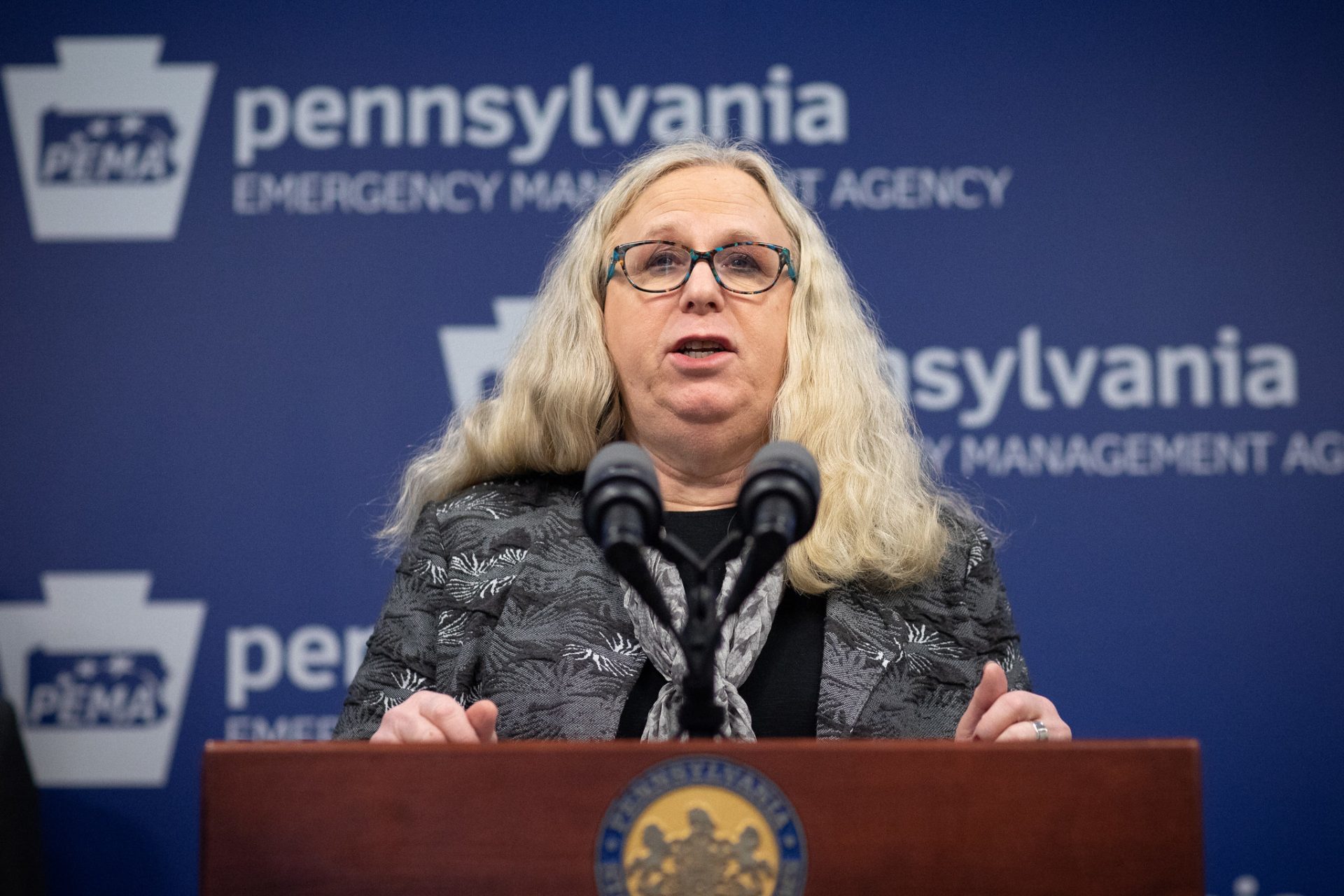
“Antigen test cards are a timely, quick and easy-to-use tool for communities to receive rapid COVID-19 testing,” Dr. Levine said. “These test kits, provided by the federal government and being distributed to areas in need by the Wolf Administration, will further help communities struggling with the spread of COVID-19. Antigen tests look for pieces of proteins that make up the SARS-CoV-2 virus, the virus that causes COVID-19, and are another tool in our testing toolkit to help quickly identify cases.”

The antigen test detects an antigen on the surface of the SARS-CoV-2 virus while the Polymerase chain reaction (PCR) test detects viral RNA. Both PCR and antigen tests can detect active infection and are considered diagnostic. Antigen tests can be considered for symptomatic individuals (within the first five to seven days of symptom onset depending upon the test) in settings where there is a high probability that the individual or population to be tested is positive.

The department anticipates receiving hundreds of thousands of tests over a number of weeks from the federal government. We will then be providing those kits to counties in need. These test kits are separate from and in addition to the ones being provided by the federal government directly to skilled nursing facilities, personal care homes and historically black colleges and universities.

CLIA-certified sites currently include:

  • Long-Term Care Facilities;
  • Personal care homes and Assisted Living/Intermediate Care facilities;
  • Higher-education institutions;
  • Drug and Alcohol and Behavioral Health treatment centers;
  • State and county correctional facilities;
  • Healthcare providers:
    • Federally Qualified Health Centers;
    • Urgent Care Centers;
    • Pharmacies; and
    • Primary Care doctors.

The targeted populations will be tested at CLIA-certified sites that directly receive these test kits and can provide timely test results and health care advice to individuals being tested.

Targeted populations include:

  • Individuals in congregate care settings;
  • Day care workers or clients;
  • K-12 students and adults who work in K-12 settings;
  • College and university students;
  • Individuals without permanent housing;
  • Food distribution facility employees;
  • Food workers, and
  • First responders.

Today the Secretary of Health also issued an Order to laboratories, health care practitioners, health care providers and facilities reinforcing that all antigen test results, both positive and negative, are required to be reported to the Department of Health via its reporting system, PA-NEDSS.

A patient with a positive antigen test result is considered a case and receives a complete case investigation and contact tracing. All entities conducting testing to identify SARS-CoV-2 are required by law to report positive, inconclusive/indeterminate, and negative results to PA-NEDSS within 24 hours. All laboratory reporters must request a PA-NEDSS account if they do not already have one.

For more information about COVID-19 testing and testing locations visit www.health.pa.gov.

Pennsylvania Reminds Voters About the Annual Mail Ballot List

Harrisburg, Pa.  Secretary of State Kathy Boockvar reminded Pennsylvania voters today that they may receive a mail ballot because they opted to be put on the annual mail ballot list when they applied for a mail ballot for the June primary. When voters choose to be added to the annual mail ballot list, they automatically will receive a ballot for all elections in that calendar year.

“We understand that some voters are receiving a mail ballot for the general election when they do not remember applying for one,” said Secretary of State Boockvar. “Pennsylvania is not a state that automatically sends mail ballots to voters. Voters must apply for the ballot for it to be sent to them, and their eligibility and identification is confirmed through that process. Act 77 also created a new option, however, that allows voters to sign up annually to automatically receive mail ballots for all elections that year, and more than a million Pennsylvanians have signed up for this option.”

If a Pennsylvania voter receives a mail ballot now, it is either because they checked the annual ballot request checkbox when they applied for a primary mail ballot, or because they applied for a mail ballot since the primary. Voters who want to verify whether they applied to be annual mail ballot voters can contact their county election office.

Voters who have received a mail ballot have several options for how to cast their voted ballot. They can:

  • Return it via mail to their county election office. Voters should make sure that they first enclose their ballot in the white inner secrecy envelope and seal it, then insert the inner envelope into the outer pre-printed return envelope, and sign and complete the voter’s declaration on the outer envelope. Voters must complete these two steps for their ballots to be counted. Ballots must be returned or postmarked by election day, Tuesday, November 3, and received by the county election office by 5 p.m., Friday, November 6, in order to be counted.
  • Return it in-person to their county election office or other designated location. Be sure to read the instructions on the ballot, seal the ballot in both envelopes and sign the declaration as outlined above. Voters must return their mail ballots to their county election office or other designated location by 8 p.m. on election day, Tuesday, November 3.

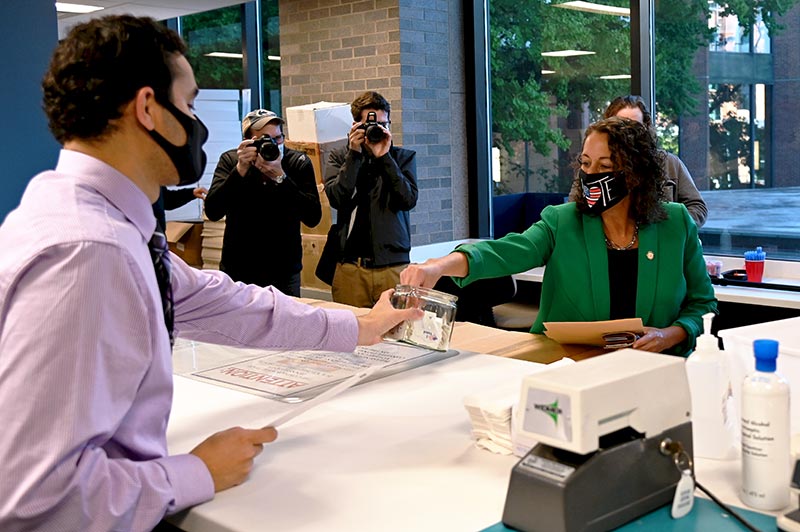
There is also a new option for voters who have changed their mind and wish to vote in person on Election Day.  Voters who receive a mail ballot but wish to vote in person at their polling place on election day should bring their ballot, including the outer return envelope where the voter signs, to their polling place. After they surrender their mail ballot and envelope to the poll worker and sign a declaration, they will be able to vote on their county’s voting system. If the voter forgets to bring their ballot and envelopes to the polling place, they may still vote by provisional ballot at their polling place.

“Pennsylvanians have more safe and secure options for casting their ballot than ever before,” said Secretary Boockvar. “Whichever option you choose, make sure that you cast your ballot on or before Nov. 3.”

For more information on voting and elections in Pennsylvania, call the Department of State’s toll-free hotline at 1-877-VOTESPA (1-877-868-3772) or visit votesPA.com.

Profiles in Service: Department of Aging Staff Recognized for Efforts to Help Nursing Home Residents Connect with Loved Ones During Pandemic

Harrisburg, PA – The Wolf Administration and the Department of Aging today recognized the State Office of Long-Term Ombudsman and other Aging staff for going above and beyond during the pandemic to help older adult residents of nursing homes connect with loved ones and the outside world.

The Ombudsman office supports and empowers consumers by resolving individual complaints involving long-term care service while working to improve and enhance the long-term living system for residents and their families. The office has a ground force of 273 local ombudsmen in communities across Pennsylvania, advocating and empowering on a case-by-case basis to resolve complaints and issues.

Carolyn Tenaglia, Regional Ombudsman Specialist in Schuylkill County, was recognized for spearheading the development and launch of the Virtual Family Council (VFC), a statewide social media resource for family and friends who are unable to see loved ones living in long-term care facilities because of the pandemic.

Launched in May 2020, the VFC helps family members who may be struggling with changes in visitation protocol, rights, and policies. The program offers weekly online meetings with a local ombudsman facilitating, along with a team of 10 local experts in attendance. Anyone can participate and ask questions, share concerns, or just listen to learn and gather information. The meetings do not address specific issues regarding a resident or a facility. The program has drawn hundreds of participants and has served as a model for other state efforts.

Tenaglia began her 20-year ombudsman career as a local ombudsman for Schuylkill County and became a Regional Ombudsman in 2005.

The Wolf Administration and the Department of Aging also recognized the group of Regional Ombudsman Specialists and local ombudsmen who have assisted in the development of content for the VFC and also provide support for each meeting. These include:

Becky Fortenbaugh, program manager; Kim Shelter, regional ombudsman specialist; Kandy Schreffler, regional ombudsman specialist; Jamie Rose, regional ombudsman specialist; Jamie Schell, local ombudsman for Lancaster County; Cori Hurley, local ombudsman for Dauphin County; Kate Wilson Paris, Megan Manney-Thomas and Winnie Backlund, local ombudsmen for Montgomery County; Carol Dieffenbach, local ombudsman for Bradford-Sullivan-Susquehanna-Tioga County ; Linda Korgeski, local ombudsman for Lackawanna County;  Bernadette Jones, local ombudsman for Monroe County; Gloria Eshelman, local ombudsman for Cambria County; Debbi Gressley, local ombudsman for Indiana County; and Jeanne Urban, local ombudsman for Clearfield County.

“Our department is very proud to highlight the efforts of our Office of Long-Term Care Ombudsman who went above and beyond to support families of long-term care residents. Throughout the COVID-19 emergency, ombudsmen have worked with nursing homes to develop connections in accordance with a family’s needs and a facility’s procedures and capabilities,” said Aging Secretary Robert Torres. “Their compassion, tenacity, and creative approach to problem-solving has made a difference for long-term care residents and their families and has helped us all chart a path for innovative visitation and communication practices moving forward.”

“The Virtual Family Council is grassroots systems advocacy that is designed to navigate a virtual world,” said State Long-Term Ombudsman Margaret Barajas. “During this challenging, isolating time for residents, the Council has also shone a loving light on the key role that compassionate caregivers play in quality of care for residents. Carolyn and ombudsmen in communities throughout Pennsylvania, along with volunteers and family members, have been the heart and soul of this effort. They are champions of resident-focused care and advocacy.”

The Wolf Administration also recognized Glenda Ebersole, Policy Director at the department, for initiating an idea to partner with AARP to help combat social isolation of older adults in nursing homes by increasing access to personal technology. AARP helped fund the initiative, and Barajas and her ombudsman team were recognized for going above and beyond to quickly coordinate and distribute more than 100 activated cellphones and tablets to 46 targeted nursing homes. The partnership utilized Ombudsman’s PEERs (Pennsylvania Empowered Expert Residents), Resident Councils, and other resident leaders and nursing home activities directors to support the residents.

To get VFC connection information, email LTC-Ombudsman@pa.gov and in the subject line, indicate Virtual Family Council.

Visit the Pennsylvania Department of Health’s dedicated Coronavirus webpage here for the most up-to-date information regarding COVID-19. Learn more about the various programs offered by the Pennsylvania Department of Aging here.

Application window extended for Snyder County entities to apply for COVID relief funds


The application window has been extended for Snyder County small businesses, nonprofits, and municipalities to apply to receive part of a grant the county received to assist them with COVID-19 expenses.

The application deadline is now Oct. 30 for the COVID-19 County Relief Block Grant (CRBG) funds. It was originally Oct. 2.

The county allocated $1.3 million CRBG funds from the Coronavirus Aid, Relief, and Economic Securities Act (CARES Act), through the state Department of Community and Economic Development (DCED) to this program.

Funds can be used for eligible costs from March 1 to Dec. 30, 2020 for the prevention, preparedness, and response to the COVID-19 crisis. For a full list of eligibility requirements and grant application forms, www.syndercounty.org. The due dates on the forms can be disregarded as they reflect the original deadline.

SEDA-Council of Governments (SEDA-COG) is assisting the county by providing professional expertise and grant administrative services, as well as activity development and management to ensure accuracy and adherence with federal and state regulations.

County Commissioner Joe Kantz said he hopes more businesses will apply by the end of the month.

“We’d especially like to see more small businesses apply for these grants. We’ve extended the deadline for this opportunity to help them recover from the pandemic’s effects,” Kantz said.

Fully completed applications are due by 11:59 p.m. Oct. 30 via email to SEDA-COG’s Jamie Shrawder at jshrawder@seda-cog.org or faxed to 570-524-9190. Mailed forms must be postmarked by Oct. 28 and sent to Snyder County Commissioners, ATTN: Tony Phillips, Chief Clerk, P.O. Box 217, 9 W. Market St., Middleburg, PA 17842.

For more information, contact Shrawder at the email above or at 570-522-7263.

As a community and economic development agency, SEDA-COG enhances the quality of life and economic advantage for residents and businesses in 11 central Pennsylvania counties through its vital partnerships and initiatives. SEDA-COG also is an advocate for the interests of its communities at the state and federal levels. For more information, visit www.seda-cog.org.

Wolf Admin. Announces New Funding for Apprenticeship Advancements and Outreach in Harrisburg

Harrisburg, PA  Today, Governor Tom Wolf announced the approval of new funding for the Iron Workers Local 404 Joint Apprenticeship and Training Committee (JATC) through the Department of Community and Economic Development’s (DCED) Apprenticeship Grant Program. This funding will support the governor’s commitment to expanding job training-related opportunities throughout Pennsylvania.

“Apprenticeship programs allow for Pennsylvania students and workers to attain the skills and abilities necessary to meet the needs of our 21st century economy,” said Gov. Wolf. “My PAsmart initiative was created with the intent of making apprenticeship opportunities more widely available and accessible so that across the commonwealth we can provide quality trades training that leads to good, family-sustaining jobs.”

Iron Workers Local 404 JATC, of Dauphin County, received $297,000 to increase program updates through exploratory outreach and to expand outreach to increase recruitment. The grant will allow for additional collaboration with sister iron worker unions and other local trade unions, and facility updates that guarantee the most current and all-encompassing training and education possible. Curriculum and training facility updates will ensure Iron Workers Local 404 JATC has a more marketable program that appeals to individuals interested in a career in iron working or pivoting to a more dependable career opportunity in general.

Administered by the JATC, the Iron Workers Local 404 apprenticeship program is a three-year program with hands on training, demonstrations by equipment suppliers, classroom lectures, and instruction time for safety training.

“The Iron Workers Local Union #404 Joint Apprenticeship and Training Committee would like to thank Governor Wolf and his administration for the generous opportunity to apply for funds that will have a direct, positive impact on the economy of the commonwealth. For over 60 years, our program has served as a dependable common ground for certifying craftsmen across 35 counties, and this investment of funds will help us continue to provide an accredited education to hardworking Pennsylvanians,” said Apprenticeship Coordinator Dan Hoke. “Now more than ever, the opportunity to begin a lucrative career in the ever-changing job market is imperative, and we are honored to receive funds that will directly lead to such opportunities.”

Apprenticeship programs provide critical access to career pathways and enable apprentices to develop the knowledge, skills and abilities necessary to compete in today’s economy. Classroom training is a required component of registered apprenticeship programs across Pennsylvania and complements traditional on-the-job training. The technical material taught in a classroom environment enables apprentices to learn fundamental concepts, terminology, procedures, safety requirements, and basic tools and instruments.

Apprenticeships are a key component of Governor Wolf’s PAsmart initiative, an innovative way to improve coordination between state agencies, cut red tape, and invest in people and businesses to expand innovative job training in apprenticeships and other programs so workers get the skills they need to compete in the global economy.

The Pre-Apprentice and Apprenticeship Grant Program is a statewide program that offers assistance to registered apprenticeship programs. The program’s goal is to increase apprenticeship availability to Pennsylvania employers to assist them with their talent recruitment and development.

For more information about the Wolf Administration’s commitment to workforce training, visit DCED website, and be sure to stay up-to-date with all of our agency on FacebookTwitter, and LinkedIn.