As Need Decreases, UPMC Adjusts Testing Offered in Williamsport

WILLIAMSPORT, Pa. – Effective Monday, June 29, UPMC in the Susquehanna region’s COVID-19 outpatient collection site will be relocated from 609 Brandon Ave., Williamsport, to UPMC’s outpatient laboratory located at 900 Plaza Dr., Montoursville.

The collection site opened on March 23 as the pandemic began to appear in the region. The site was designed to proactively offer an option to reduce the stress on the system for testing based on the demand seen in cities and regions early in the outbreak across the U.S.

“We wanted to be ready for the worst-case scenario should the virus hit our region as hard as we were seeing it in other areas,” said David Lopatofsky, MD, chief medical officer, UPMC in the Susquehanna region. “As the pandemic progressed, we luckily did not see a significant outbreak of the virus in the region. We’ve since ramped up our testing capabilities, and we’re now transitioning the site to align more efficiently with our laboratory services already in place.”

The collection site in Montoursville will offer testing by referral and with an appointment only. No walk-in testing is available. UPMC will continue to offer testing at its hospitals. UPMC providers will work with patients who meet testing requirements to identify the most appropriate testing site and referrals as needed.

For the latest COVID-19 updates from UPMC, visit UPMC.com/Coronavirus.
Gov. Wolf Issues Statement in Support of Allegheny County COVID-19 Mitigation Efforts Announced Today

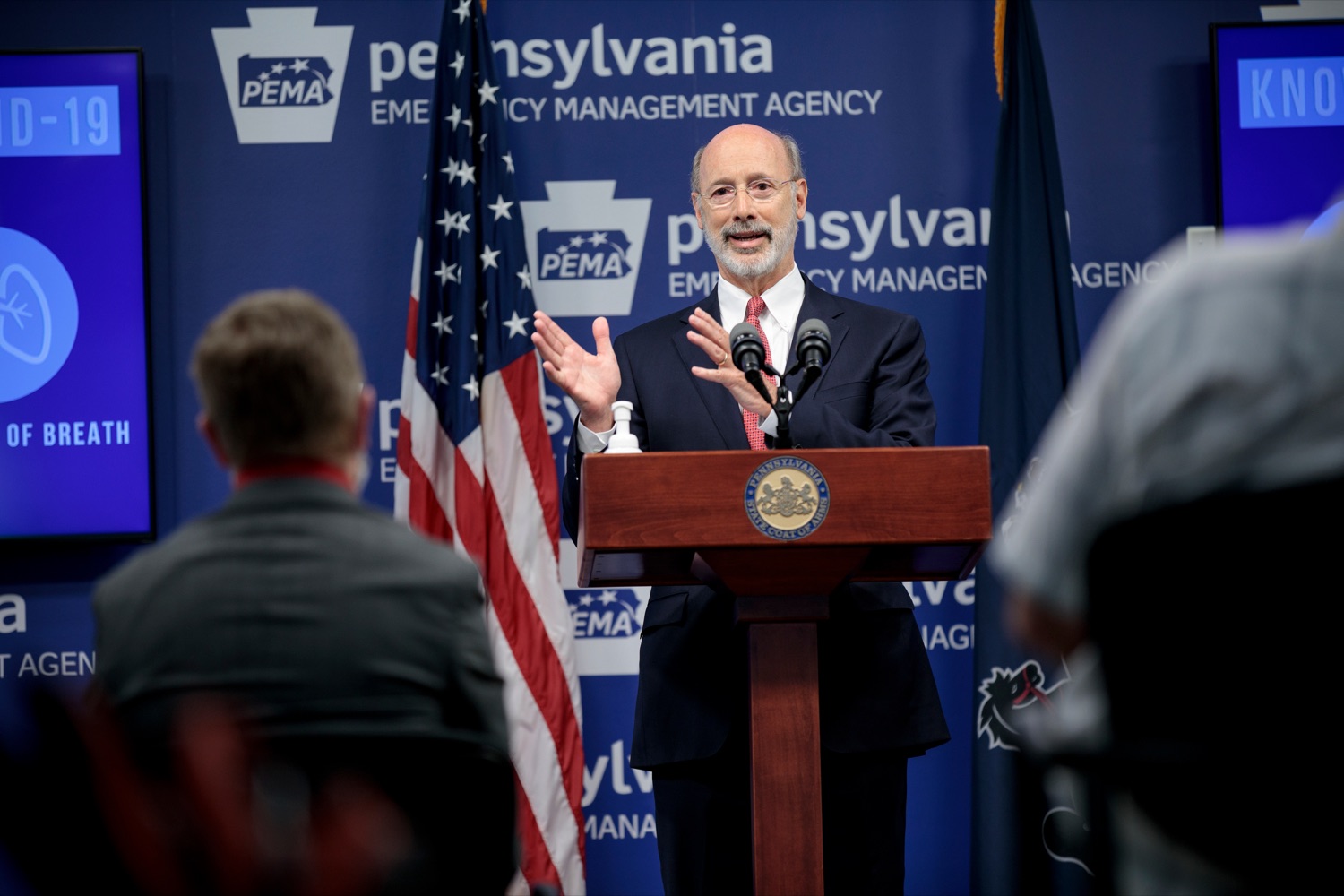
Pennsylvania Governor Tom Wolf answering questions from the press. Governor Tom Wolf today announced a $225 million statewide grant program to support small businesses that were impacted by the COVID-19 public health crisis and subsequent business closure order. Harrisburg, PA — June 8, 2020

Governor Tom Wolf today commended the Allegheny County Executive and Health Department for the additional mitigations the county is putting in place in response to significant COVID-19 case increases over the past few days, emphasizing that the situation in Allegheny County is a reminder for the entire state to follow mask-wearing and other mitigation requirements. The majority of new cases in Allegheny County are in people age 19-49 with an average age of 27.

“I commend Allegheny County Executive Rich Fitzgerald and Health Department Director Dr. Debra Brogan for the decision to shut down bars and restaurants for on-premises alcohol sales in Allegheny County effective June 30. This was the right move to work to stop the recent spike of COVID-19 cases in its tracks and to remind all residents and businesses that the best defense we have in preventing the spread of COVID-19 and keeping Pennsylvanians safe is to continue to follow the mask-wearing requirement, practice social distancing, and follow safety guidelines even and especially during the green phase of reopening. We cannot become complacent in practicing the measures we know can protect everyone from the spread of this very contagious virus.

“It is my hope that swift action on the part of the county results in swift containment and the return to an increased commitment to protect all residents, especially those most vulnerable to COVID-19, and that this action sets an example for the rest of the state to continue to follow mitigation efforts put in place to protect lives and livelihoods.

“Mitigation efforts statewide include the requirement to wear a mask when in businesses, following occupancy limits in all businesses and gatherings, practicing social distancing, hand washing and sanitizing surfaces – these simple practices can make a huge difference in protecting ourselves, our seniors, our neighbors and our communities. Even if you believe you will not get sick, you can, and you can spread the virus to someone who may not be able to recover as easily.”

505 Positives Bring PA Total to 85,496 with 3 new deaths and 6,606 total deaths

Department of Health Provides Update on COVID-19,

505 Positives Bring Statewide Total to 85,496

Harrisburg, PA – The Pennsylvania Department of Health today confirmed as of 12:00 a.m., June 28, that there are 505 additional positive cases of COVID-19, bringing the statewide total to 85,496. All 67 counties in Pennsylvania have cases of COVID-19.

There are 6,606 total deaths attributed to COVID-19, an increase of 3 new deaths. County-specific information and a statewide map are available here.

“As nearly the entire state is now in the green phase, we must remain committed to protecting against COVID-19,” Secretary of Health Dr. Rachel Levine said. “Pennsylvania has been a model for the country on how to reopen effectively using a careful, measured approach. However, the virus has not gone away. Each of us has a responsibility to continue to protect ourselves, our loved ones and others by wearing a mask, maintaining social distancing and washing our hands frequently. Together we can protect our most vulnerable Pennsylvanians, our essential workers and our healthcare system.”

Mask wearing is required in all businesses in all phases of reopening. Consistent mask wearing is critical to preventing the spread of COVID-19.

There are 633 patients who have a positive serology test and either COVID-19 symptoms or a high-risk exposure, which are considered probable cases and not confirmed cases. There are 657,486 patients who have tested negative to date. Of the patients who have tested positive to date the age breakdown is as follows:

  • Nearly 1% are ages 0-4;
  • 1% are ages 5-12;
  • 2% are ages 13-18;
  • Nearly 7% are ages 19-24;
  • Nearly 37% are ages 25-49;
  • Nearly 25% are ages 50-64; and
  • Nearly 28% are ages 65 or older.

Most of the patients hospitalized are ages 65 or older, and most of the deaths have occurred in patients 65 or older. More data is available here.

In nursing and personal care homes, there are 17,677 resident cases of COVID-19, and 3,212 cases among employees, for a total of 20,889 at 687 distinct facilities in 51 counties. Out of our total deaths, 4,528 have occurred in residents from nursing or personal care facilities. A county breakdown can be found here.

Approximately 6,484 of our total cases are in health care workers.

For the latest information for individuals, families, businesses and schools, visit “Responding to COVID-19” on pa.gov.

Currently, all 67 counties are in the yellow or green phase of reopening.

The Wolf Administration stresses the role Pennsylvanians play in helping to reduce the spread of COVID-19:

  • Wash your hands with soap and water for at least 20 seconds or use hand sanitizer if soap and water are not available.
  • Cover any coughs or sneezes with your elbow, not your hands.
  • Clean surfaces frequently.
  • Stay home to avoid spreading COVID-19, especially if you are unwell.
  • If you must go out, you are required to wear a mask when in a business or where it is difficult to maintain proper social distancing.

Updated Coronavirus Links: Press Releases, State Lab Photos, Graphics

All Pennsylvania residents are encouraged to sign up for AlertPA, a text notification system for health, weather, and other important alerts like COVID-19 updates from commonwealth agencies. Residents can sign up online at www.ready.pa.gov/BeInformed/Signup-For-Alerts.

No new COVID-19 cases added Saturday in Lycoming County remaining at 176 cases and 19 deaths according to DOH report

No new COVID-19 cases added Saturday in Lycoming County remaining at 176 cases and 19 deaths according to DOH report.

Department of Health Provides Update on COVID-19, 621 Positives Bring Statewide Total to 84,991

Harrisburg, PA – The Pennsylvania Department of Health today confirmed as of 12:00 a.m., June 27, that there are 621 additional positive cases of COVID-19, bringing the statewide total to 84,991. All 67 counties in Pennsylvania have cases of COVID-19.

There are 6,603 total deaths attributed to COVID-19, an increase of 24 new deaths. County-specific information and a statewide map are available here.

“As nearly the entire state is now in the green phase, we must remain committed to protecting against COVID-19,” Secretary of Health Dr. Rachel Levine said. “Pennsylvania has been a model for the country on how to reopen effectively using a careful, measured approach. However, the virus has not gone away. Each of us has a responsibility to continue to protect ourselves, our loved ones and others by wearing a mask, maintaining social distancing and washing our hands frequently. Together we can protect our most vulnerable Pennsylvanians, our essential workers and our healthcare system.”

Mask wearing is required in all businesses in yellow and green phases of reopening. Consistent mask wearing, even in counties in the green phase, could have lasting benefits as a COVID-19 surge is possible this fall.

There are 633 patients who have a positive serology test and either COVID-19 symptoms or a high-risk exposure, which are considered probable cases and not confirmed cases. There are 646,780 patients who have tested negative to date. Of the patients who have tested positive to date the age breakdown is as follows:

  • Nearly 1% are ages 0-4;
  • 1% are ages 5-12;
  • 2% are ages 13-18;
  • Nearly 7% are ages 19-24;
  • Nearly 37% are ages 25-49;
  • Nearly 25% are ages 50-64; and
  • Nearly 28% are ages 65 or older.

Most of the patients hospitalized are ages 65 or older, and most of the deaths have occurred in patients 65 or older. More data is available here.

In nursing and personal care homes, there are 17,622 resident cases of COVID-19, and 3,193 cases among employees, for a total of 20,815 at 684 distinct facilities in 51 counties. Out of our total deaths, 4,528 have occurred in residents from nursing or personal care facilities. A county breakdown can be found here.

Approximately 6,446 of our total cases are in health care workers.

For the latest information for individuals, families, businesses and schools, visit “Responding to COVID-19” on pa.gov.

Currently, all 67 counties are in the yellow or green phase of reopening.

Statewide – The Wolf Administration has since noon, June 26:

The Wolf Administration stresses the role Pennsylvanians play in helping to reduce the spread of COVID-19:

  • Wash your hands with soap and water for at least 20 seconds or use hand sanitizer if soap and water are not available.
  • Cover any coughs or sneezes with your elbow, not your hands.
  • Clean surfaces frequently.
  • Stay home to avoid spreading COVID-19, especially if you are unwell.
  • If you must go out, you are required to wear a mask when in a business or where it is difficult to maintain proper social distancing.

Updated Coronavirus Links: Press Releases, State Lab Photos, Graphics

All Pennsylvania residents are encouraged to sign up for AlertPA, a text notification system for health, weather, and other important alerts like COVID-19 updates from commonwealth agencies. Residents can sign up online at www.ready.pa.gov/BeInformed/Signup-For-Alerts.

Wolf Admin. Announces Strategy to Ease Long-Term Care Facility Restrictions through Gradual Three-Step Process to Protect Vulnerable Populations

Harrisburg, PA – The Pennsylvania departments of Health and Human Services today issued updated guidance to ensure a safe return to activities, visitation, and other events for residents in nursing homes, personal care homes, assisted living residences and private intermediate care facilities.

“We continue to practice a careful, measured approach in long-term care facilities so all staff and residents can safely welcome visitors and return to a more normal routine,” Secretary of Health Dr. Levine said. “We developed this guidance through collective input from residents and families, stakeholders, academia and facility representatives to allow safe visitations with strong public health measures to balance the mental and physical well-being of Pennsylvania’s most vulnerable residents. We will continue to work with and support facilities to ensure they adhere to these measures.”

“COVID-19 has presented a tremendous challenge, but long-term care facilities have felt these challenges acutely due to the often fragile health of residents at these facilities. Precautions and restrictions implemented at these facilities were necessary to keep residents and staff safe, but we recognize that they are not permanently sustainable,” said Human Services Secretary Teresa Miller. “Resuming operations for long-term care facilities should be done gradually and deliberately, and most importantly, this must be done safely. Guidance issued today will help this process begin, and we will continue to support our long-term care facilities through every step.”

In order to cautiously lift restrictions in long-term care facilities (LTCFs), the departments of Health and of Human Services will now require all LTCFs to meet several prerequisites before proceeding into the official three-step process of reopening:

  • Develop an implementation plan and post that plan to the facility’s website, if the facility has a website, that specifies how the reopening and visitation requirements will be met.
  • Administer tests within 24 hours of a resident showing COVID-19 symptoms and complete baseline testing as required in the Secretary’s Orders for skilled nursing facilities issued on June 8 and for personal care homes, assisted living residences, and private intermediate care facilities issued on June 26;
  • Develop a plan to allow visitation that includes scheduling and other safety measures;
  • Develop a plan for cohorting or isolating residents diagnosed with COVID-19 in accordance with PA-HAN 509;
  • Establish and adhere to written screening protocols for all staff during each shift, each resident daily, and all persons entering the facility;
  • Have adequate staffing and supply of personal protective equipment for all staff;
  • Be located in a county that is either in the yellow or green phase of the Governor’s Reopening Plan; and

Once a facility meets the required prerequisites, the facility will enter a three-step process of reopening:

Step One: From the date the facility enters step one, a facility must maintain no new COVID-19 cases among staff or residents and have no spread in the facility for 14 consecutive days in order to enter step two.

Step Two: While in step two, facilities are required to maintain no new cases of COVID-19 among staff or residents and have no spread in the facility for 14 consecutive days to progress into the final step.

Step Three: The final step allows LTCFs to operate as outlined for the remainder of the Governor’s COVID-19 Disaster Declaration as long as there are no new COVID-19 cases among staff and residents for 14 consecutive days.

If a new COVID-19 case is known, facilities will cease implementing their reopening plan and wait until they have no new COVID-19 cases for 14 consecutive days before re-entering step one.

Each step of the plan includes specific criteria for conducting dining, activities, non-essential personnel, volunteers, visitors and outings.

Visitations will only be allowed in steps two and three as long as the facility determines a resident is able to safely see visitors and will prioritize those with diseases causing progressive cognitive decline and residents expressing feelings of loneliness. A facility must designate visitation hours, locations (preferably outside or a pass-through not typically occupied or frequented by residents), and screenings to permit a visitor into the building. During the entirety of the visit, social distancing and infection control protocols must be followed along with enforcing the proper hand hygiene with alcohol-based hand sanitizer and universal masking. Facility staff will monitor visits so all safety guidelines are met and enforced. After each visit concludes, staff will need to sign out the visitor and properly disinfect the designated visitation location. Guidance for visitors is available here.

Since the beginning of the COVID-19 pandemic, the Wolf Administration has taken a three-pillar approach to protecting the residents living in LTCFs by:

  • Ensuring resident safety through testing, education and resources;
  • Preventing and mitigating outbreaks; and
  • Working in partnership with state agencies, local health departments and LTCF operators.

As of June 19, the Department of Health distributed over 2,300 shipments of personal protective equipment (PPE) to all LTCFs in Pennsylvania. This PPE included 306,944 gowns, 336,559 face shields, 1,023,800 gloves, 2,807,570 N95 masks and 1,175,200 surgical masks. Additionally, the Department of Health continues to work with ECRI as they provide technical assistance and our Healthcare Acquired Infection (HAI) team to further assist and remain connected with the nursing homes in order to best assist their needs.

The Educational Support and Clinical Consultation Program (ESCCP) team, a partnership between DHS, the Jewish Healthcare Foundation, and seven health systems around Pennsylvania, has also provided clinical guidance, advice on infection control strategies, and clinical needs identification to more than 900 LTCFs licensed by DHS and 250 skilled nursing facilities licensed by DOH. The ESCCP program has conducted more than 16 webinars to more than 2,400 participants statewide on topics like proper use of PPE, infection prevention and control methods, and emotional support for residents. In July, the ESCCP program will transition from a voluntary partnership to a contracted grant agreement that establishes Regional Response Healthcare Collaboratives that will provide financial support to contracted health system partners to assist with continued education, clinical support, testing, and other areas necessary to respond to COVID-19. This network will be available to support facilities as they prepare to safely reopen.

The guidance issued today will supersede the previous guidance issued for nursing homes and personal care homes, assisted living residences and private intermediate care facilities. Previously, the ongoing visitor limitations, personnel restrictions, and other measures in LTCFs remained in place at least 28 days after the respective facility’s county enters the green phase in the Governor’s Process to Reopen Pennsylvania.

For additional resources regarding COVID-19 and nursing homes in Pennsylvania, please visit the Department of Health’s COVID-19 Information for Nursing Homes website.

For more information regarding personal care homes, assisted living residences and private intermediate care facilities, please visit the Department of Human Services’ website.

Pennsylvanians are reminded that mask-wearing is required when visiting businesses in both the yellow and green phases of reopening or in any setting outside the home where social distancing is difficult. Remember: My mask protects you; your mask protects me.

The Wolf Administration stresses the role Pennsylvanians play in helping to reduce the spread of COVID-19:

  • Wash your hands with soap and water for at least 20 seconds or use hand sanitizer if soap and water are not available.
  • Cover any coughs or sneezes with your elbow, not your hands.
  • Clean surfaces frequently.
  • Stay home to avoid spreading COVID-19, especially if you are unwell.
  • If you must go out for a life-sustaining reason, please wear a mask.

Updated Coronavirus Links: Press Releases, State Lab Photos, Graphics

All Pennsylvania residents are encouraged to sign up for AlertPA, a text notification system for health, weather, and other important alerts like COVID-19 updates from commonwealth agencies. Residents can sign up online at www.ready.pa.gov/BeInformed/Signup-For-Alerts.

Wolf Admin. Continues Support for Residents and Staff at Long-Term Care Facilities, Mitigates the Spread of COVID-19 through Testing, Education and Resources

Harrisburg, PA – Secretary of Health Dr. Rachel Levine and Secretary of Human Services Teresa Miller today emphasized the work being done through testing, education and resources to assist long-term care facilities (LTCFs) in mitigating the spread of COVID-19 to protect residents and staff living and working in these congregate care facilities.

The secretaries also announced an expanded testing order for LTCFs, extending to personal care homes, assisted living residences, and intermediate care facilities licensed by the Department of Human Services.

“We continue to take necessary action to protect our most vulnerable Pennsylvanians – many of whom reside in long-term care facilities,” Secretary of Health Dr. Rachel Levine said. “Testing, education and resources are essential components to ensure the safety and well-being of residents. Our strides to mitigate the spread of COVID-19 in the commonwealth have been successful, but we continue to strengthen these efforts as COVID-19 remains a threat in our communities.”

The Wolf Administration’s strategy to protect residents of LTCFs focuses on ensuring resident safety through education, resources and testing; preventing and mitigating outbreaks; and working in partnership with other state agencies, municipal and county health departments and LTCFs.

As of June 19, the departments of Health and Human Services have deployed these mitigation efforts and engaged with facility management and local health systems to further stop the spread of COVID-19 and best protect residents and staff of all LTCFs:

  • Distributed over 2,300 shipments of Personal Protective Equipment (PPE) to date, which includes 306,944 gowns, 336,559 face shields, 1,023,800 gloves, 2,807,570 N95s masks and 1,175,200 surgical masks.
  • Deployed 69 Pennsylvania National Guard Strike Teams to 34 different LTCFs. Work includes 32 site assessments, 10 PPE trainings, 13 COVID-19 mass testing missions, and 14 facility staffing missions.
  • Responded to 100 percent of outbreaks, defined as one or more confirmed positive case among staff or residents, in LTCFs.
  • Provided advice and consultation on infection control and outbreak response to facilities and, where needed;
  • Collaborated, partnered and received reports from local, state, and federal resources, along with contracted support from ECRI.

Through the collaborations and partnerships with ECRI and Patient Safety Authority (PSA), the department provided infection control and technical assistance to over 100 and 90 different LTCFs, respectively. The US Public Health Service has also been deployed to 19 LTCFs for onsite assessments and training.

Additionally, the Educational Support and Clinical Consultation Program (ESCCP) team, a partnership between DHS, the Jewish Healthcare Foundation, and seven health systems around Pennsylvania, have provided clinical guidance, advice on infection control strategies, and clinical needs identification to a more than 900 long-term care facilities licensed by DHS and 250 skilled nursing facilities licensed by DOH. The ESCCP program has conducted more than 16 webinars to more than 2,400 participants statewide on topics like proper use of PPE, infection prevention and control methods, emotional support for residents, and facilitating safe communication between residents and outside family and friends and providing safe entertainment and programming while restrictions are in place. In July, the ESCCP program will transition from a voluntary partnership to a contracted grant agreement that establishes Regional Response Healthcare Collaboratives and will provide financial support to contracted health system partners to assist with continued education, clinical support, testing, and other areas necessary to respond to COVID-19.

The Wolf Administration is committed to testing all residents and staff in Pennsylvania’s long-term care facilities as part of the statewide comprehensive testing strategy. On June 8, the Department of Health issued an Order to require nursing homes to complete baseline universal testing no later than July 24. Since then, testing across all LTCFs over the last four weeks has increased 30 percent as compared to the month before. The test positivity rate within all LTCFs is the lowest it has been since the start of the outbreak: 7.8 percent. Now, over 100 facilities have now reported completion of universal testing.

The Department of Health today issued a testing order extending universal testing requirements to DHS’ licensed assisted living residences, personal care homes, and intermediate care facilities effective July 1, 2020. Under this order, these licensed facilities are directed to test residents and staff at least once before August 31, 2020. Facilities included under this order were already following previously issued testing guidance and many have ramped up testing but were not included in the original order due to differences in how these facilities would cohort patients and due to DHS’ facilities not always having medical directors or on-site clinical staff. Instituting this requirement in July allows the Regional Response Health Collaboratives, which will be in place in early July, to provide testing and clinical support to these facilities as they ramp up testing and prepare for a potential second spike of cases in Pennsylvania.

“Our long-term care facilities serve medically fragile and vulnerable Pennsylvanians, and we must be extremely vigilant to prevent COVID-19 from reaching these facilities,” said Secretary Miller. “Even as circumstances improve around the commonwealth, the risk is still acute for residents and staff of these facilities. We cannot let our guard down, and we are committed to supporting these facilities as the adjust to evolving circumstances.”

Education to facilities has been provided through bulletin boards, nursing home associations, and our normal channels of communication such as Health Alert Network messages. That education has included guidance for clinicians at long-term care facilities on the cohorting of residents with COVID-19 in dedicated units within LTCFs, effective transmission prevention strategy, universal screening and masking of all healthcare workers, and how to provide access to the state’s Long-Term Care Ombudsman.

The long term care facility data mandated by the Department of Health includes the number of cases, number of employee cases and number of deaths that have occurred at each facility. Facilities who are not reporting, or not reporting properly, have been assisted to ensure the data is being shared properly. As testing becomes more widespread, it is important that all facilities report all necessary information.

For facilities with less than five in any of the collected data points, the information is redacted to protect patient confidentiality at that facility. If a facility does not have any COVID-19 cases or deaths, it will still be shown on the spreadsheet.

More information on data reporting requirements for nursing home facilities can be found here.

Individuals with complaints about a nursing home can file that complaint with the Department of Health in several ways. Complaints can be made anonymously by calling 1-800-254-5164, filling out the online complaint form, emailing c-ncomplai@pa.gov or sending the complaint in the mail to the department. Complaints regarding personal care homes and assisted living residences can be sent to DHS at RA-pwarlheadquarters@pa.gov.

The Wolf Administration stresses the role Pennsylvanians play in helping to reduce the spread of COVID-19:

  • Wash your hands with soap and water for at least 20 seconds or use hand sanitizer if soap and water are not available.
  • Cover any coughs or sneezes with your elbow, not your hands.
  • Clean surfaces frequently.
  • Stay home to avoid spreading COVID-19, especially if you are unwell.
  • If you must go out for a life-sustaining reason, please wear a mask.

Updated Coronavirus Links: Press Releases, State Lab Photos, Graphics

All Pennsylvania residents are encouraged to sign up for AlertPA, a text notification system for health, weather, and other important alerts like COVID-19 updates from commonwealth agencies. Residents can sign up online at www.ready.pa.gov/BeInformed/Signup-For-Alerts.

Gov. Wolf: Masks are Mandatory in Pennsylvania Businesses

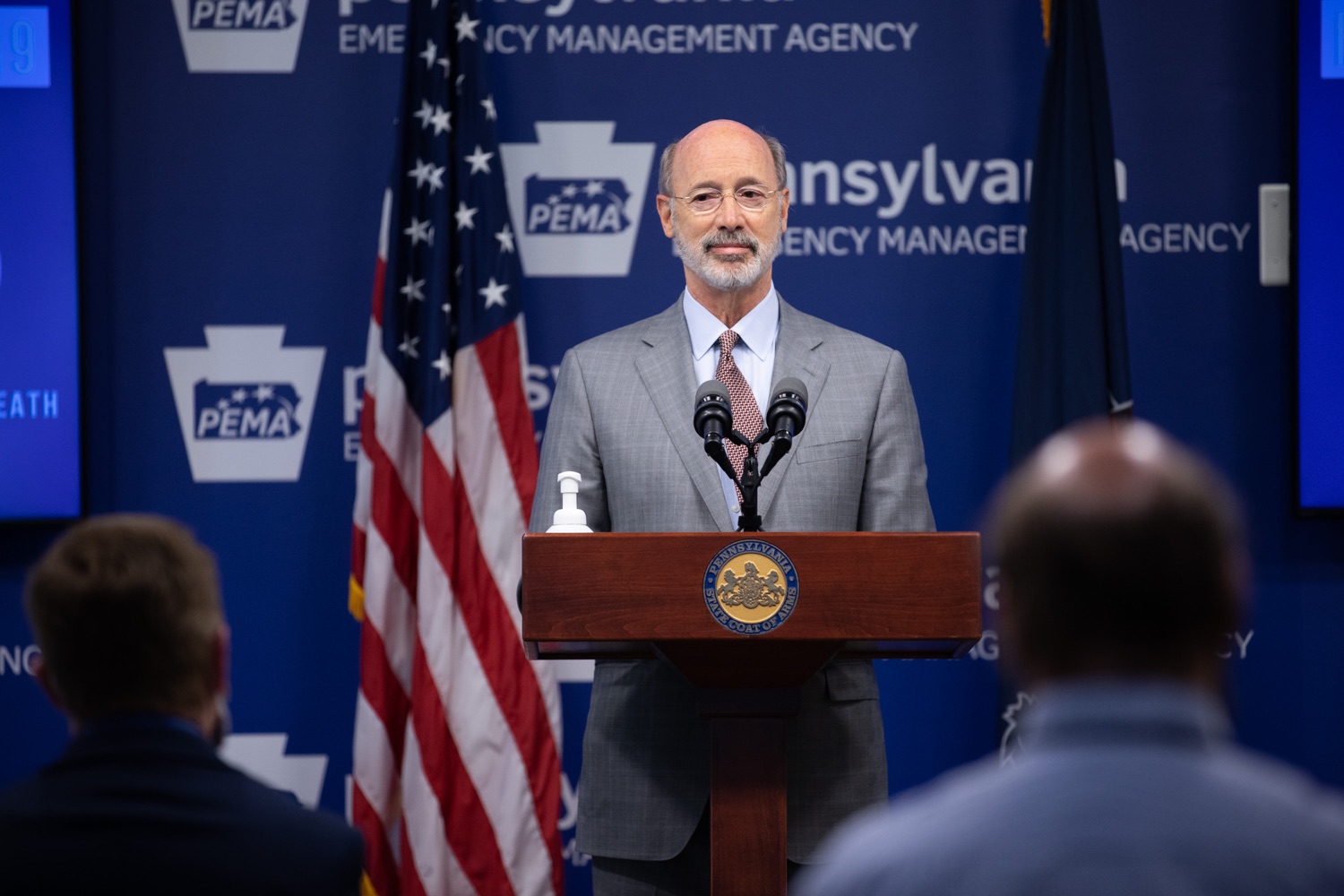
Governor Tom Wolf speaks during a press conference addressing the 2019 Novel Coronavirus (COVID-19) in Pennsylvania, inside PEMA headquarters on Wednesday, June 10, 2020.

Harrisburg, PA – Governor Tom Wolf today reminded all Pennsylvania residents and businesses that masks are mandatory when visiting a business.

“The importance of mask-wearing to reduce the spread of COVID-19 and protect people and businesses cannot be overstated,” Gov. Wolf said. “Masks are required in businesses, for the entire time someone is visiting a business. It’s that simple and that important to continue to safely reopen the state and keep our case counts on the decline.”

Multiple state government agencies sent a communication to Pennsylvania businesses this week outlining mask requirements:

  • Everyone must wear a mask, unless they have a medical reason not to or are under the age of 2. That includes workers and customers. Remember, my mask protects you and your mask protects me.
  • No mask, no shirt, no shoes, no service. If a worker or customer attempts to enter your business without a mask on, ask them to leave and return when they have a mask. A fabric mask is fine.
  • Find PPE to protect your workers. Masks and other PPE can be hard to find given the high demand. But we’ve got you covered. Check out our online directory of PPE manufacturers and suppliers in Pennsylvania.
  • Have good mask hygiene. Don’t touch the front of your mask. Make sure it covers both your nose and mouth. Don’t lift it up when talking to someone. Remember, the virus travels in the droplets we breath out when talking or laughing, not just when we cough or sneeze. If wearing a fabric mask, make sure you wash it and let it fully dry between uses.

“Wearing masks in a business or when in a public space where social distancing can’t be maintained is a required, vital practice to stopping the spread of COVID-19,” Gov. Wolf said. “It’s also a sign of respect for others because your mask is protecting them. Let’s continue to get through this together.”

The state’s business guidance outlines mask-wearing requirements.

The state’s restaurant industry guidance outlines mask-wearing requirements specific to restaurants.

Congressman Fred Keller opposes D.C. statehood bill

Introduces “Motion to Recommit” to ensure entire country’s priorities are reflected in state constitution

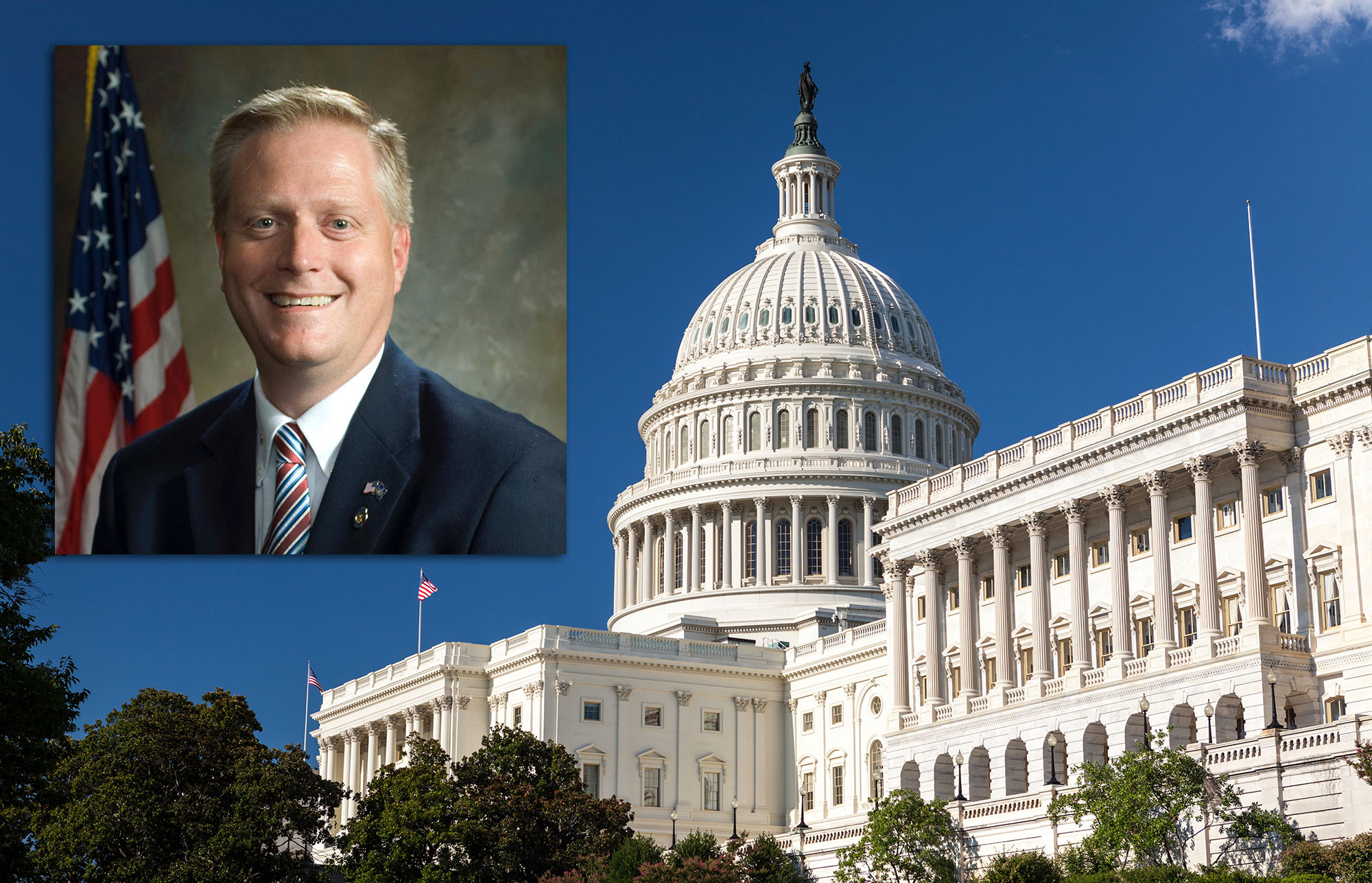
WASHINGTON – Congressman Fred Keller (R-PA) on Friday voted against H.R. 51, legislation that would make Washington D.C. the 51st state as Washington Douglass Commonwealth.

Prior to the vote on Friday, Congressman Keller offered the House Republican’s Motion to Recommit the legislation, a move that would have ensured the priorities of people from across the country—not just Democrats—are included in the new state.

A person in a suit and tie sitting in a chair

Description automatically generated

(Click to watch remarks)

Washington, D.C. was never meant to be a state. Our founders intended the federal district to be a neutral location of collaboration among all 50 states—not subject to any one state. With this ill-conceived move for D.C. statehood, Democrats will allow the new Washington Douglass Commonwealth to have a position of superiority over the federal government in contravention of the original intent of the founders of this country,” Congressman Keller said.

“On top of that, Washington, D.C. has a troubled history of financial mismanagement and high crime. It has barely been able to manage itself as a city and should not be allowed to manage itself as a state,” Congressman Keller added.

The “Motion to Recommit” would have ensured that Second Amendment protections, protections for monuments, funding for police and law enforcement, a prohibition against sanctuary city status and autonomous zones, and a prohibition on the use of taxpayer funds for campaign activity for public office were reflected in Washington Douglass Commonwealth’s state constitution.

“Republicans need assurances that the interests of our constituents will be reflected in this new state that will have undue influence over the nation’s federal government. And so, my motion contains reasonable additions to H.R. 51 that will require the President to assure certain amendments to the state constitution are incorporated before granting statehood. These provisions reflect the entirety of the nation’s views, not just those of cities controlled by Democrats,” Congressman Keller said on the House Floor.

“A state with a controlling influence over the nation’s federal capital is simply not on equal footing with the other 50 states. It is above them. A vote for the Majority’s design for D.C. statehood is a vote for D.C. superiority. The Founders recognized the status of Washington, D.C.  House Republicans do not support deviation from their vision.  However, if the Democrats insist on creating this new state, it is only fair that it be established as a State with policy values that more closely reflect the rest of the country,” Congressman Keller added.

You can watch Congressman Keller’s remarks in full HERE.

No new COVID-19 cases added Friday in Lycoming County

No new COVID-19 cases added Friday in Lycoming County remaining at 176 cases and 19 deaths according to DOH report.

Gov. Wolf: Last PA County will Move to Green on July 3

Harrisburg, PA – Governor Tom Wolf announced today that Lebanon County is slated to move to the green phase of reopening on July 3, putting all 67 counties in green. Twelve counties moved to green today, joining 54 already in the least restrictive phase of reopening.

“We will soon have all of our counties in green,” Gov. Wolf said. “A milestone worth a cautious celebration of the hard work and collaborative spirit of Pennsylvanians. But we must remember that the restrictions that remain in the green phase will help us continue to enjoy the freedoms this phase allows for.”

Green phase restrictions include:

Work and Congregate Settings Restrictions

  • Continued Telework Strongly Encouraged
  • Businesses with In-Person Operations Must Follow Updated Business and Building Safety Requirements
  • All Businesses Operating at 50% Occupancy in the Yellow Phase May Increase to 75% Occupancy
  • Child Care May Open Complying with Guidance
  • Congregate Care Restrictions in Place
  • Prison and Hospital Restrictions Determined by Individual Facilities
  • Schools Subject to CDC and Commonwealth Guidance

Social Restrictions

  • Large Gatherings of More Than 250 Prohibited
  • Masks Are Required in Businesses
  • Restaurants and Bars Open at 50% Occupancy
  • Personal Care Services (including hair salons and barbershops) Open at 50% Occupancy and by Appointment Only
  • Indoor Recreation, Health and Wellness Facilities, and Personal Care Services (such as gyms and spas) Open at 50% Occupancy with Appointments Strongly Encouraged
  • All Entertainment (such as casinos, theaters, and shopping malls) Open at 50% Occupancy
  • Construction Activity May Return to Full Capacity with Continued Implementation of Protocols

The data dashboard of county cases and criteria for reopening consideration can be found here.

Gov. Wolf’s Process to Reopen Pennsylvania outlines remaining restrictions for counties in yellow or green. Effective today, there are 66 counties in green and one in yellow. Philadelphia County is in green beginning today based on the state’s metrics; however, local officials will maintain some additional restrictions until July 3.

As counties reopen, Pennsylvania continues to see a steady decline in cases, a positive indicator that its phased, measured reopening plan is working to balance public health with economic recovery.

The CDC’s analysis of proprietary state case data puts Pennsylvania among states with a 42-day steady decline in cases. Pennsylvania has maintained this distinction for three weeks to date.

Research indicates that mask-wearing is a vital strategy to help stop the spread of the virus, especially as we plan for a possible surge in the fall. Gov. Wolf continues to remind Pennsylvanians of the mask-wearing requirement and was joined yesterday by business owners endorsing this measure to protect customers, employees and communities.

The state continues to use risk-based metrics from Carnegie Mellon University and the Department of Health and Pennsylvania Emergency Management Agency data dashboard available here.

The state is increasing testing and contact-tracing efforts. The Department of Health received a total of 106,076 test results in the past seven days, an average of 15,154 a day. The 30-day average of test results received is more than 13,000.

There were 3,524 COVID-19 total cases added to investigations for the week of June 19 through 25. There are currently 521 contact tracers with the Department of Health.

The latest business guidance, including outdoor recreation guidance, can be found here.

Preliminary sports guidance can be found here.