DOH Report 504 Positives Bring PA Total to 81,266

Harrisburg, PA – The Pennsylvania Department of Health today confirmed as of 12:00 a.m., June 20, that there are 504 additional positive cases of COVID-19, bringing the statewide total to 81,266. All 67 counties in Pennsylvania have cases of COVID-19.

There are 6,419 total deaths attributed to COVID-19, an increase of 20 new deaths. County-specific information and a statewide map are available here.

“With more than half of the state now in the green phase of the process to reopen, it is essential that we continue to take precautions to protect against COVID-19,” Secretary of Health Dr. Rachel Levine said. “The commonwealth’s careful, measured approach to reopening is working as we see case counts continue to decline even as many other states see increases. But the virus has not gone away. Each of us has a responsibility to continue to protect ourselves, our loved ones and others by wearing a mask, maintaining social distancing and washing our hands frequently. Together we can protect our most vulnerable Pennsylvanians, our essential workers and our healthcare system.”

Mask wearing is required in all businesses in yellow and green phases of reopening. The importance of masks even in counties in the green phase could have lasting effects as a COVID-19 surge is possible this fall.

There are 631 patients who have a positive serology test and either COVID-19 symptoms or a high-risk exposure, which are considered probable cases and not confirmed cases. There are 556,461 patients who have tested negative to date. Of the patients who have tested positive to date the age breakdown is as follows:

  • Nearly 1% are ages 0-4;
  • 1% are ages 5-12;
  • 2% are ages 13-18;
  • Nearly 7% are ages 19-24;
  • Nearly 37% are ages 25-49;
  • Nearly 25% are ages 50-64; and
  • Nearly 28% are ages 65 or older.

Most of the patients hospitalized are ages 65 or older, and most of the deaths have occurred in patients 65 or older. More data is available here.

In nursing and personal care homes, there are 17,000 resident cases of COVID-19, and 3,034 cases among employees, for a total of 20,034 at 658 distinct facilities in 47 counties. Out of our total deaths, 4,381 have occurred in residents from nursing or personal care facilities. A county breakdown can be found here.

Approximately 6,180 of our total cases are in health care workers.

For the latest information for individuals, families, businesses and schools, visit “Responding to COVID-19” on pa.gov.

Currently, all 67 counties are in the yellow or green phase of reopening.

Statewide – The Wolf Administration has since noon, June 19:

The Wolf Administration stresses the role Pennsylvanians play in helping to reduce the spread of COVID-19:

  • Wash your hands with soap and water for at least 20 seconds or use hand sanitizer if soap and water are not available.
  • Cover any coughs or sneezes with your elbow, not your hands.
  • Clean surfaces frequently.
  • Stay home to avoid spreading COVID-19, especially if you are unwell.
  • If you must go out for a life-sustaining reason, please wear a mask.

Updated Coronavirus Links: Press Releases, State Lab Photos, Graphics

All Pennsylvania residents are encouraged to sign up for AlertPA, a text notification system for health, weather, and other important alerts like COVID-19 updates from commonwealth agencies. Residents can sign up online at www.ready.pa.gov/BeInformed/Signup-For-Alerts.

DOH: More than 4,000 Close Contacts of COVID-19 Cases Identified, Monitored through Contact Tracing Efforts across PA

Harrisburg, PA – The Pennsylvania Department of Health today announced more than 4,000 close contacts of COVID-19 cases have been identified and monitored to date through the contact tracing efforts of 500 trained contact tracers throughout the state, including 130 state health nurses. These efforts include the support from the six county health departments and four municipal health departments who have primary responsibility for all efforts inside their jurisdiction.

“We are now equipped with hundreds of contact tracers that can help us mitigate the spread of this virus, but we still need Pennsylvanians to be alert as COVID-19 remains a threat in our communities,” Secretary of Health Dr. Rachel Levine. “We are proud to partner with dedicated individuals and organizations across the state to protect our neighbors who have come into contact with someone who has COVID-19. We encourage everyone to remain alert as we all continue to fight this ongoing virus.”

Pennsylvania’s public health professionals are the backbone of contact tracing and are supported by volunteers to supplement their ongoing work and case management technology tools to track, manage and evaluate efforts.

Over 800 contract tracers have volunteered through the ServPA platform, at least 50 through AmeriCorps and hundreds through other community organizations or academic institutions. The state has focused on building partnerships with organizations like AmeriCorps, who are volunteering 50 individuals to perform contact tracing this summer and exploring an additional 100 individuals in the fall. This month, Temple University has plans to onboard 200 students to help with contact tracing.

Across the commonwealth, regional consortiums will work to assess the number of contact tracers needed in each area, help recruit contact tracers and make sure training and education are available, and coordinate information and data to ensure consistency within the region. The consortiums will create a sustainable infrastructure that will support the growth of coordinated contact tracing efforts in each region, and will hopefully establish partnerships that could assist in other public health priorities moving forward. A regional approach grows existing community infrastructure and incorporates local knowledge, experience and connections.

In the southwest region, the Jewish Healthcare Foundation helped to quickly mobilize the initial membership of the regional consortium and the department will continue to seek partners in this region and as it continues coordination to begin consortium meetings in the remaining regions: Northwest, Northcentral, Northeast, Southcentral, and Southeast.

To ensure a healthy Pennsylvania for all, especially during these unprecedented times, the Wolf Administration will only partner with organizations and entities throughout this contact tracing strategy that have an established commitment to non-discriminatory practices. The Department of Health has created partnerships to connect with bilingual Pennsylvanians and will continue to build an inclusive network to communicate in other languages.

Governor Wolf’s Process to Reopen Pennsylvania uses a careful, measured approach to ensure that Pennsylvanians are safe to resume work and normal routines. Robust case investigations, contact tracing and monitoring are proven public health strategies that contain the spread of diseases and are necessary to identify any instances of community spread and prevent larger outbreaks.

You can find more information on the state’s contact tracing plan and more about the contact tracing process on our website. Those who would like to become a contact tracer, as either an individual or a group, can find information to sign up.

As of 12:00 a.m., June 19, there were 80,762 positive cases of COVID-19 statewide in 67 counties and 6,399 confirmed deaths. Most of the patients hospitalized are 65 or older, and most of the deaths have occurred in patients 65 and older. More data is available here.

Pennsylvanians are reminded that mask-wearing is required when visiting businesses in both the yellow and green phases of reopening or in any setting outside the home where social distancing is difficult. Remember: My mask protects you; your mask protects me.

For the latest information for individuals, families, businesses and schools, visit “Responding to COVID-19” on pa.gov.

The Wolf Administration stresses the role Pennsylvanians play in helping to reduce the spread of COVID-19:

  • Wash your hands with soap and water for at least 20 seconds or use hand sanitizer if soap and water are not available.
  • Cover any coughs or sneezes with your elbow, not your hands.
  • Clean surfaces frequently.
  • Stay home to avoid spreading COVID-19, especially if you are unwell.
  • If you must go out for a life-sustaining reason, please wear a mask.

Updated Coronavirus Links: Press Releases, State Lab Photos, Graphics

All Pennsylvania residents are encouraged to sign up for AlertPA, a text notification system for health, weather, and other important alerts like COVID-19 updates from commonwealth agencies. Residents can sign up online at www.ready.pa.gov/BeInformed/Signup-For-Alerts

Gov. Wolf: 12 More Counties to Go Green on June 26, Lebanon remains in Yellow

Harrisburg, PA – Governor Tom Wolf today announced that 12 more counties will move to the green phase of reopening from the COVID-19 pandemic at 12:01 a.m. on Friday, June 26. These counties include Berks, Bucks, Chester, Delaware, Erie, Lackawanna, Lancaster, Lehigh, Montgomery, Northampton, Philadelphia and Susquehanna.

Philadelphia County met the criteria and will move to the state’s green phase on June 26; however, local officials will maintain some additional restrictions until July 3. The Wolf Administration has supported specific county requests for more restrictions throughout the phased reopening process.

“When these 12 counties move on June 26, we will have nearly every county in green,” Gov. Wolf said. “It’s a testament to the many residents and businesses that have sacrificed over the past three months to stay home and adhere to the guidance the state has provided to protect lives and livelihoods. As we begin to reopen, I urge everyone to stay alert and continue to follow social distancing to maintain the momentum of mitigation we have in place.”

The only county not slated to move to green on June 26 is Lebanon County. Against the advice of public health experts and against orders from Gov. Wolf and Sec. of Health Dr. Rachel Levine aimed at keeping Pennsylvanians healthy, Lebanon County commissioners voted 2 to 1 along party lines to prematurely reopen in late May. Now, the county is facing an uptick in cases, and is unable to move to green.

“Lebanon County’s partisan, politically driven decision to ignore public health experts and reopen prematurely is having severe consequences for the health and safety of county residents,” Dr. Levine said. “Case counts have escalated and the county is not yet ready to be reopened. Lebanon County has hindered its progress by reopening too early. Because of this irresponsible decision, Lebanon County residents are at greater risk of contracting COVID-19.”

The data dashboard of county cases and criteria for reopening consideration can be found here.

Gov. Wolf’s Process to Reopen Pennsylvania outlines remaining restrictions for counties in yellow or green. Effective today, there are 54 counties in green and 13 in yellow.

As counties reopen, Pennsylvania continues to see a steady decline in cases, a positive indicator that its phased, measured reopening plan is working to balance public health with economic recovery.

The CDC’s analysis of propriety state case data puts Pennsylvania among only three states with a 42-day steady decline in cases. The other two states are Hawaii and Montana.

According to analysis by the New York Times, new COVID-19 cases are declining in less than half of all U.S. states and territories.

“By participating in small actions recommended by the CDC and the Pennsylvania Department of Health, we can continue to break transmission links even while we resume our daily activities,” Gov. Wolf said. “Things like washing hands, bringing our own water to sports practice and, of course, wearing masks.”

According to peer-reviewed studies in the New England Journal of Medicine and a recent study from Cambridge and Greenwich universities, mask-wearing prevents people from unknowingly giving COVID-19 to others and can be critical as we prepare for a possible resurgence of the virus in the fall.

Yellow Phase
As of June 19, these 13 counties are in the yellow phase: Berks, Bucks, Chester, Delaware, Erie, Lackawanna, Lancaster, Lebanon, Lehigh, Montgomery, Northampton, Philadelphia, and Susquehanna.

Some restrictions on work and social interaction are eased in the yellow phase while others, such as closures of schools, gyms, and other indoor recreation centers, hair and nail salons, as well as limitations around large gatherings, remain in place.

The purpose of this phase is to begin to power back up the economy while keeping a close eye on the public health data to ensure the spread of disease remains contained to the greatest extent possible.

Work and Congregate Setting Restrictions

Social Restrictions

  • Stay-at-Home Order Lifted for Aggressive Mitigation
  • Large Gatherings of More than 25 Prohibited
  • Masks are Required When Entering a Business
  • In-Person Retail Allowable, Curbside and Delivery Preferable
  • Indoor Recreation, Health and Wellness Facilities and Personal Care Services (such as gyms, spas, hair salons, nail salons and other entities that provide massage therapy), and all Entertainment (such as casinos, theaters) Remain Closed
  • Restaurants and Bars May Open Outdoor Dining, in Addition to Carry-Out and Delivery

Green Phase
As of June 19, these 54 counties are in the green phase: Adams, Allegheny, Armstrong, Beaver, Bedford, Blair, Bradford, Butler, Cambria, Cameron, Carbon, Centre, Clarion, Clearfield, Clinton, Columbia, Crawford, Cumberland, Dauphin, Elk, Fayette, Forest, Franklin, Fulton, Greene, Huntingdon, Indiana, Juniata, Jefferson, Lawrence, Lycoming, Luzerne, McKean, Mercer, Mifflin, Monroe, Montour, Northumberland, Perry, Pike, Potter, Schuylkill, Snyder, Somerset, Sullivan, Tioga, Union, Venango, Warren, Washington, Wayne, Westmoreland, Wyoming, and York.

After a county transitions to the yellow phase, it is closely monitored for increased risk, such as significant outbreaks. If overall risk remains mitigated for 14 days, the county will transition to the green phase.

The green phase eases most restrictions by lifting the stay-at-home and business closure orders to allow the economy to strategically reopen while continuing to prioritize public health. Some restrictions, such as mask-wearing, do remain in place.

It is important to continue to monitor public health indicators and adjust orders and restrictions as necessary to ensure the spread of disease remains at a minimum.

Work and Congregate Settings Restrictions

  • Continued Telework Strongly Encouraged
  • Businesses with In-Person Operations Must Follow Updated Business and Building Safety Requirements
  • All Businesses Operating at 50% Occupancy in the Yellow Phase May Increase to 75% Occupancy
  • Child Care May Open Complying with Guidance
  • Congregate Care Restrictions in Place
  • Prison and Hospital Restrictions Determined by Individual Facilities
  • Schools Subject to CDC and Commonwealth Guidance

Social Restrictions

  • Large Gatherings of More Than 250 Prohibited
  • Masks are Required When Entering a Business
  • Restaurants and Bars Open at 50% Occupancy
  • Personal Care Services (including hair salons and barbershops) Open at 50% Occupancy and by Appointment Only
  • Indoor Recreation, Health and Wellness Facilities, and Personal Care Services (such as gyms and spas) Open at 50% Occupancy with Appointments Strongly Encouraged
  • All Entertainment (such as casinos, theaters, and shopping malls) Open at 50% Occupancy
  • Construction Activity May Return to Full Capacity with Continued Implementation of Protocols

The state continues to use risk-based metrics from Carnegie Mellon University and the Department of Health and Pennsylvania Emergency Management Agency data dashboard available here.

The state continues to increase testing and ramp up contact-tracing efforts. As of June 18, there are a total of 518 contact tracers, and a total of 4,161 contacts being monitored.

The Department of Health received a total of 89,350 test results in the past seven days, an average of 12,764 a day. The 30-day average of test results received is more than 13,934.

There were 2,763 total cases added to investigations for the week of June 12 through 18.

The latest business guidance, including outdoor recreation guidance, can be found here.

Preliminary sports guidance can be found here.

DOH Distributes Fifth Shipment of Drug to Help Treat COVID-19 Patients in Hospitals

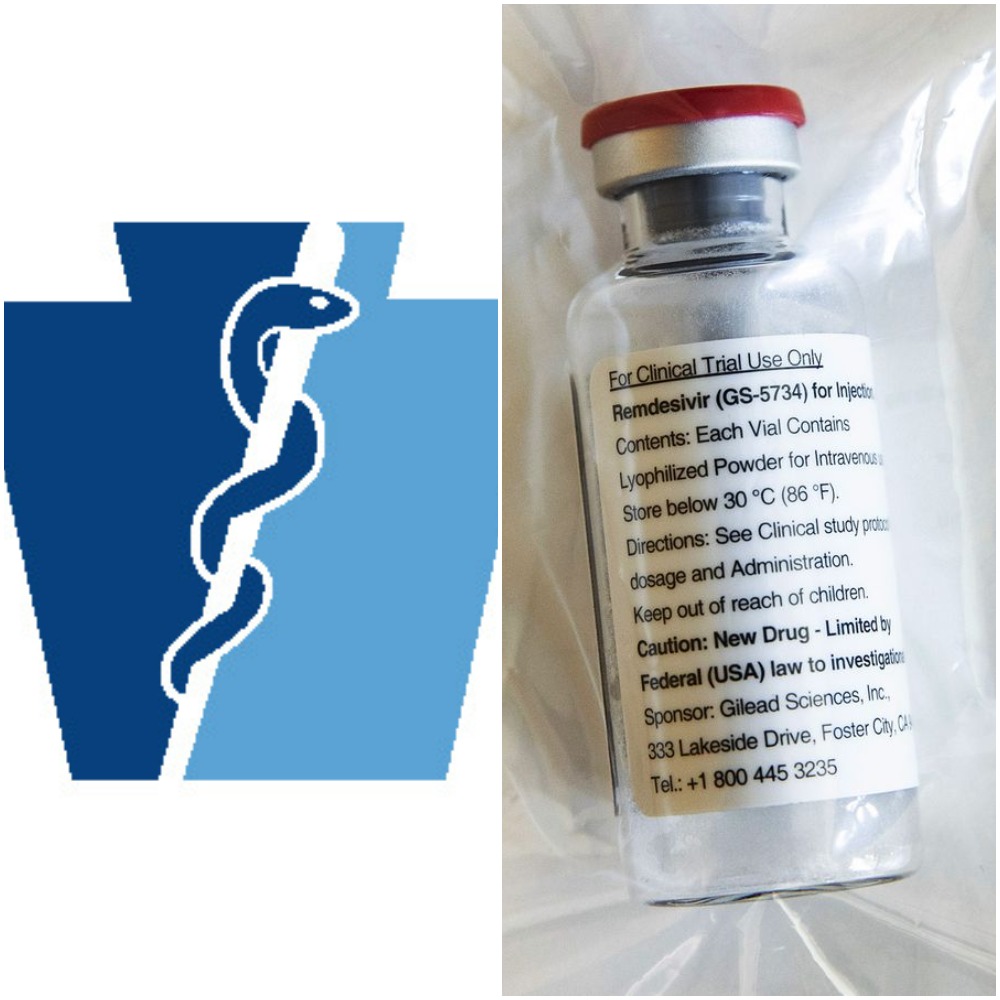
Harrisburg, PA – The Department of Health distributed the fifth shipment of the investigational antiviral medication, remdesivir, to treat patients in the hospital with COVID-19. Today, 4,788 doses of medication were sent to 82 hospitals. The federal government distributed the shipment to the department on Wednesday, June 17.

“The department is working to give our hospitals every opportunity to treat patients with COVID-19,” Secretary of Health Dr. Rachel Levine said. “It is important to note that there is limited information on the safety and effectiveness of using remdesivir to treat people in the hospital with COVID-19. However, it was shown in a clinical trial to shorten the recovery time in some people, which is why the Food and Drug Administration (FDA) has authorized the emergency use of the medication for treatment.”

The Department of Health first distributed 1,200 doses of the medication to 51 hospitals across Pennsylvania on May 12. A second round of 7,938 doses were sent to 79 hospitals on May 15 and May 18, a third round of 8,928 doses was distributed to 81 hospitals on May 22 and a fourth round of 4,400 doses was distributed to 73 hospitals on June 3.

The hospitals that have received these shipments were determined based on the number and severity of COVID-19 patients at the hospital and the facility’s documented usage of previous rounds of remdesivir. The department will continue to work with our federal partners to acquire more doses of this medication to serve more patients across Pennsylvania.

Remdesivir is given to a patient through an IV once per day for up to 10 days, depending on how critically ill the patient is. According to the FDA, remdesivir may help decrease the amount of coronavirus in your body, which may help you get better faster.

Symptoms of COVID-19 can include:

  • Fever
  • Cough
  • Shortness of breath or difficulty breathing
  • Diarrhea
  • Chills
  • Repeating shaking with chills
  • Muscle pain
  • Headache
  • Sore throat
  • New loss of taste or smell

Symptoms may appear in as few as two days or as long as 14 days after exposure. Reported illnesses have ranged from people with little to no symptoms to people being severely ill and dying.

As of 12:00 a.m., June 18, there were 80,236 positive cases of COVID-19 statewide in 67 counties and 6,361 confirmed deaths. Most of the patients hospitalized are 65 or older, and most of the deaths have occurred in patients 65 and older. There have been no pediatric deaths to date. More data is available here.

Pennsylvanians are reminded that mask-wearing is required when visiting businesses in both the yellow and green phases of reopening or in any setting outside the home where social distancing is difficult. Remember: My mask protects you; your mask protects me.

For the latest information for individuals, families, businesses and schools, visit “Responding to COVID-19” on pa.gov.

The Wolf Administration stresses the role Pennsylvanians play in helping to reduce the spread of COVID-19:

  • Wash your hands with soap and water for at least 20 seconds or use hand sanitizer if soap and water are not available.
  • Cover any coughs or sneezes with your elbow, not your hands.
  • Clean surfaces frequently.
  • Stay home to avoid spreading COVID-19, especially if you are unwell.
  • If you must go out for a life-sustaining reason, please wear a mask.

Updated Coronavirus Links: Press Releases, State Lab Photos, Graphics

All Pennsylvania residents are encouraged to sign up for AlertPA, a text notification system for health, weather, and other important alerts like COVID-19 updates from commonwealth agencies. Residents can sign up online at www.ready.pa.gov/BeInformed/Signup-For-Alerts.

DOH Applies for $301 Million Federal Grant to Strengthen COVID-19 Response, More Than $100 Million for Local Health Departments

Harrisburg, PA – Secretary of Health Dr. Rachel Levine today announced that the Department of Health has applied for a more than $301 million grant from the Centers for Disease Control and Prevention (CDC) to strengthen state and local public health capacity in Pennsylvania.

“This funding is essential to our future response to the COVID-19 pandemic in Pennsylvania,” Secretary of Health Dr. Rachel Levine said. “In our application, we earmarked about a third of that funding, more than $100 million, to bolster county and municipal public health departments’ response. We intend to use the balance of the grant funding to expand our testing efforts, case investigating and contact tracing and our data infrastructure to improve our response.”

The Department will also continue its close collaboration with the Philadelphia Department of Public Health, who separately received more than $92 million to assist their work from CDC.

Throughout Pennsylvania, there are six county health departments and four municipal health departments, who have primary responsibility for public health efforts inside their jurisdiction.

The funding will support six primary strategies to respond to the COVID-19 pandemic. These include continuing work to develop a robust testing and contact tracing strategy, supporting local health departments and investing in public health surveillance and laboratory infrastructure. The grant submission focused on ensuring minority and underserved communities are targeted for testing, outreach and we have improved demographic data collection. Here is a breakdown of these six strategies and the corresponding funding:

  1. Strengthen Laboratory Testing: $96,407,366

· Stand up regional hub and spoke testing network to ensure testing is available and accessible across the commonwealth.

· Partner with vendors to deliver testing at long term care facilities, community-based testing sites and other locations with a focus on minority communities.

· Purchase necessary supplies and equipment for the PA DOH’s state laboratory to increase testing capacity at the state level, prioritized for long term care and other congregate care settings. This includes supplies and equipment for both diagnostic and antibody testing.

  1. Advance Electronic Data Exchange at Public Health Labs: $3,133,542

· Implement an IT solution to enhance and expand laboratory results information infrastructure, to enable faster and more complete data exchange and reporting for public health data.

  1. Improve Surveillance and Reporting of Electronic Health Data: $5,048,277

· Implement IT solutions to enable comprehensive, automated, daily reporting to the CDC and others in a machine-readable format. This includes hiring a vendor to populate missing demographic information to ensure state has a complete picture of impact of COVID-19 by race and ethnicity.

  1. Use Laboratory Data to Enhance Investigation, Response and Prevention: $84,815,746

· Develop a robust investigation and contact tracing infrastructure for in depth case investigation and contact tracing including nurses, contact tracers, outbreak response and IT solutions, including a mobile app for exposure notification.  Additionally, this strategy includes funding for six outreach specialists to serve as trusted messengers to reach traditionally underserved communities.

· Target $10 million of funding to research and address health disparities related to COVID-19 and ensure communities and systems are intentionally focused on ensuring a healthy Pennsylvania for all.

  1. Coordinate and Engage with Partners: $103,529,626

· Support the state’s county and municipal health departments (CMHDs) so they can bolster the infrastructure and workforce needed to address local public health needs now and in the future. Create and provide additional programs to LTCF to support response.

  1. Enhance Laboratory, Surveillance, Informatics and other Workforce Capacity: $8,102,129

· Build expertise to support management of the COVID-19 related activities within the commonwealth.

Symptoms of COVID-19 can include:

  • Fever
  • Cough
  • Shortness of breath or difficulty breathing
  • Diarrhea
  • Chills
  • Repeating shaking with chills
  • Muscle pain
  • Headache
  • Sore throat
  • New loss of taste or smell

Symptoms may appear in as few as two days or as long as 14 days after exposure. Reported illnesses have ranged from people with little to no symptoms to people being severely ill and dying.

As of 12:00 a.m., June 18, there were 80,236 positive cases of COVID-19 statewide in 67 counties and 6,361 confirmed deaths. Most of the patients hospitalized are 65 or older, and most of the deaths have occurred in patients 65 and older. More data is available here.

Pennsylvanians are reminded that mask-wearing is required when visiting businesses in both the yellow and green phases of reopening or in any setting outside the home where social distancing is difficult. Remember: My mask protects you; your mask protects me.

For the latest information for individuals, families, businesses and schools, visit “Responding to COVID-19” on pa.gov.

The Wolf Administration stresses the role Pennsylvanians play in helping to reduce the spread of COVID-19:

  • Wash your hands with soap and water for at least 20 seconds or use hand sanitizer if soap and water are not available.
  • Cover any coughs or sneezes with your elbow, not your hands.
  • Clean surfaces frequently.
  • Stay home to avoid spreading COVID-19, especially if you are unwell.
  • If you must go out for a life-sustaining reason, please wear a mask.

Updated Coronavirus Links: Press Releases, State Lab Photos, Graphics

All Pennsylvania residents are encouraged to sign up for AlertPA, a text notification system for health, weather, and other important alerts like COVID-19 updates from commonwealth agencies. Residents can sign up online at www.ready.pa.gov/BeInformed/Signup-For-Alerts.
Gov. Wolf: Mask-Wearing is Required, Critical to Stop COVID-19 Spread

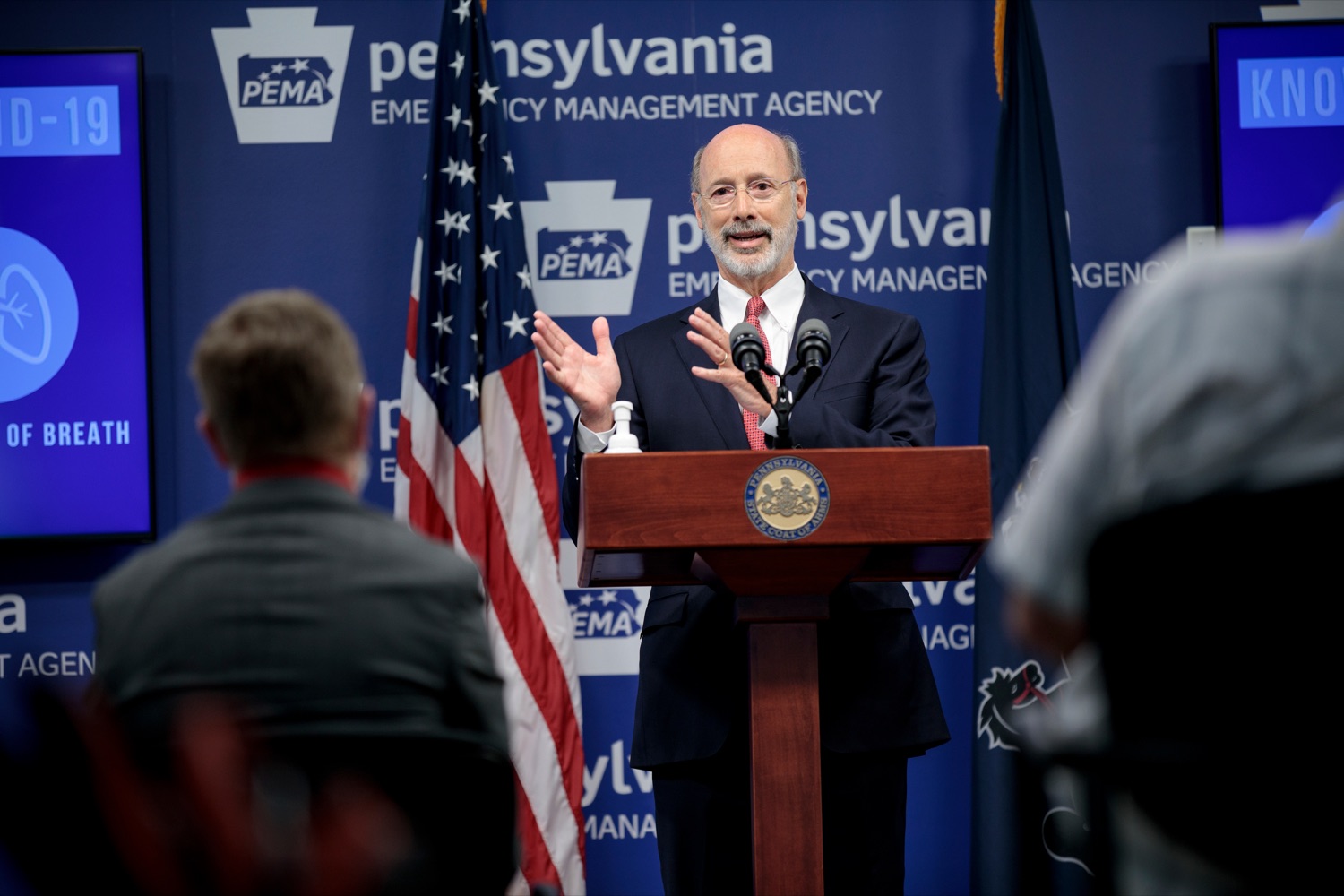
Governor Tom Wolf speaks during a press conference addressing the 2019 Novel Coronavirus (COVID-19) in Pennsylvania, inside PEMA headquarters on Wednesday, June 10, 2020.

Harrisburg, PA – Governor Tom Wolf today reminded Pennsylvanians that mask-wearing is required when entering any business in all counties in the state in both yellow and green phases of reopening. Masks are considered critical in stopping the spread of COVID, now and in preparation for a possible resurgence of the virus in the fall.

The mask requirement is part of Secretary of Health Dr. Rachel’s Levine’s order, “Directing Public Health Safety Measures for Businesses Permitted to Maintain In-person Operations,” which pertains to all counties regardless of the phase of reopening.

“In yellow and green counties, it is required that masks are worn when visiting businesses to protect employees, employees’ families, and communities as a whole,” Gov. Wolf said. “Mask-wearing has proven to be an important deterrent to the spread of the virus, and as more counties move to green and more things reopen, we need to be vigilant in our efforts to continue our mitigation efforts.”

A recent study from Cambridge and Greenwich universities in the United Kingdom found that cloth masks, “even homemade masks with limited effectiveness can dramatically reduce transmission rates if worn by enough people, regardless of whether they show symptoms.”

Peer-reviewed studies published in scientific journals such as The New England Journal of Medicine corroborate the need for masks and the U.S. Surgeon General said that wearing a mask doesn’t impinge on our freedom – it gives us more freedom from unknowingly spreading COVID-19.

The state’s business guidance outlines mask-wearing requirements and additional safety parameters for both employees and customers.

Read more on Gov. Wolf’s Process to Reopen PA here.

Sen. Yaw: Senate Lawmakers to Hold Hearings on Law Enforcement, Criminal Justice Accountability Reforms

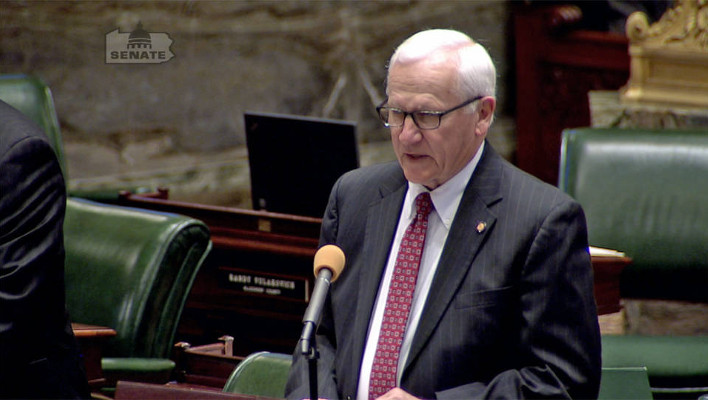
Photo Courtesy PCN

HARRISBURG – Two joint hearings will be held this week in the Senate to examine and develop legislative proposals for addressing law enforcement and criminal justice accountability reforms, said state Sen. Gene Yaw (R-23), a member of the Senate Judiciary and Law and Justice Committees.

WATCH LIVE

On Wednesday, June 17 and Thursday, June 18, beginning at 10AM, the Committees intend to call a wide variety of witnesses, including Pennsylvania Attorney General Josh Shapiro; officials from the Pennsylvania State Police; Kenneth Huston, President, Pennsylvania State NAACP; Lisette M. McCormick, Esq., Executive Director, Pennsylvania Interbranch Commission for Gender, Racial and Ethnic Fairness; Erick Coolidge, Tioga County Commissioner and Board Member, Emergency Response Training and Certification Association, and many others.

“The hearings will evaluate where laws need to be strengthened and other reforms are required,’ Sen. Yaw said.

This week, the Pennsylvania House Judiciary Committee unanimously voted on two comprehensive bills dealing with the vetting and training of police officers.

House Bill 1841 would require a thorough background investigation on an applicant for employment as a law enforcement officer, including a review of the applicant’s employment information and separation records from prior law enforcement employment, before the applicant may be employed. It would also require the establishment and maintenance of an electronic database containing separation records of law enforcement officers for use by other law enforcement agencies when hiring certified law enforcement officers.

House Bill 1910 would require the training of officers on interacting with individuals of diverse racial, ethnic and economic backgrounds; implicit bias training; recognizing and reporting child abuse; and annual training on the use of appropriate force. In addition, the bill would establish better access to mental health evaluations for law enforcement officers.

HHS Secretary: Gov. Wolf’s Disaster Declaration Necessary as Health Care and Social Services Providers Rise to Continued Challenge of COVID-19

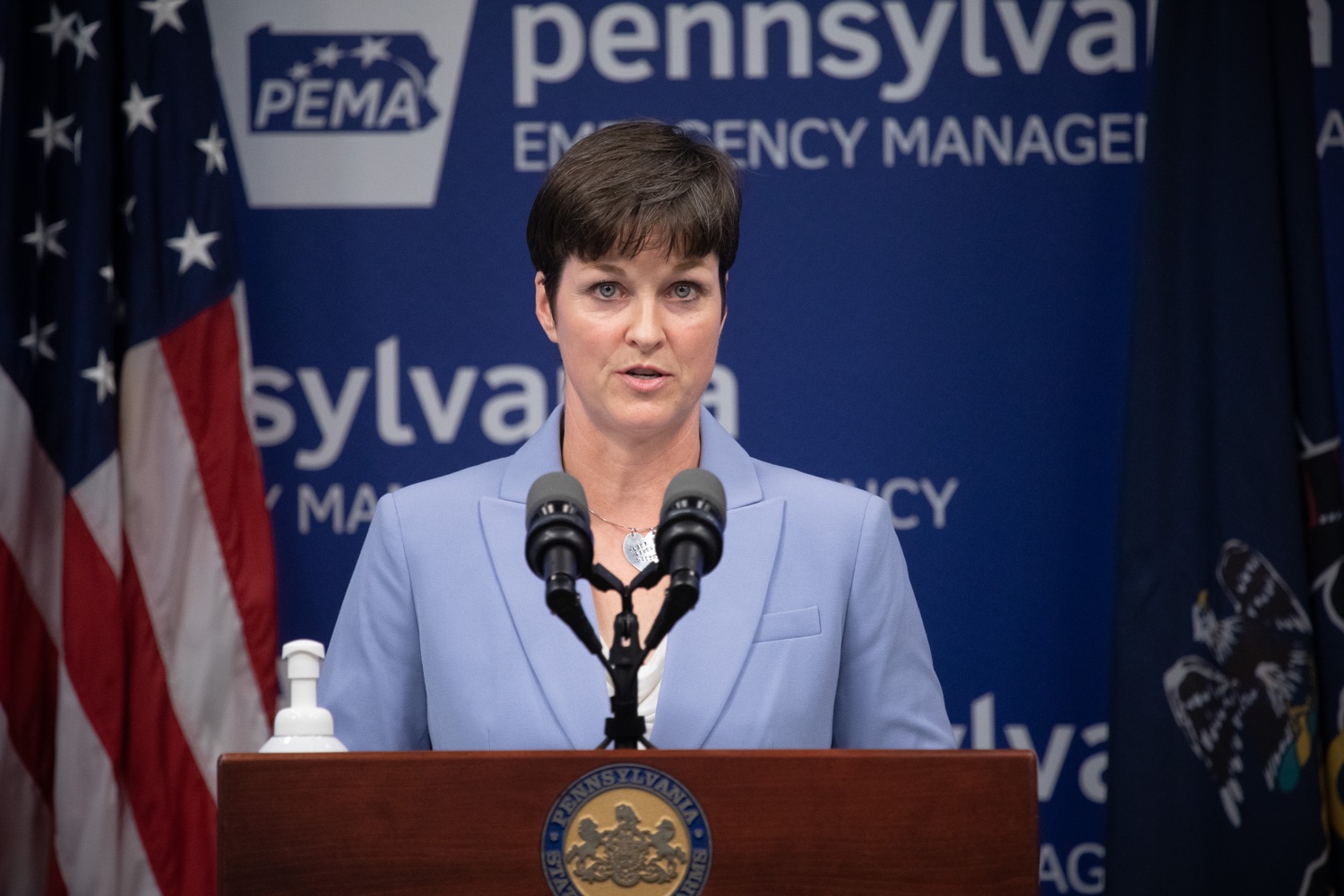
Secretary of Human Services Teresa Miller answers questions from the press. Governor Tom Wolf announced that people with intellectual disabilities and autism and the providers of support services for these vulnerable Pennsylvanians will receive $260 million in CARES Act funding to help continue to provide services during the COVID-19 pandemic. Gov. Wolf was joined by Department of Human Services Secretary Teresa Miller, who outlined to details of funding allocations. JUNE 15, 2020 – HARRISBURG, PA

Harrisburg, PA – Department of Human Services (DHS) Secretary Teresa Miller today outlined regulatory suspensions and operational adjustments permitted under Governor Tom Wolf’s disaster declaration for the COVID-19 pandemic. These flexibilities and waivers are necessary to ensure continuity of services and operations while keeping people served by and working in the health care and social services systems safe from COVID-19, and they remain in effect until notification is issued by DHS.

“COVID-19 has been a challenge unlike anything DHS and our providers and partners have ever faced. We have completely lost our sense of normal, and with that, serious adjustments are necessary to keep people safe,” said Secretary Miller. “This would not be possible without Governor Wolf’s disaster declaration. The waivers and regulatory suspensions permitted under this declaration are still critical, and until directed otherwise by the Wolf Administration, they remain in effect.”

Since March, DHS’ offices have made numerous adjustments to operations and functions to help providers across the health care and social services spectrum continue to operate with necessary social distancing measures in place and responding to the evolving challenge of COVID-19. Many of these waivers are permitted by the federal government but require a state-level disaster declaration be in place. The following are among the regulatory suspensions and operational adjustments that remain in effect under Governor Wolf’s disaster declaration:

Office of Medical Assistance Programs (OMAP)

Without the disaster declaration, waivers of prior authorization and copay requirements that remove barriers to treatment for COVID-19 would be removed, and out-of-state providers and providers who normally do not participate in Pennsylvania’s Medicaid program would lose the ability to work with people covered by Medicaid, limiting access to care for the nearly 3 million Pennsylvanians covered by this program. Additionally, the following flexibilities would be lost:

  • Broader use of telehealth that reduces the need for people to receive care in a doctor’s office;
  • Expanded scopes of practice for nurse practitioners and physician assistances;
  • Continued eligibility for children enrolled in the Children’s Health Insurance Program (CHIP); and,
  • Permitting billing for services at alternate care sites such as drive-up testing facilities.

Office of Long-Term Living (OLTL)

OLTL licenses and oversees more than 1,200 personal care homes and assisted living residences that provide a home and care to more than 45,000 people, a group that often has pre-existing or chronic conditions that create a higher risk for a more serious case of COVID-19. Waivers and guidance in effect due to Governor Wolf’s declaration permit regulatory changes that help keep residents and staff of these facilities safe, including restricting visitation and suspending program requirements that include requirements for meals to be served in congregate settings and group activities.

In addition to waiving requirements for long-term care facilities, OLTL’s waivers permitted under the disaster declaration include guidance for increasing beds at nursing facilities and continuity of services for people served in the community by Community HealthChoices.

Office of Developmental Programs (ODP)

ODP provides oversight and support for approximately 35,000 people with intellectual disabilities and autism living in communities around Pennsylvania and 681 residents of four state centers run by DHS. Under the disaster declaration, service providers are able to reconfigure facilities’ physical space, use alternate space, adjust staffing to allow for quarantine and isolation areas, and make other operational adjustments to keep both residents and staff safe and ensure continuity of operations during the pandemic.

Office of Mental Health and Substance Abuse Services (OMHSAS)

Because of the pandemic and the need for social distancing, many behavioral health counseling and substance use disorder treatment programs have been able to transition to telehealth under Governor Wolf’s disaster declaration. This declaration and the subsequent waivers are necessary both to allow telehealth and so providers are able to bill for services and sessions administered through telehealth. In addition to this, the disaster declaration also allows a waiver permitting take home medication for people using medication-assisted treatment. These waivers have been critical to keep people safe while ensuring continuity of behavioral health and substance use disorder treatment in a manner that keeps staff and patients safe. If these services were disrupted, it could create a serious threat to a person’s well-being, sobriety, recovery, and health.

Office of Child Development and Early Learning (OCDEL)

Under the disaster declaration, OCDEL has been able to:

  • Continue payments to child care providers for enrollments in the Child Care Works (CCW) subsidized child care program, even if the family had sought alternate arrangements for care due to their normal provider choosing to remain closed;
  • Suspend collection of CCW co-pays for families who were not working or using child care without requiring them to give up their spot in care; and
  • Not risk non-compliance with federal child care regulations governing inspections, hiring, and training practices.

Office of Children, Youth, and Families (OCYF)

OCYF oversees Pennsylvania’s child welfare system, which is administered by counties at the local level. State regulations govern the foster care system, and the disaster declaration permits flexibility for foster families entering the system so children can continue to be placed into care if necessary. Additionally, OCYF licenses residential providers for children, and the disaster declaration is necessary to enable operational adjustments to keep staff and children safe from the virus.

Office of Income Maintenance (OIM)

Under Governor Wolf’s disaster declaration Pennsylvanians who qualify for the Supplemental Nutrition Assistance Program (SNAP) but do not receive the maximum benefit for their household size are able to receive an additional payment to total the monthly maximum benefit. This federally funded payment is authorized under the Families First Coronavirus Relief Act and brings an additional $100 million to individuals and families that then gets returned to grocers, farmers markets, and other small businesses and local economies around Pennsylvania.

Additionally, the disaster declaration permits operational adjustments that helps keep public assistance recipients and applicants as well as DHS staff in County Assistance Offices safe by allowing interviews for programs to take place over the phone rather than face-to-face in an office.

As needs and circumstances change, DHS may begin to rescind certain waivers or flexibilities. Notification on changes to or suspensions of current guidance or waivers will come from DHS. Until and unless notified, waivers remain in effect.

“Even as the commonwealth begins to reopen, we cannot get too comfortable and lose sight of the precautions necessary to keep ourselves and others safe from COVID-19, “ said Secretary Miller. “DHS is closely monitoring circumstances for our providers and the people we serve, and the disaster declaration allows us to continue to be responsive to developing needs and rise to the challenge of this pandemic.”

Visit pa.gov for a “Responding to COVID-19” guide or the Pennsylvania Department of Health’s dedicated Coronavirus webpage for the most up-to-date information regarding COVID-19.

Guidance to DHS providers related to COVID-19 is available here.

Gov. Wolf: $157.5 Million Now Available for School Health and Safety Grants to Address COVID-19

Harrisburg, PA — Governor Tom Wolf announced today that The School Safety and Security Committee (SSSC) within the Pennsylvania Commission on Crime and Delinquency (PCCD) has approved the opening of two funding announcements totaling $157.5 million that school entities are immediately eligible to apply for to address COVID-19-related health and safety needs for the 2020-2021 school year. Information about the grants and the application process can be found on PCCD’s School Safety and Security webpage.

“Schools have had to bear a significant operational and financial burden in responding to COVID-19,” Gov. Wolf said. “With the safety and well-being of students at the forefront of their response, this funding is intended to ease some of that burden.”

With the recent passage of Act 30 of 2020 on June 5, a total of $150 million in federal CARES Act funding was transferred to PCCD to be distributed to school districts, area career and technical centers, intermediate units, charter schools, regional charter schools and cyber charter schools to support COVID-19 Disaster Emergency School Health and Safety Grants.  Awards are to be made to over 770 eligible school entities per the formula distribution included in Act 30.

Another $7.5 million was allocated to PCCD to support COVID-19 Disaster Emergency Targeted School Health and Safety Grants for the 2020-2021 school year. Funding will be awarded by the SSSC to intermediate units applying on behalf of nonpublic schools for targeted grants to address COVID-19-related health and safety needs.

Eligible uses for the funding include the purchase of cleaning and sanitizing products; training and professional development of staff on sanitation and minimizing the spread of infectious diseases; equipment purchases; modifying existing areas to support appropriate social distancing of students and staff; providing mental health services and supports; purchasing educational technology for distance learning; and other health and safety programs, items or services necessary to address the COVID-19 disaster emergency.

Per Act 30, school entities are required to apply with PCCD no later than June 30, 2020, to be eligible to receive their funding by July 15, 2020.  Intermediate units must apply on behalf of nonpublic schools in their area no later than July 8, 2020, in order to be eligible to receive awards no later than August 1, 2020.

More information about the Committee, its work, these solicitations and other grant opportunities can be found on PCCD’s School Safety and Security webpage.

First Lady Frances Wolf Partners with Pennsylvania PBS to Deliver Encouraging Messages to Children and Caregivers

Harrisburg, PA – Today, First Lady Frances Wolf offered encouraging messages to children, parents, teachers, and caregivers through the release of a series of videos created in collaboration with Pennsylvania PBS titled #TogetherPennsylvania.

Videos in the series include:

  • a reading of Ruby Finds a Worry by Tom Percival and discussion on how to deal with anxiety with Pennsylvania Secretary of Health Dr. Rachel Levine;
  • a message of encouragement to middle schoolers;
  • a message of congratulations to the Class of 2020;
  • a video visit between the First Lady and Daniel Tiger of Daniel Tiger’s Neighborhood, the animated PBS KIDS series produced by Fred Rogers Productions, sharing ways children can be helpful to their families during the pandemic;
  • ideas on how to have fun while staying at home; and
  • a message of support to parents, caregivers and educators.

“To the children, parents, caregivers, and educators of Pennsylvania: I want you to know that we see you, we appreciate you, and we couldn’t get through this without you,” said First Lady Frances Wolf. “Through this partnership with Pennsylvania PBS, we hope to tap into the human side of what is happening and remind everyone that their perseverance matters. We truly are in this together, and all Pennsylvanians – from our youngest, to our oldest, and everyone in between – play such an important role in our collective well-being.”

The First Lady was joined by Secretary of Health Dr. Rachel Levine, who reminded children that there are people like herself who work to keep them safe and discussed the importance of wearing masks.

“During these uncertain times, it is important to remember to take care of your mental health along with your physical health,” said Dr. Levine. “Some individuals may be experiencing heightened feelings of anxiety or stress, and that is okay. To help decrease these feelings, it is important to take time for yourself away from the news, connect with friends and family and practice good self-care. Also remember, if you or someone you know is experiencing a mental health crisis, help is available.”

#TogetherPennsylvania was designed to represent the enduring spirit of Pennsylvanians as we work side-by-side to help each other during the pandemic.

Debbie Riek, WITF’s director of education, elaborated, “Children find comfort and strength when grown-ups speak to them with calmness and care. Parents find support when a leader in the community shares that she believes that they have been doing a good job at showing how to persevere. Everyone needs reassurance right now. #TogetherPennsylvania acts as that essential hug we want to give our neighbor, but can’t.”

Pennsylvania PBS (PA PBS) is the collective name for the seven public media organizations throughout PA – WHYY Public Media in Philadelphia, WITF Public Media in Harrisburg, Lehigh Valley Public Media in the Greater Lehigh Valley, WPSU Public Media in State College, WQED Public Media in Pittsburgh, WQLN Public Media in Northwestern PA, and WVIA Public Media in Northeastern PA.

PA PBS’s mission is to educate, engage, and inspire the citizens of the Commonwealth through powerful partner collaborations. The #TogetherPennsylvania campaign truly aligns with PA PBS’s educational mission.

“It’s natural right now for children and adults to find themselves going through different emotions from day to day, or even hour to hour. Some moments are joyful. Some aren’t,” said Kate Domico, executive director, Pennsylvania PBS. “As we face what may be the most serious health crisis of our lifetimes, it is clear that the mission of Pennsylvania PBS to serve with exceptional, community-centered outreach like #TogetherPennsylvania takes on new significance.”

Videos that have been released for #TogetherPennsylvania can be found on any PA PBS station’s broadcast channel, social media platform and at learningathomepa.org.

In late March, the Pennsylvania Department of Education (PDE) announced a partnership with the PBS stations in PA to offer instructional programming to communities with limited internet access. The First Lady-Pennsylvania PBS collaboration builds on this effort by providing encouraging content for viewers who may need a reminder that they are not alone in figuring out the next steps in their education or trying to adjust to a different lifestyle.

“Pennsylvania’s PBS stations have been important partners in providing instructional programming to students during the COVID-19 pandemic,” Education Secretary Pedro A. Rivera said. “The Department of Education is proud to collaborate with PBS on this project to ensure families and educators around the state have access to valuable programs.”

PDE is committed to supporting school communities all year round by providing guidance and resources related not only to academic success, but also to the mental health and well-being of students of all ages. This includes resources related to:

As Pennsylvania continues to navigate the COVID-19 pandemic, state leaders are reminding residents of all ages to practice self-care, which includes nurturing their mental health and wellness and reaching out if they need assistance.

The Pennsylvania Department of Health offers the following suggestion to parents and caregivers to best support children during this pandemic:

  • Make yourself available to listen and to talk. Be sure children know they can come to you when they have questions or to express their fears.
  • Remain calm and reassuring. Children are often trusting with adults. It is important to lead by example and remain calm to not pass fear.
  • Teach children everyday actions to reduce the spread of germs. This is an opportunity to create healthy habits. Remind children to cough or sneeze into a tissue or elbow and to wash their hands frequently while singing “Happy Birthday” twice, or for 20 seconds.
  • Model self-care. Nurture your physical and mental health and wellness by ensuring your body is getting the proper nutrients from fruits, vegetables and getting enough sleep.
  • Keep it simple while providing accurate information. Give children information that is truthful and appropriate for the age and developmental level of the child. Avoid making assumptions about who might have COVID-19.
  • Pay attention to what children see or hear on television, radio, or online. Consider reducing the amount of screen time focused on COVID-19. Too much information on one topic can lead to anxiety.
  • If you, your child, or a member of your family are sick, stay home until you are feeling better. In addition, frequently clean commonly touched surfaces in your home such as countertops, light switches and cell phones.

Up to date information on COVID-19 health and safety precautions can be found on the Pennsylvania Department of Health website.