Wolf Administration Provides Guidance to Resume High School and Other Summer Sports

Harrisburg, PA – The Wolf Administration today issued preliminary guidance for high school and recreational sports teams to resume voluntary workouts and other in-person activities in the state’s yellow and green phases. The guidance includes college and professional sports.

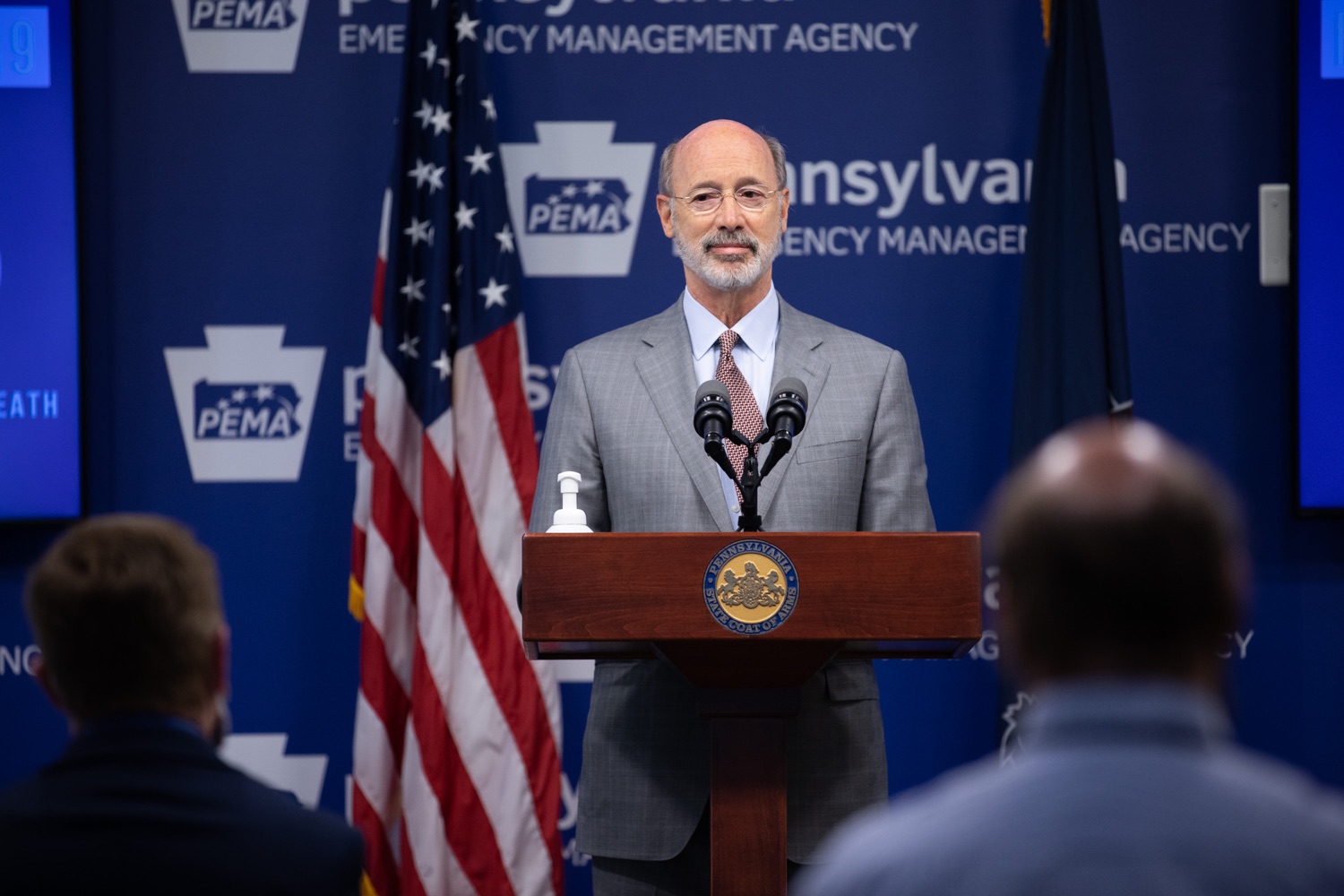
“Pennsylvania has some of the best athletes and teams in the country and they can now begin to safely return to organized sports,” said Gov. Wolf. This guidance balances keeping student athletes safe from COVID-19 while allowing them to participate in an important part of their lives.

“This is another step toward reopening our state and getting things back on track. As students and teammates get ready to train and compete, it’s important that they follow precautions to protect each other and their community from the risk of COVID-19.”

The preliminary guidance is a starting point for summer sports teams and the Wolf Administration will continue to work with stakeholders. The guidance for fall, winter and spring sports seasons may be updated.

Public and private K-12 schools under the Pennsylvania Interscholastic Athletic Association (PIAA) and the Pennsylvania Independent Schools Athletic Association (PISAA) in the yellow and green phase can resume voluntary sports-related workouts. Schools must first develop an athletic health and safety plan in alignment with the Department of Education’s Preliminary Guidance for Phased Reopening of Schools guidance, that is approved by the local board of directors and posted on the school’s website.

Recreational and amateur sports teams in the green phase that are not affiliated with a K-12 school can hold in-person activities, including games and practices. Examples include basketball, hockey, field hockey, football, soccer, swimming, baseball, softball, lacrosse, gymnastics and kickball. Youth sports organizations should follow CDC guidelines.

Gatherings of all participants, including players, athletic staff, officials and spectators are limited to 25 in the yellow phase and 250, or 50 percent capacity, in the green phase, as outlined in the Process to Reopen Pennsylvania.

League and team staff must review CDC guidance for youth sports. Coaches and other adult personnel should wear face coverings and screen athletes for symptoms before practices and games. All participants must follow safe hygiene and social distancing practices, avoid unnecessary physical contact, and clean and disinfect equipment and facilities. Teams are encouraged to stagger drop-off and pick-up times at outdoor locations and designate entrances and exits to facilities.

Parents and other spectators should practice social distancing, wear face coverings and not enter the field or bench areas. Parents should monitor children for COVID-19 symptoms and evaluate children at higher risk for severe illnesses.

College sports sanctioned by the National Collegiate Athletic Association (NCAA), including intramural and club sports, can resume in-person activity after developing an athletic health and safety plan in alignment with PDE’s Postsecondary Education Institutions and Adult Education Programs guidance.

Professional sports can resume immediately. Teams or leagues in the yellow phase, or if more than 250 people are on site in the green phase, must have a COVID-19 safety plan approved by the Department of Health.

The guidance released today provides additional information. 

The Wolf Administration also updated guidance on outdoor recreation today and previously released summer guidance for camps, pools, and child care.

All counties are in the yellow or green phase.

Lycoming County has 168 total positive cases, 164 confirmed and 4 probable. Additionally, 17 deaths all occurring in nursing homes according to Wednesday DOH report

Department of Health Provides Update on COVID-19,

410 Positives Bring Statewide Total to 76,846

Lycoming County has 168 total positive cases, 164 confirmed and 4 probable. Additionally, 17 deaths all occurring in nursing homes according to Wednesday DOH report.

Harrisburg, PA – The Pennsylvania Department of Health today confirmed as of 12:00 a.m., June 10, that there are 410 additional positive cases of COVID-19, bringing the statewide total to 76,846. All 67 counties in Pennsylvania have cases of COVID-19.

There are 6,062 total deaths attributed to COVID-19, an increase of 48 new deaths. County-specific information and a statewide map are available here.

“With more than half of the state now in the green phase of the process to reopen, it is essential that we continue to take precautions to protect against COVID-19,” Secretary of Health Dr. Rachel Levine said. “Each of us has a responsibility to protect ourselves, our loved ones and others by wearing a mask, maintaining social distancing and washing our hands frequently. Together we can protect our most vulnerable Pennsylvanians, our essential workers and our healthcare system.”

There are 631 patients who have a positive serology test and either COVID-19 symptoms or a high-risk exposure, which are considered probable cases and not confirmed cases. There are 467,329 patients who have tested negative to date. Of the patients who have tested positive to date the age breakdown is as follows:

  • Nearly 1% are ages 0-4;
  • Nearly 1% are ages 5-12;
  • Nearly 2% are ages 13-18;
  • 6% are ages 19-24;
  • Nearly 37% are ages 25-49;
  • 25% are ages 50-64; and
  • 28% are ages 65 or older.

Most of the patients hospitalized are ages 65 or older, and most of the deaths have occurred in patients 65 or older. More data is available here.

In nursing and personal care homes, there are 16,309 resident cases of COVID-19, and 2,845 cases among employees, for a total of 19,154 at 623 distinct facilities in 45 counties. Out of our total deaths, 4,199 have occurred in residents from nursing or personal care facilities. A county breakdown can be found here.

Approximately 5,837 of our total cases are in health care workers.

For the latest information for individuals, families, businesses and schools, visit “Responding to COVID-19” on pa.gov.

Currently, all 67 counties are in the yellow or green phase of reopening.

The Wolf Administration stresses the role Pennsylvanians play in helping to reduce the spread of COVID-19:

  • Wash your hands with soap and water for at least 20 seconds or use hand sanitizer if soap and water are not available.
  • Cover any coughs or sneezes with your elbow, not your hands.
  • Clean surfaces frequently.
  • Stay home to avoid spreading COVID-19, especially if you are unwell.
  • If you must go out for a life-sustaining reason, please wear a mask.

Statewide – The Wolf Administration has since noon, June 9:

Updated Coronavirus Links: Press Releases, State Lab Photos, Graphics

All Pennsylvania residents are encouraged to sign up for AlertPA, a text notification system for health, weather, and other important alerts like COVID-19 updates from commonwealth agencies. Residents can sign up online at www.ready.pa.gov/BeInformed/Signup-For-Alerts.

Gov. Wolf: Updated Business Guidance on Outdoor Recreation Available for Yellow and Green Phases of Reopening

Harrisburg, PA – Governor Tom Wolf today released updated guidance regarding the types of outdoor recreation that businesses may offer during the yellow and green phases of reopening, and how they may do so safely, as the commonwealth continues to open its own public recreation facilities across the state.

“As summer quickly approaches and all 67 counties are in either yellow or green phases of reopening, it was important to provide businesses with the guidance necessary to safely reopen or plan for reopening as they reach the green phase,” Gov. Wolf said. “I want all Pennsylvanians to remain active and to enjoy all the recreation the commonwealth has to offer, but we must do so safely and with social distancing top of mind.”

The new guidance allows outdoor activities like mountain biking, outdoor miniature golf, motorsports venues, go carts, rock climbing, disc golf, paintball, horse riding, tennis, archery or shooting, and other similar facilities that conduct operations outdoors to resume operation in yellow phase counties.

Businesses that operate these outdoor recreational activities may resume operations but may not operate indoor spaces for public or visitor use other than restrooms and ticketing and entry locations.

Online ticketing and timed or staged entry are strongly encouraged to manage occupancy rates and physical distancing.

These businesses must ensure that visitors practice social distancing and do not congregate at entry gates, kiosks, concession stands, or similar locations.

The announcement comes as Pennsylvania’s own recreational facilities are reopening to the public, with facilities in state parks and forests such as cabins, cottages, lodges, and yurts opening statewide on Friday, June 12, and most state park swimming pools in yellow phase and green phase counties reopening as of Saturday, June 13. As of Saturday, June 6, all 58 state park beaches are open to swimming.

Capacity at beaches and pools will be limited to 50 percent of the normal facility capacity and mitigation measures, including restricting visitor parking, controlling facility access, ensuring social distancing and the wearing of face masks when not in the water, must remain in place. All Centers for Disease Control and Prevention (CDC) guidance remains in effect.

The updated guidance can be found here.

More information on Governor Wolf’s Process to Reopen Pennsylvania can be found here.

Keep up with state park and forest facility reopenings using the DCNR Reopening Map.

Capitol steps announcement by PA lawmakers on HR836 passage

Pennsylvania lawmakers are planning a press conference on the Capitol steps today at noon and News Talk WMPT will be there to cover it.

Speakers expected to attend include Senator Doug Mastriano who sponsored SB323 and Representative Russ Diamond who voted in favor of HR836.

Story developing.

Wolf Admin: Prepare for Severe Summer Weather During Global COVID-19 Pandemic

Harrisburg, PA – The Wolf Administration is urging the public to consider how COVID-19 could change or alter emergency preparedness plans leading into summer, when we face the threat of severe weather that comes with warmer weather.

“The Atlantic hurricane season started just last week and while Pennsylvania doesn’t often take a direct hit like coastal states, we face weather systems that can cause flooding or significant power outages,” said PEMA Executive Deputy Director Jeff Thomas. “The reality of COVID-19 will change the way people plan for emergencies, and the time to think about those changes is now, not in the middle of an emergency.”

Thomas said that families should review their emergency kits and plans. Emergency kits should be updated with COVID-19 necessities such as cloth masks, hand sanitizer, and medication. Additionally, if Pennsylvanians plan to host friends or family who evacuate their homes for any reason, they should consider the need for additional emergency supplies, and plan for physical distancing measures to protect family or vulnerable loved ones.

Emergency managers, public health professionals and state, county and local officials are taking measures to reduce the possible spread of COVID-19 among people who seek safety in a disaster. Tips to prepare to shelter from severe weather include:

  • Knowing where to shelter if you do not typically shelter at home;
  • Following guidance on when and where to shelter;
  • Staying informed with weather alerts through cell phone alerts, a NOAA weather radio or twitter alerts; and
  • Prepare an emergency kit with personal items you need in an emergency.

“Any actions to protect yourself from immediate threats to life safety should take priority, such as sheltering during severe weather,” Department of Health Deputy Secretary for Health Preparedness and Community Protection Ray Barishansky said. “However, whenever possible, all COVID-19 protective action guidance should be followed as long as it does not slow response or cause greater harm. It is essential that we act now to prepare for severe weather this summer.”

Families should have multiple ways to get severe weather alerts. A NOAA weather radio is an inexpensive and portable option that provides location-based weather alerts. Most models are battery-operated, but others can be powered via a USB connection, solar or by manually cranking a handle on the unit to store power.

Many media provide local weather alerts via text message, social media or apps that can be downloaded to a cellphone. Residents are encouraged to select one or more trusted media outlets, and sign up for the AlertPA notification system by CodeRED for emergency and weather related alerts, health notifications, building alerts, and other updates from commonwealth and federal agencies. Keep in mind there should never be a cost for weather alerts, other than data and texting charges that may be levied by a wireless carrier.

There are five National Weather Service Offices that service Pennsylvania, and each makes weather information available via Twitter and Facebook: NWS Cleveland (Twitter, Facebook); NWS Pittsburgh (Twitter, Facebook); NWS State College (Twitter, Facebook): NWS Philadelphia/Mt. Holly (Twitter, Facebook); and NWS Binghamton (Twitter, Facebook.) Users do not need a social media account to access the information shared on either platform.

For information and updates related to COVID-19, visit the Department of Health website at www.health.pa.gov or Facebook and Twitter.

More information about how to prepare for an emergency, including specific information for people with specialized needs such as pets or access and functional needs, is available on the ReadyPA webpage.

Gov. Wolf responds to passage of HR836

BY: TODD BARTLEY, NEWS TALK WMPT, NEWS@TALKWILLIAMSPORT.COM

Governor Wolf authored a letter to Members of the House of Representatives imploring them to keep his Emergency Declaration in place on Tuesday.

Wolf concluded the 3-page letter with, “Passage of House Resolution 836, and the resulting premature termination of the Proclamation of Disaster Emergency for the COVID-19 pandemic, will be disastrous for the Commonwealth.  It will potentially undo all the progress made to combat the spread of COVID-19 and to save the lives of Pennsylvanians.  For the safety and welfare of all Pennsylvanians, I urge you to vote against the passage of House Resolution 836.  Thank you for your consideration.

2020.6.9 HR 836 House

News Talk WMPT reach Lyndsay Kensinger, Press Secretary for Governor Wolf for reaction to the passage of HR836.

UPDATE: 11:00 P.M.

Kensinger updated her comments as follows: “When the concurrent resolution is presented to him, as the Constitution requires, he will disapprove it. Until then, no action will be taken. The disaster proclamation has not been terminated by the House or Senate’s actions. Only the governor can terminate the disaster emergency.”

“This action does not terminate the current disaster proclamation. When the concurrent resolution is presented to him, as the Constitution requires, he will disapprove it. That said, this resolution would not affect the Secretary of Health’s order including business closure orders, building safety orders, and business safety orders, and therefore the Administration’s phased reopening plan and associated orders would remain in place even if it passes.”

She added, “Practically speaking, if the resolution becomes effective, the Governor must end the March 6, 2020 disaster proclamation, meaning that certain powers  granted to him by law to effectively deal with the state’s response to the pandemic will end.

Legislative enactments tied specifically to the March 6, 2020 disaster proclamation, which were passed specifically to help Pennsylvanians and Pennsylvania businesses during the pandemic, may expire upon the termination of the COVID-19 disaster declaration.  These include, among others:  

  • Unemployment Compensation eligibility requirements and employer relief from charges.
  • Property tax relief.  
  • Educational tax credit waivers.
  • Certification requirements under the public-school code and child protective services law.

Ending the declaration removes many practical aspects of the state’s response to this disaster, including the authority to activate the National Guard to help with nursing homes; deploying commonwealth personnel, services and distributing supplies and equipment; implementing emergency funding; suspending rules and regulations that would hinder or delay necessary action in coping with the emergency; and using all available resources of the commonwealth government and its political subdivisions to deal with the emergency.

The state may also lose federal public and individual disaster assistance, and any additional state funding sources available through transfer of unused General Fund dollars.

During a state of emergency declared by the governor, commonwealth agencies and departments may implement their emergency assignments without regard to procedures required by other laws pertaining to performing their work, entering into contracts, purchasing supplies and equipment, and employing temporary workers.”

With the actions of the PA House and Senate this evening it is expected Governor Wolf will be attending the press conference on Wednesday and News Talk WMPT will be in attendance.

Gov. Wolf to News Talk WMPT on masks at businesses: “They’re not required”

Pennsylvania Governor Tom Wolf answering questions from the press. Governor Tom Wolf today announced a $225 million statewide grant program to support small businesses that were impacted by the COVID-19 public health crisis and subsequent business closure order. Harrisburg, PA — June 8, 2020

BY: TODD BARTLEY, NEWS TALK WMPT, NEWS@TALKWILLIAMSPORT.COM

On Monday as the press conference with Governor Wolf was concluding, the final question was posed by Todd Bartley (photo left) of News Talk WMPT.

QUESTION: Governor, you had I believe on social media said earlier today that masks are required. Previously you said they’re the recommended. Is there a difference in the guidance on masks going forward for entering a business?

Governor Wolf responded:

“They’re not required.

Let me make sure I say this right cuz I’m not a lawyer.

I’m not sure, whether they’re required or not though – let me just put a plug in for wearing masks.

The mask protects other people.

Obviously if you’re yelling, I think we’re learning more about that that is there less effective.

But and just general conversation if you’re in a room with somebody else or you’re close to somebody else you actually are doing them a favor by wearing a mask.

So I will find out, we’ll find out what with the legality is.

But but we really ought to be wearing masks and stores should be requiring that of their customers.

They can do that with shirts and shoes they should certainly be able to do it with masks to try to keep their other customers safe.”


The Official Facebook Page of Governor Wolf posted the following on June 7, 2020:

Pennsylvanians are required to wear cloth face masks when visiting businesses and are strongly encouraged to wear a mask anytime they leave their homes.

Remember: My mask protects you. Your mask protects me.

chart listing what masks do and don't do. For example: While they do protect people from getting COVID from the wearer of the mask, they don't effectively protect the wearer from COVID.

With the actions of the PA House and Senate this evening it is expected Governor Wolf will be attending the press conference on Wednesday and News Talk WMPT will be in attendance.

Rep. Everett on HR836 passing in the House: “We are Putting PA Back to Work and Back to Life”

Tuesday evening State Representative Garth Everett informed his constituents about HR836 passing the PA House.

‼️BREAKING: HR836 PASSES 121-81 IN THE HOUSE‼️

Tonight the PA House and Senate passed a resolution which requires by law that the governor must end the emergency declaration.

Under the Pennsylvania Constitution, the General Assembly has the authority to terminate a state of disaster emergency at any time by concurrent resolution. Upon adoption of the resolution, the governor must issue an executive order or proclamation ending the state of disaster emergency. Today’s House vote completes the concurrent resolution process.

A Note From Rep. Everett: We are Putting PA Back to Work and Back to Life

Back in March, the disaster declaration, ratcheting down PA and flattening the curve of the COVID-19 made sense. Three months later, the curve is flattened. The peak number of cases was two months ago at about 2,000 per day and has decreased to below 1,000 per day for the last three weeks despite more than half the state being partially opened up.

The point is that there is no longer a need for the Disaster Declaration and Governor Tom Wolf single-handedly deciding what businesses can be open, how many people can be in a restaurant and how we worship. It is time to allow the citizens of Pennsylvania to decide how to safely live and run their businesses.

We now know who the vulnerable members of our population are — the elderly and those with certain pre-existing medical conditions. It is time we protect and isolate the vulnerable rather than restricting the entire population of the state.

Ending the Disaster Declaration does not mean that COVID-19 is gone, but that it is time to get state government back to normal, and for the citizens of Pennsylvania to take charge of their lives and health.

Pa. legislature passes resolution to revoke Gov. Wolf’s coronavirus emergency order

Benjamin Pontz, PA Post

Action sets up a court fight over whether governor can veto the move

Pennsylvania’s Republican-controlled General Assembly passed a resolution to terminate the emergency Gov. Tom Wolf issued in March and extended earlier in June that has provided the legal basis for much of the Commonwealth’s response to the coronavirus.

After a four-hour debate in which 30 of the 50 senators spoke, the state Senate passed the resolution 31-19 with two Democrats joining Republicans shortly before 8:00 p.m. Almost immediately, the House took up the resolution on concurrence and passed it 121-81.

The action sets up a potential legal battle over next steps. For weeks, legislative Republicans have maintained that because Title 35 of state code says the governor “shall” sign a concurrent resolution that ends the governor’s disaster declaration, he has no choice in the matter such that passage by both chambers effectively ends a declared emergency.

“The governor will be statutorily required to issue an order terminating the declaration in compliance with section 7301 if the House passes the resolution as adopted by the Senate,” tweeted Senate GOP leadership spokesperson Jennifer Kocher. “He has no discretion in this matter.”

Democrats have countered that according to the state constitution, for any concurrent resolution to have the force of law, a signature by the governor or a two-thirds override by both chambers of the legislature is required.

Wolf spokesperson Lyndsay Kensinger said the governor will disapprove (effectively veto) the resolution, but said that, even if it were to take effect, it would not affect the administration’s phased reopening plan.

“That said, this resolution would not affect the Secretary of Health’s order including business closure orders, building safety orders, and business safety orders, and therefore the Administration’s phased reopening plan and associated orders would remain in place even if it passes,” she said.

Senate Minority Leader Jay Costa (D-Allegheny) said that during the Senate debate that that is because of the Secretary of Health’s prerogatives under the Disease Prevention and Control Law of 1955.

House Majority Leader Bryan Cutler (R-Lancaster) agreed that some of the health orders will stand because they were issued under different statutory authority, but he objected to the idea that the governor’s disapproval could be the final word on the issue.

House GOP spokesperson Mike Straub said that the Chief Clerk of the House will transmit a copy of the resolution to the Secretary of the Commonwealth as an official action of the General Assembly under Title 35 to terminate a state of emergency.

“This will not go to Wolf. The declaration is over, and it will be published in the Pennsylvania bulletin,” he said.

A source close to the GOP leadership predicted that Wolf will take the legislature to court.

[Related: Clash between Gov. Wolf and GOP legislature hinges on different understandings of power under the Pa. Constitution]

The Senate debate

During the Senate debate Tuesday, Republicans tended to focus their arguments on separation of powers issues and the impact the shutdown has had on Pennsylvanians.

“We are here in response to the voices that put us here,” said state Sen. Scott Martin (R-Lancaster).

“He’s our governor. He’s not our king,” said state Sen. David Argall (R-Berks, Schuylkill). “The General Assembly never ever intended to grant this governor or any governor, the royal powers of the king. This legislation is an attempt to clarify our checks and balances.”

“At the stroke of a pen, back in March, the governor chose winners and losers,” said state Sen. Doug Mastriano (R-Adams, Cumberland & Franklin), who sponsored a companion resolution in April. “At the stroke of the pen, he selected essential and non-essential, life sustaining and non-life sustaining. At the stroke of a pen, life and death. It is not hyperbole to say — looking back at the history of our Commonwealth — that we’ve never had a more powerful governor in the history of our state.”

Senate Minority Leader Jay Costa (D-Allegheny) suggested that even if the resolution passes, it would not necessarily stop the business closure orders because the Secretary of Health has authority under the Disease Prevention and Control Act of 1955 to close businesses, he said.

Senate Majority Leader Jake Corman (R-Centre) countered that the Secretary of Health has the powers only over those who are sick.

» Sign up for The Context, our daily newsletter about governing and governments across Pennsylvania.

Democrats tended to focus on the potential loss of federal funding should Pennsylvania become the first state to end its emergency declaration as well as the ongoing risks of COVID-19.

State Sen. Lindsey Williams (D-Allegheny) pointed to Title 42, Section 5191 of the U.S. Code, which states, “As a part of [a request for assistance], and as a prerequisite to emergency assistance under this chapter, the Governor shall take appropriate action under State law and direct execution of the State’s emergency plan.”

Williams dismissed an assurance that Mastriano received from a White House official as insufficient justification to protect the Commonwealth.

“I’m a licensed attorney. I want a legal opinion. I want citations to statutes, regulations, and legal authority to justify that legal opinion,” she said.

State Sen. Maria Collett (D-Bucks, Montgomery) added, “I am not willing to bet my constituents’ livelihoods on the whims of this president.”

But Democrats also questioned the capacity of the legislature to act responsibly in a pandemic.

State Sen. Art Haywood (D-Montgomery, Philadelphia) noted that, on April 15, near the peak of COVID-19 cases in Pennsylvania, the legislature passed legislation to reopen several sectors of the economy.

State Sen. Katie Muth (D-Berks, Chester, Montgomery), responding to Republican arguments that stay-at-home and business closure orders infringed on people’s personal freedom, said, “Your freedom does not give you the right to put someone else at risk.”

Two Democrats did express reservations about the governor’s use of executive power, but neither voted for the resolution.

State Sen. Lisa Boscola (D-Lehigh, Northampton) said she would have been inclined to support the version of HR 836 that passed the House, which terminated the disaster declaration only to the extent that it treats some businesses differently than others, but that the Senate version, as amended Tuesday, went too far because it might jeopardize federal funding.

“As frustrated as I am with the approach that this administration has taken with the Lehigh Valley specifically, I am not going to put federal dollars in jeopardy. I can’t do that. I am going to set aside my personal feelings about how I feel about the administration’s approach to the Lehigh Valley … I’m just going to vote in the financial interests — the best interests — of all Pennsylvanians,” Boscola said.

Legislators do not agree on what happens if the House concurs with the Senate’s amendments to HR 836. Democrats maintain that the governor can simply disapprove of the resolution (effectively a veto), which would require two-thirds of both chambers to override for the resolution to take effect. That is the process prescribed for concurrent resolutions in the state. constitution.

But Republicans maintain that Title 35 of the Pennsylvania Consolidated Statutes require the governor to sign the resolution.

“The governor will be statutorily required to issue an order terminating the declaration in compliance with section 7301 if the House passes the resolution as adopted by the Senate,” tweeted GOP leadership spokesperson Jennifer Kocher. “He has no discretion in this matter.”

Former Gov. Tom Corbett (R) suggested he agreed with the Democrats’ interpretation in an interview when this resolution was moving through the House in May, and Elizabethtown College political science professor Kyle Kopko predicted the matter may end up being resolved in the courts.

Corman conceded the governor could issue a new emergency declaration that has narrower constraints and said Republicans would be happy to work with him on that, but he said that he refuses to become “comfortable” with the new normal Gov. Wolf has signaled is forthcoming.

“The governor is a good man. He and the Secretary of Health are doing absolutely everything they can to fight this virus,” said Corman. “It’s not about his interest and desire to keep the people of Pennsylvania healthy. This is a free society, a free society where we fought and died … for a government of the people, by the people, and for the people. If we become complacent and we allow our civil liberties to go away because of fear, they may never come back.”

State Sen. Andy Dinniman (D-Chester) acknowledged Republicans’ concerns about checks of balances, conceding, “Clearly, we do not have a balance of power that is appropriate.”

He suggested that a proposed constitutional amendment that would require legislative assent to a disaster emergency declaration after 30 days is a step he would support, and he also proposed a constitutional convention to address the balance of power between branches. But he said he could not support HR 836 because COVID-19 is still an active pandemic.

The proposed amendment to the state constitution is currently in the Senate as SB 1166 and passed the Senate Appropriations Committee Tuesday for possible consideration Wednesday. Amending Pennsylvania’s constitution requires approval by voters after passing both chambers of the legislature in two consecutive legislative sessions.

» PA Post is an independent newsroom covering policy and government in Pennsylvania. For more, go to www.papost.org. News Talk WMPT is an affiliate of PA Post.

State Senator Yaw votes to end Gov. Wolf Emergency Declaration

Photo Courtesy PCN

BY: TODD BARTLEY, NEWS TALK WMPT, NEWS@TALKWILLIAMSPORT.COM

BENJAMIN PONTZ, PAPOST

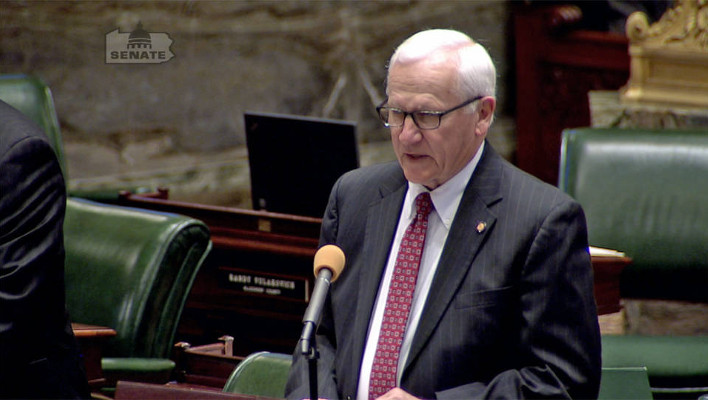
Senator Gene Yaw Tuesday evening voiced his support of HR836 which included language from SB323 to end the Emergency Declaration issued by Governor Tom Wolf in March at the inception of the coronavirus pandemic.

Reached Tuesday evening by News Talk WMPT, Yaw stated, “If the PA House approves HR836 the Governor would then have the burden of making public notices that are cited in the legislation ending the Emergency Declaration.”

Yaw went onto say, “this is the type of legislative action that does not need his (Gov. Wolf) approval. the legislature is trying to limit hos power.”

A constitutional amendment is being taken up tomorrow in the Senate. It sets out to boost the legislature’s involvement in emergency declarations and limit them to 30 days before legislative action would be required to renew or extend them.

The video of the floor speech made by Senator Yaw is provided (full text listed below):

https://www.facebook.com/SenatorGeneYaw/videos/2626892857524316/


The audio of the floor speech made by Senator Yaw is provided (full text listed below):


Benjamin Pontz of PA Post authored the following in the immediate aftermath of the vote this evening.

Senate GOP passes resolution to end coronavirus emergency declaration, sending it back to House for concurrence

Separately, constitutional amendment to boost legislature’s involvement in emergency declarations advances to final consideration in Senate

The Pennsylvania Senate passed a concurrent resolution Tuesday afternoon that directs the governor to end the emergency declaration that grants him expansive powers to manage the coronavirus pandemic. The resolution will head back to the House for concurrence, which could happen as soon as Tuesday night.

Two Senate Democrats broke ranks to join a unanimous Republican caucus in passing the resolution, 31-19. The resolution passed the House on May 28 with eight Democratic votes.

During a debate that spanned four hours and grew heated on both sides of the aisle, 30 of the chamber’s 50 senators spoke.

Republicans tended to focus their arguments on separation of powers issues and the impact the shutdown has had on Pennsylvanians.

“We are here in response to the voices that put us here,” said state Sen. Scott Martin (R-Lancaster).

“He’s our governor. He’s not our king,” said state Sen. David Argall (R-Berks, Schuylkill). “The General Assembly never ever intended to grant this governor or any governor, the royal powers of the king. This legislation is an attempt to clarify our checks and balances.”

“At the stroke of a pen, back in March, the governor chose winners and losers,” said state Sen. Doug Mastriano (R-Adams, Cumberland & Franklin), who sponsored a companion resolution in April. “At the stroke of the pen, he selected essential and non-essential, life sustaining and non-life sustaining. At the stroke of a pen, life and death. It is not hyperbole to say — looking back at the history of our Commonwealth — that we’ve never had a more powerful governor in the history of our state.”

Senate Minority Leader Jay Costa (D-Allegheny) suggested that even if the resolution passes, it would not necessarily stop the business closure orders because the Secretary of Health has authority under the Disease Prevention and Control Act of 1955 to close businesses, he said.

Senate Majority Leader Jake Corman (R-Centre) countered that the Secretary of Health has the powers only over those who are sick.

Democrats tended to focus on the potential loss of federal funding should Pennsylvania become the first state to end its emergency declaration as well as the ongoing risks of COVID-19.

State Sen. Lindsey Williams (D-Allegheny) pointed to Title 42, Section 5191 of the U.S. Code, which states, “As a part of [a request for assistance], and as a prerequisite to emergency assistance under this chapter, the Governor shall take appropriate action under State law and direct execution of the State’s emergency plan.”

Williams dismissed an assurance that Mastriano received from a White House official as insufficient justification to protect the Commonwealth.

“I’m a licensed attorney. I want a legal opinion. I want citations to statutes, regulations, and legal authority to justify that legal opinion,” she said.

State Sen. Maria Collett (D-Bucks, Montgomery) added, “I am not willing to bet my constituents’ livelihoods on the whims of this president.”

But Democrats also questioned the capacity of the legislature to act responsibly in a pandemic.

State Sen. Art Haywood (D-Montgomery, Philadelphia) noted that, on April 15, near the peak of COVID-19 cases in Pennsylvania, the legislature passed legislation to reopen several sectors of the economy.

State Sen. Katie Muth (D-Berks, Chester, Montgomery), responding to Republican arguments that stay-at-home and business closure orders infringed on people’s personal freedom, said, “Your freedom does not give you the right to put someone else at risk.”

Two Democrats did express reservations about the governor’s use of executive power, but neither voted for the resolution.

State Sen. Lisa Boscola (D-Lehigh, Northampton) said she would have been inclined to support the version of HR 836 that passed the House, which terminated the disaster declaration only to the extent that it treats some businesses differently than others, but that the Senate version, as amended Tuesday, went too far because it might jeopardize federal funding.

“As frustrated as I am with the approach that this administration has taken with the Lehigh Valley specifically, I am not going to put federal dollars in jeopardy. I can’t do that. I am going to set aside my personal feelings about how I feel about the administration’s approach to the Lehigh Valley … I’m just going to vote in the financial interests — the best interests — of all Pennsylvanians,” Boscola said.

Legislators do not agree on what happens if the House concurs with the Senate’s amendments to HR 836. Democrats maintain that the governor can simply disapprove of the resolution (effectively a veto), which would require two-thirds of both chambers to override for the resolution to take effect. That is the process prescribed for concurrent resolutions in the state. constitution.

But Republicans maintain that Title 35 of the Pennsylvania Consolidated Statutes require the governor to sign the resolution.

“The governor will be statutorily required to issue an order terminating the declaration in compliance with section 7301 if the House passes the resolution as adopted by the Senate,” tweeted GOP leadership spokesperson Jennifer Kocher. “He has no discretion in this matter.”

Former Gov. Tom Corbett (R) suggested he agreed with the Democrats’ interpretation in an interview when this resolution was moving through the House in May, and Elizabethtown College political science professor Kyle Kopko predicted the matter may end up being resolved in the courts.

Corman conceded the governor could issue a new emergency declaration that has narrower constraints and said Republicans would be happy to work with him on that, but he said that he refuses to become “comfortable” with the new normal Gov. Wolf has signaled is forthcoming.

“The governor is a good man. He and the Secretary of Health are doing absolutely everything they can to fight this virus,” said Corman. “It’s not about his interest and desire to keep the people of Pennsylvania healthy. This is a free society, a free society where we fought and died … for a government of the people, by the people, and for the people. If we become complacent and we allow our civil liberties to go away because of fear, they may never come back.”

State Sen. Andy Dinniman (D-Chester) acknowledged Republicans’ concerns about checks of balances, conceding, “Clearly, we do not have a balance of power that is appropriate.”

He suggested that a proposed constitutional amendment that would require legislative assent to a disaster emergency declaration after 30 days is a step he would support, and he also proposed a constitutional convention to address the balance of power between branches. But he said he could not support HR 836 because COVID-19 is still an active pandemic.

The proposed amendment to the state constitution is currently in the Senate as SB 1166 and passed the Senate Appropriations Committee Tuesday for possible consideration Wednesday. Amending Pennsylvania’s constitution requires approval by voters after passing both chambers of the legislature in two consecutive legislative sessions.

» PA Post is an independent newsroom covering policy and government in Pennsylvania. For more, go to www.papost.org. News Talk WMPT is an affiliate of PA Post.


FULL YAW FLOOR SPEECH:

I rise in support of House Resolution 836.

I would just like to make a few brief comments about this.

Never in the history of Pennsylvania or even the United States or perhaps the world have we quarantined the healthy in order to protect the sick.

I don’t understand that that’s an approach which has never been in history is never occurred.

We had the Spanish Flu which we’ve talked about the Spanish flu, and, and actually the coronavirus is said derivation of the strain that actually was the Spanish Flu.

At that time, there were 500 million people affected by the Spanish Flu. This was in 1918. That was about at that time was one third of the world population. There were 20 million deaths.

And yet we didn’t do anything like we’re doing today.

It might interest people to know that the Spanish Flu; there’s still no vaccine for it.

How did we cope with it?

We coped with it naturally by over a period of time the people in their immune system developed an immunity to it.

I grew up at a time when mumps, measles and chickenpox were prevalent. And the way that they were handled then is that if you got mumps or measles or chickenpox or something like that, you were quarantined you stayed at home.

There was a health officer came around and put a sign on your house. If you go on the internet now, there are people selling these signs for the historical value of them. That was the way that we did it. We quarantined the sick.

I also grew up in a time when most of the people here won’t remember in polio.

Polio was a was a devastating disease that affected about 35,000 people every year with a crippling deformity. What did we do? We quarantined the people who had that disease?

It might be interesting for people to note that on an average flu season in the United States 60,000 people died somewhere around that number in the 2017-2018 flu season we had 80,000 people died in the United States 80,000. And what’s interesting about that time is we had a vaccine.

Did we shut down the country. Did we shut down the state? Did we send everybody home to stay locked up?

The answer is no.

I don’t understand and will never answer it today why the publicity has gotten so great concerning this there’s no question about it. This is a devastating disease for certain people and it is perhaps worse for some in some situations.

The time when we started this whole process out nobody knew what was going on.

That is not the case any longer.

We know where the disease occurs.

We know who it attacks and we know how to deal with it.

The median age of a death in Pennsylvania is 84.

70 somewhere between seventy and eighty percent of the deaths come out of where or the cases come out of nursing homes.

We know where to focus the problem.

We expected a surge supposedly we had to flatten a curve.

That was why all hospitals had to be shut down at least more a month ago or perhaps a month and a half ago when UPMC finally said look we have 5,500 beds that are system less than 2% of them are around 2% of them are all that are devoted to coronavirus.

We’ve got to open up the system and get back to work.

I would also like to point out a couple of examples that occurred during the red phase.

I have a manufacturing facility in my district that employs 500 people. They worked everyday, 500 people worked everyday. Except for they had to shut down two weeks because their supply chain was cut off due to all of the other businesses being closed. The number of coronavirus cases they had in that that facility zero – none and that was during the so-called red phase.

We’ve heard the statistics again of UPMC which has 30 some Elderly Care Facilities; they had zero cases of Coronavirus.

Mr. President this is no longer an emergency.

This is turned into an endurance for Pennsylvania and the evidence just no longer supports restricting the rights of healthy individuals to be able to not do what they would normally do in a free society.

I think the time has come for individual responsibility and by that I mean; if a business doesn’t want to open fine don’t open if you don’t want to patronize the business, then don’t patronize a certain business that you don’t like.

If you’re afraid to go out of your house, then stay home, but it’s up to the individuals.

My constituents ask me all the time or tell me. All we want to do is treat us like adults. We have not been treated like adults in this entire process.

We don’t want babysitters to tell us everything that we need to do.

I have faith in the citizens of my district in the citizens of Pennsylvania and into citizens of the United States to make reasonable rational and responsible decisions concerning this crisis in the sickness that is out there. I think we need to trust those people.

I’m not only asking for an affirmative vote on house resolution 836; we cannot afford not to have an affirmative vote on house resolution 836.