Congressman Fred Keller renews call for rural broadband expansion


Congressman Keller participates in a webinar focused on bringing broadband to rural areas of the country.

Discusses importance of broadband development to rural America

Washington, D.C. — Congressman Fred Keller (R-PA) today participated in the North American Infrastructure Leadership Forum, where he joined government and technology leaders in discussing the importance of expanding broadband internet access to rural communities across the nation.

Congressman Keller shared his perspective on the need for broadband in Pennsylvania’s 12th Congressional District, citing its importance for telemedicine, education, and business development. Keller shared details on legislation he has co-sponsored and promoted during the 116th Congress to support broadband expansion measures, including the Broadband Data Improvement Act and the RURAL Act.

Also participating in the discussion were: West Virginia Lieutenant Governor Mitch Carmichael; Microsoft Senior Director Mike Egan; Nokia Vice President Brian Hendricks; and National Rural Electric Cooperative Association Senior Director Brian O’Hara.

On the subject of rural broadband, Congressman Fred Keller made the following statement:

“Reliable, high-speed internet access should be a staple for every American family. Today’s meeting is another example of the outstanding partnerships that can exist when government and private industry unite to better serve our communities.

“Broadband development means so much more than just internet access. It means ensuring our businesses in critical sectors of the economy like energy and manufacturing are best equipped to innovate and be competitive in an ever-changing market. Going forward, I am committed to advancing policies that will help develop our infrastructure to support American businesses and families.”
Dept. of Agriculture Releases COVID-19 Restaurant Enforcement Actions, October 19 – October 25

Harrisburg, PA – The Department of Agriculture today released data related to COVID-19 restaurant enforcement actions from October 19 through October 25, 2020. The information is specific to COVID-19 mitigation requirements for restaurants including social distancing, masking, and occupancy limits.

These numbers include actions taken during routine food safety inspections and inspections prompted by consumer complaints.

From October 19 through October 25, the Bureau of Food Safety performed 653 total inspections, 46 of which were complaint-driven; 15 were COVID-19 specific complaints. The bureau distributed 61 COVID-19 complaint-driven educational letters. 19 COVID-19 related complaints were referred to local and county health jurisdictions. One formal Warning Letters were issued.

A county by county breakdown of COVID-19 restaurant enforcement actions can be found on the Department of Agriculture’s website. The data will be updated weekly, with data from the previous week.

Among other requirements, all businesses in the restaurant and retail food service industry authorized to conduct in-person activities are mandated to:

  • Require all customers to wear a mask while entering, exiting, or otherwise traveling through the restaurant or retail food service business (mask may be removed while seated).
  • Employees are required to wear masks at all times.
  • Provide at least six feet between parties at tables or physical barriers between customers where booths are arranged back to back.
  • Ensure maximum occupancy limits for indoor and outdoor areas are posted and enforced.

The Bureau of Food Safety has always operated with an education-first model, and always works to educate and correct on-site before taking official action. Businesses unwilling to correct on-site will first receive a warning letter, followed by monetary citations ranging from $25 to $300 per offense. Following an initial warning, food safety inspectors will follow up with unannounced inspections to ensure compliance or issue citations as necessary.

Consumers with general food safety complaints or concerns about non-compliance for COVID-19 mitigation can file a report online. COVID-19 mitigation restaurant enforcement actions will be released on a weekly basis.

For more information about the Department of Agriculture’s COVID-19 response, visit agriculture.pa.gov/covid.

U.S. Sec. of Transportation Elaine L. Chao Announces Nearly $16 Million in ‘State of Good Repair’ Grants to Improve the Reliability and Safety of Pennsylvania’s Rail Network

WASHINGTON – U.S. Secretary of Transportation Elaine L. Chao today announced an investment of more than $291 million in grants for 11 intercity passenger rail projects in nine states through the Federal-State Partnership for State of Good Repair Program (Partnership Program). Pennsylvania will receive more than $15.9 million.

“This $291 million in federal grants will upgrade rail infrastructure and enhance railroad safety and reliability in communities across America,” said U.S. Transportation Secretary Elaine L. Chao.

Pennsylvania’s grant will benefit commuter and intercity passenger rail:

Harrisburg Line Signal System Renewal: Paoli to Overbrook

Up to $15,910,000

Southeastern Pennsylvania Transportation Authority (SEPTA)

Replaces and upgrades train control signal systems to a state of good repair between Paoli and Overbook on the Amtrak-owned Harrisburg Line in Pennsylvania. The line serves Amtrak intercity service, SEPTA commuter service, and freight rail. Project replaces antiquated signal system with modernized equipment, enabling greater operational flexibility, higher operating speeds, and bi-directional train movement on all tracks in the project area. Increases signal blocks, enhancing line capacity and operational fluidity while reducing delays.

The Partnership Program is intended to improve intercity passenger rail performance by funding capital projects to repair, replace or rehabilitate publicly owned or controlled railroad assets, thereby bringing them into a state of good repair. Funding for these awards totals $291,422,706, with $198 million made available from the Further Consolidated Appropriations Act of 2020 and $93,422,706 in remaining funds made available through the Consolidated Appropriations Act of 2019.

The Federal Railroad Administration (FRA) published a Notice of Funding Opportunity for this award cycle on June 10, 2020. The evaluation and selection process considered several factors in choosing projects, including the project’s abilities to improve service and safety and to meet existing or anticipated demand.

“This Administration has invested billions in railroad infrastructure to ensure the safe movement of passengers and goods throughout our nation,” FRA Administrator Ronald L. Batory said. “These investments have proven vital during this challenging year and kept essential supplies moving throughout our nation, and these State of Good Repair grants will continue those improvements and enhance passenger rail service to ready the nation for the forthcoming recovery,” Batory added.

PA Officials Discuss Election Security With U.S. Attorneys and FBI Agents

Harrisburg, Pa – Secretary of State Kathy Boockvar and Pennsylvania Director of Homeland Security Marcus Brown recently met with Pennsylvania’s three United States Attorneys and FBI agents from Philadelphia and Pittsburgh to review security and preparations for the Nov. 3 general election.

United States Attorneys William M. McSwain of the Eastern District of Pennsylvania, David J. Freed of the Middle District of Pennsylvania and Scott W. Brady of the Western District of Pennsylvania participated in the Oct. 2 meeting, along with FBI Special Agents in Charge Michael Driscoll of the Philadelphia Field Office and Michael Christman of the Pittsburgh Field Office.

“Strong collaboration and communication between our federal, state, and local partners is key to ensuring that we protect every Pennsylvanian’s right to vote and maintain confidence in a safe, secure and accurate election,” said Secretary Boockvar.  “We appreciated the opportunity to discuss these critical issues and expand our partnerships. We are also in close coordination with other key agencies such as the Pennsylvania Emergency Management Agency, all 67 counties across the commonwealth, and many other state and federal security and elections partners, to ensure a free and fair election for every Pennsylvanian.”

During the meeting, the officials discussed their shared commitment to ensuring the safety, security and integrity of the election for all Pennsylvanians and areas where they can continue to collaborate to strengthen protections in advance of and on election day.

“To maintain ordered liberty and the consent of the people, we must ensure that our elections are free and fair – both in reality and in the public’s perception,” U.S. Attorney Brady said. “This meeting was an important opportunity to work with the Secretary, my fellow U.S. Attorneys, and the FBI to discuss statewide and regional issues.  With a stronger understanding of each other’s efforts, we are all in a better position to work toward the free and fair election that Pennsylvanians deserve.” 

The Department of State has collaborated with the U.S. Attorneys and the FBI on election security and preparedness in the past.

“I appreciated the opportunity to meet with Secretary Boockvar and her team to discuss the upcoming general election,” U.S. Attorney Freed said.  “From our office based in Harrisburg, we have worked closely, along with our colleagues from the FBI, with Pennsylvania Department of State elections staff on previous elections. This year will be no different.  Our discussion and information sharing will further the joint goal of ensuring a free, fair and safe general election in Pennsylvania.”

In July 2018, the Inter-Agency Election Preparedness and Security Workgroup was created to ensure Pennsylvania meets the highest standards of election preparedness and integrity and to coordinate election security. The member agencies include the Departments of State and Military and Veterans Affairs, the Pennsylvania Emergency Management Agency, the Pennsylvania State Police and the offices of Administration, Governor, Homeland Security and State Inspector General.

“Coordination between our federal, state and local election officials, emergency managers and law enforcement is how Pennsylvania is ensuring our election is as safe as possible,” said Marcus L. Brown, director of the Pennsylvania Office of Homeland Security. “On the state level, the Election Security and Preparedness Interagency Workgroup is the forum that we have been using for the last several years to strategically identify election security gaps and then develop solutions.”

The commonwealth also works with all 67 county boards of elections, the Pennsylvania National Guard, the Center for Internet Security and other key partners to maintain and enhance the security of Pennsylvania’s election process.  Pennsylvania uses a layered set of defenses to protect its voting systems, which are never connected to the internet nor permitted on internet-facing networks.

“Elections are the cornerstone of our democracy and therefore safeguarding their integrity is critical to the health of our Republic.  Pennsylvanians can rest assured that their federal and state officials are working together– as they should be – on this shared mission,” U.S. Attorney McSwain said. “As President Lincoln once put it: ‘elections belong to the people.’  We will work tirelessly to give meaning to that simple but profound statement.”

October 28, 2020 – Department of Health Report

Eight (8) new cases added Wednesday in Lycoming County now at 968 cases, one new deaths, 32 total deaths, with 15,885 negatives according to DOH report.

Department of Health Provides Update on COVID-19,

2,228 Positives Bring Statewide Total to 200,674

Pennsylvanians Urged to Download COVID Alert PA App

Harrisburg, PA – The Pennsylvania Department of Health today confirmed as of 12:00 a.m., October 28, that there were 2,228 additional positive cases of COVID-19, bringing the statewide total to 200,674. Daily increases are now comparable with what we saw in April 2020.

The most accurate daily data is available on the website, with archived data also available.

The number of tests administered within the last 7 days between October 21 and October 27 is 252,583 with 13,574 positive cases. There were 33,329 test results reported to the department through 10 p.m., October 27.

There are 8,718 total deaths attributed to COVID-19, an increase of 22 new deaths reported. County-specific information and a statewide map are available on the COVID-19 Data Dashboard.

Mask-wearing is required in all businesses and whenever leaving home. Consistent mask-wearing is critical to preventing the spread of COVID-19.

There are 2,834 individuals who have a positive viral antigen test and are considered probable cases and 647 individuals who have a positive serology test and either COVID-19 symptoms or a high-risk exposure.

There are 2,269,246 individuals who have tested negative to date. Of those who have tested positive to date the age breakdown is as follows:

  • Approximately 1% are ages 0-4;
  • Approximately 2% are ages 5-12;
  • Approximately 5% are ages 13-18;
  • Nearly 14% are ages 19-24;
  • Nearly 36% are ages 25-49;
  • Approximately 21% are ages 50-64; and
  • Nearly 21% are ages 65 or older.

Most of the patients hospitalized are ages 65 or older, and most of the deaths have occurred in patients 65 or older. More data is available here.

The department is seeing significant increases in the number of COVID-19 cases among younger age groups, particularly 19 to 24-year-olds. An alert was sent to healthcare providers about the changing COVID-19 case demographics. Increases among 19 to 24-year-olds from April to present in October are available below:

  • NC – Approximately 7 percent of cases in April to nearly 30 percent of cases so far in October;
  • NE – 6 percent of cases in April to nearly 17 percent of cases so far in October;
  • NW – Nearly 7 percent of cases in April to approximately 15 percent of cases so far in October;
  • SE – Nearly 5 percent of cases in April to nearly 15 percent of cases so far in October;
  • SW – Approximately 5 percent of cases in April to nearly 12 percent of cases so far in October; and
  • SC – Approximately 7 percent of cases in April to nearly 10 percent of cases so far in October.

In nursing and personal care homes, there are 25,717 resident cases of COVID-19, and 5,561 cases among employees, for a total of 31,278 at 1,056 distinct facilities in 63 counties. Out of our total deaths, 5,757 have occurred in residents from nursing or personal care facilities. A county breakdown can be found here.

Approximately 12,188 of our total cases are among health care workers.

Statewide – The Wolf Administration has since noon, Oct. 27:

The Wolf Administration stresses the role Pennsylvanians play in helping to reduce the spread of COVID-19:

  • Wash your hands with soap and water for at least 20 seconds or use hand sanitizer if soap and water are not available.
  • Cover any coughs or sneezes with your elbow, not your hands.
  • Clean surfaces frequently.
  • Stay home to avoid spreading COVID-19, especially if you are unwell.
  • If you must go out, you are required to wear a mask when in a business or where it is difficult to maintain proper social distancing.
  • Download the COVID Alert PA app and make your phone part of the fight. The free app can be found in the Google Play Store and the Apple App Store by searching for “covid alert pa”.

Updated Coronavirus Links: Press Releases, State Lab Photos, Graphics

All Pennsylvania residents are encouraged to sign up for AlertPA, a text notification system for health, weather, and other important alerts like COVID-19 updates from commonwealth agencies. Residents can sign up online at www.ready.pa.gov/BeInformed/Signup-For-Alerts.

Eyes Wide Shut

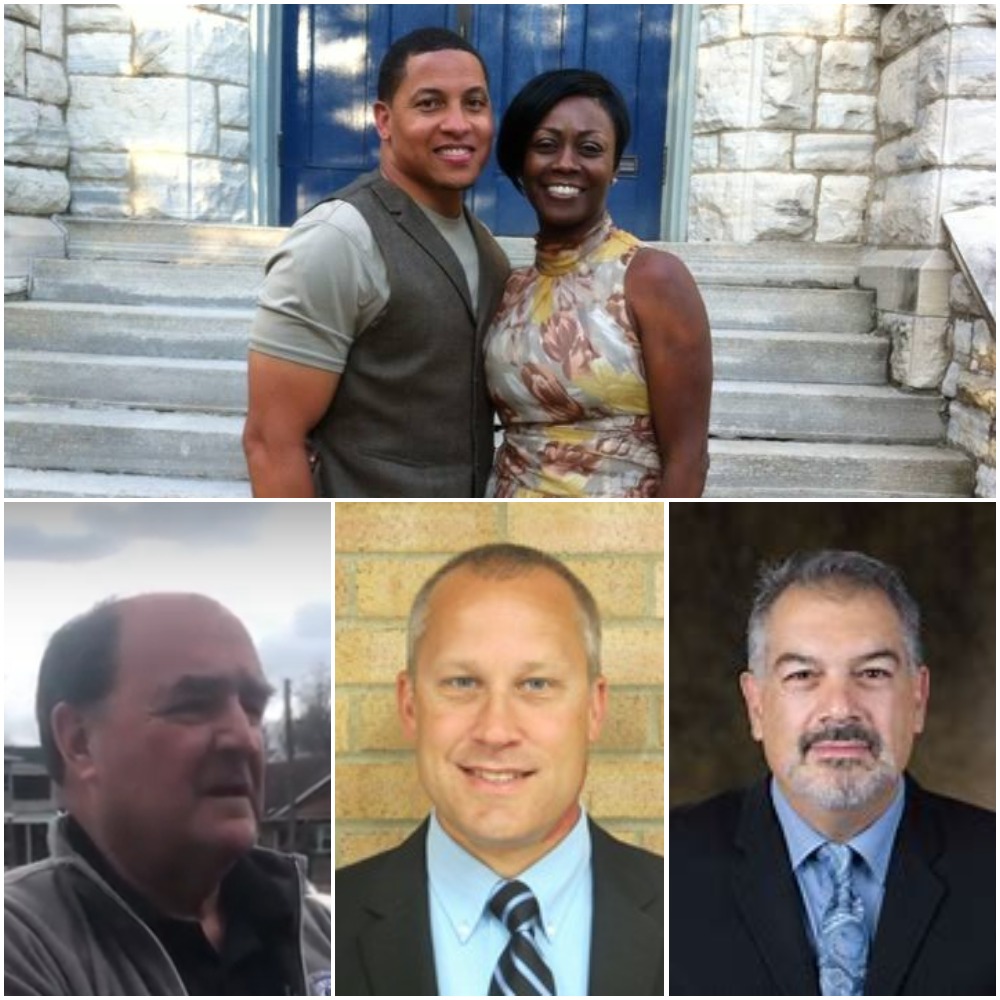
Photo: Pastor Marwyn & First Lady Barbara Reeves in front of their church Christ Community Worship Center, Inc. (top), Willie Weber, former Lycoming County Chief Detective (bottom left), Brandon Pardoe, WAHS head principal (bottom middle), Randy Zangara, WAHS head principal (bottom right).

“I will not be pressured by anyone or put in a position to be punished for my vote.” – Barbara Reeves 10-20-20

That statement was made by WASD school board member Barbara Reeves in the most recent WASD school board meeting when she was challenged on her “no” vote to return to 5-day per week in-person learning.

A running theme throughout the series, “A Baseball Story In The Birthplace of Little League Baseball – most recently PART XXII; is the deep connective tissue of all the parties involved.
Should the WASD taxpayers be concerned with the underlying enmeshments involving Fred Holland and members of the WASD school board?
As an elected official full disclosure is a long standing tenant in order to engender trust with the public which casts ballots.

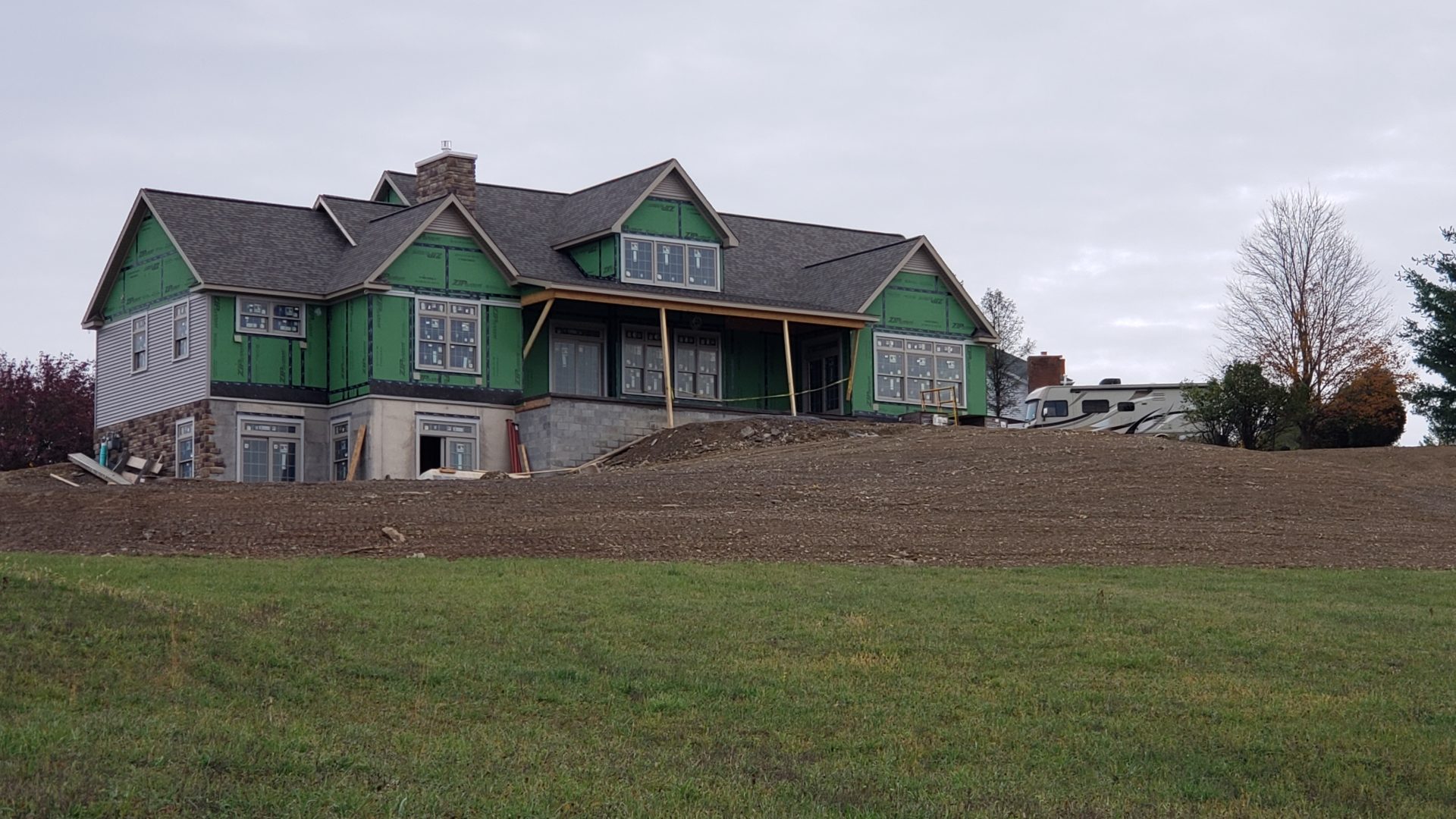
WASD school board member Nancy Somers and husband William have undertaken a multiple years long process to build a home in Loyalsock Township.

According to Lycoming County property records, the first lot was acquired on May 20, 2019 for $95,000 from a local doctor.

The second lot was acquired on February 22, 2020 for $86,500 from the same local doctor.

Photo: Somers home under construction in Loyalsock Township

Construction began earlier this year and the pandemic stalled the process, if not for the pandemic the Somers’ could have actually occupied the home.

At the current stage of construction all indications are the Somers could occupy the home by as early as the end of the year.

Was Nancy Somers going to inform the taxpayers who elected her of her possible intentions to move out of the WASD; at the same time she votes to keep students in a hybrid model?

If the science Somers cites, dictating children cannot be in school with in-person learning; how are construction workers feverishly putting the final touches on her new home, in a different school district?

According to city-data.com the estimated median house or condo value in 2017: $128,906 (it was $67,900 in 2000).

Nancy Somers also failed to second the motion made by Adam Welteroth regarding an independent third party investigation into the 2018 WAHS baseball team trip to Myrtle Beach where “criminal sexual misconduct” was committed by a WAHS baseball player.

Back to Barbara Reeves, “I will not be pressured by anyone or put in a position to be punished for my vote.”

Her statement was made by WASD school board member Barbara Reeves in the most recent WASD school board meeting when she was challenged on her “no” vote to return to 5-day per week in-person learning.

Barbara Reeves WASD school board member and wife of Pastor Marwyn Reeves sat silent when fellow board member Adam Welteroth made a motion to explore an independent third-party investigation into the WASD response to the 2018 WAHS baseball team trip to Myrtle Beach, South Carolina.

Is Pastor Marwyn Reeves now a spokesperson for the WASD or at a very minimum his wife Barbara?

Talkwilliamsport.com has confirmed Pastor Marwyn Reeves and wife Barbara reside in the same neighborhood as WAHS head principal Brandon Pardoe, former WASD administrator Randy Zangara and Lycoming County detective Willie Weber.

According to Lycoming County property records, the Reeves family home was purchased in 2004.

In fact, the address obtained by Talkwilliamsport.com makes it next door neighbors with a WASD administrator listed above.

If the enmeshment of the relationships on the WASD school board could not be any closer; according to Lycoming County property records, the “Certificate of Residence” affirming the address of the “Grantee” (Reeves) was signed by…Fred Holland in his capacity as Attorney or Agent for Grantee on October 28, 2004.

A new and revised mortgage on the same property was executed on December 23, 2010 by Barbara Reeves and Marwyn Reeves. Again, the “Certificate of Residence” affirming the address of the “mortgagee” (Reeves) was signed by…Fred Holland.

The same Fred Holland who filed the non-profit documentation with the State of Pennsylvania for fellow WASD school board member Jennifer Lake.

The same Fred Holland who characterized the events in the Myrtle Beach case as “indecent and inappropriate behavior in the part of a WAHS baseball player.”

The characterization was thoroughly debunked by Lycoming County District Attorney Ryan Gardner, who referred the case of “criminal sexual misconduct” to Pennsylvania Attorney General Josh Shapiro.

Fred Holland is the same person who said WAHS head principal Brandon Pardoe had no conflicts of interest and approved the very “prompt” Myrtle Beach case investigation.

Should the WASD taxpayers be concerned with the underlying enmeshments involving Fred Holland and members of the WASD school board?

Do those enmeshments subvert a possible third party investigation into the Myrtle Beach case which would lead to a contradiction of the WASD narrative (the WASD handled the entire Myrtle Beach case properly) that has been discredited?

Does Fred Holland having performed legal services for at least two WASD school board members has some type of control of their votes since he has yet to recuse himself or resign as solicitor?

Holland is also the solicitor for the South Williamsport School District where the wife of WAHS head principal Brandon Pardoe works.

All of this is very cozy, isn’t it?


On background, “Pastor Marwyn Reeves threatens legal action, while confirming link to Roger Freed” in response to “Reeves and Freed linked through church and WASD.”

Talkwilliamsport.com has obtained a number of e-mails and text messages between WASD school board members discussing issues of public importance. Details with be forthcoming.

Barbara Reeves, Nancy Somers, Jennifer Lake and the rest of the WASD school board will be voting on a return to 5-day per week in-person learning this evening in a special meeting open to the public at 6 p.m.

Pennsylvanians Urged to Hand-Deliver Mail Ballots Immediately

Pennsylvania Governor Tom Wolf speaking to the press. Governor Tom Wolf and Secretary of State Kathy Boockvar reminded Pennsylvanians that today is the deadline to apply for a mail or absentee ballot for the Nov.3 election. Voters who still have their mail ballot are strongly encouraged to immediately hand- deliver their voted ballot to their county election office or other officially designated site, including drop boxes. Harrisburg, PA – October 27, 2020

Deadline for mail ballot application is today, apply at votesPA.com

Harrisburg, PA – Governor Tom Wolf and Secretary of State Kathy Boockvar reminded Pennsylvanians that today is the deadline to apply for a mail or absentee ballot for the Nov.3 election. Voters who still have their mail ballot are strongly encouraged to immediately hand-deliver their voted ballot to their county election office or other officially designated site, including drop boxes.

“If you haven’t already, voters with mail ballots should immediately hand-deliver your ballot to your county-designated location,” said Gov. Wolf. “Don’t wait until election day. Hand-delivering your own ballot now will give you the peace of mind that your vote will be counted, and your voice will be heard in this historic election.”

More than 3 million Pennsylvanians have applied to vote by mail, made possible by a new law the governor signed last year creating the most sweeping election reforms in 80 years.

Today is the deadline to apply for their ballot or apply in person for a ballot and vote early.  Counties will mail ballots to voters once the application is verified. The deadline to drop off their completed mail ballots is 8 p.m. on election day, Tuesday, Nov. 3.

“Pennsylvanians have more secure and accessible options for how they cast their ballot than ever before,” said Secretary Boockvar. “Whichever method you choose, the important thing is that you cast your ballot and have a say in our democracy.

As soon as the voter receives the mail ballot, the voter should:

  • Read the instructions carefully.
  • Fill out the ballot, being sure to follow instructions on how to mark selections.
  • Seal the ballot in the white inner secrecy envelope that indicates “official ballot.” Make sure not to make any stray marks on the envelope.
  • Then seal the inner secrecy envelope in the pre-addressed outer return envelope which the voter must sign.
  • Complete and sign the voter’s declaration on the outside of the outer return envelope.
  • For the ballot to be counted, it must be enclosed in both envelopes and the voter must sign the outer envelope.

Voters can find out information about the status of their ballot by contacting their county election office.

“Pennsylvania is well prepared, and we will have a fair election,” said Gov. Wolf. “Counting more than 3 million mail ballots may take more time than in past elections. All of us will need to be patient as county officials work tirelessly to ensure that all votes are counted. This could take a few days, but we must have accurate results.”

Voters who applied for and received a mail ballot and then decide they want to vote at the polls must bring their entire mail ballot packet with them to be voided, including both envelopes. They may then vote on their county’s voting system.

If a voter applies for a mail ballot but does not return it and no longer has the mail ballot and envelopes, they may vote by provisional ballot at the polls on election day. Their county board of elections will then verify that they did not vote by mail before counting their provisional ballot.

Additionally, if a voter’s absentee or mail ballot is rejected for a reason other than their qualification or eligibility to vote, such as a missing signature or naked ballot, they may vote by provisional ballot.

Under Pennsylvania law, voters may only return their own mail ballot. The only exceptions to this are for voters with a disability who have designated someone in writing to deliver their ballot, or for voters  who need an emergency absentee ballot. Voters with a disability have several options for how to cast their ballots this election.

For voters with limited English proficiency, mail ballot applications are available in Spanish and Vietnamese. If voters have questions, or need translation services in other languages, they are encouraged to call the Department of State at 1-877-VOTESPA (1-877-868-3772).

For more information on voting and elections call the Department of State’s toll-free hotline at 1-877-VOTESPA (1-877-868-3772) or visit votesPA.com.

October 26, 2020 – Department of Health Report

Twenty two (22) new cases added Sunday and Monday in Lycoming County now at 950 cases, no new deaths, 31 total deaths, with 15,730 negatives according to DOH report.

Department of Health Provides Update on COVID-19,

3,073 Two-Day Positives Bring Statewide Total to 195,695

Pennsylvanians Urged to Download COVID Alert PA App

Harrisburg, PA – The Pennsylvania Department of Health today confirmed as of 12:00 a.m., October 26, that there were 1,407 new cases, in addition to 1,666 new cases reported Sunday, October 25 for a two-day total of 3,073 additional positive cases of COVID-19, bringing the statewide total to 195,695. Daily increases are now comparable with what we saw in April 2020.

The most accurate daily data is available on the website, with archived data also available.

The number of tests administered within the last 7 days between October 19 and October 25 is 241,113 with 10,410 positive cases. There were 34,763 test results reported to the department through 10 p.m., October 24 and 26,683 test results reported to the department through 10 p.m., October 25.

There were 12 new deaths reported Sunday, October 25, and 7 new deaths reported for Monday, October 26 for a total of 8,673 deaths attributed to COVID-19. County-specific information and a statewide map are available on the COVID-19 Data Dashboard.

Mask-wearing is required in all businesses and whenever leaving home. Consistent mask-wearing is critical to preventing the spread of COVID-19.

There are 2,478 individuals who have a positive viral antigen test and are considered probable cases and 647 individuals who have a positive serology test and either COVID-19 symptoms or a high-risk exposure.

There are 2,241,430 individuals who have tested negative to date. Of those who have tested positive to date the age breakdown is as follows:

  • Approximately 1% are ages 0-4;
  • Approximately 2% are ages 5-12;
  • Approximately 5% are ages 13-18;
  • Nearly 14% are ages 19-24;
  • Nearly 36% are ages 25-49;
  • Approximately 21% are ages 50-64; and
  • Nearly 21% are ages 65 or older.

Most of the patients hospitalized are ages 65 or older, and most of the deaths have occurred in patients 65 or older. More data is available here.

The department has seen significant increases in the number of COVID-19 cases among younger age groups, particularly 19 to 24-year-olds. An alert was sent to healthcare providers about the changing COVID-19 case demographics. Increases among 19 to 24-year-olds from April to present in October are available below:

  • NC – Approximately 7 percent of cases in April to approximately 30 percent of cases so far in October;
  • SE – Nearly 5 percent of cases in April to nearly 15 percent of cases so far in October;
  • NE – 6 percent of cases in April to approximately 17 percent of cases so far in October;
  • SW – Approximately 5 percent of cases in April to nearly 12 percent of cases so far in October;
  • NW – Nearly 7 percent of cases in April to nearly 16 percent of cases so far in October; and
  • SC – Approximately 7 percent of cases in April to 10 percent of cases so far in October.

In nursing and personal care homes, there are 25,486 resident cases of COVID-19, and 5,522 cases among employees, for a total of 31,008 at 1,049 distinct facilities in 63 counties. Out of our total deaths, 5,702 have occurred in residents from nursing or personal care facilities. A county breakdown can be found here.

Approximately 12,067 of our total cases are among health care workers.

Statewide – The Wolf Administration has since noon, Oct. 25:

The Wolf Administration stresses the role Pennsylvanians play in helping to reduce the spread of COVID-19:

  • Wash your hands with soap and water for at least 20 seconds or use hand sanitizer if soap and water are not available.
  • Cover any coughs or sneezes with your elbow, not your hands.
  • Clean surfaces frequently.
  • Stay home to avoid spreading COVID-19, especially if you are unwell.
  • If you must go out, you are required to wear a mask when in a business or where it is difficult to maintain proper social distancing.
  • Download the COVID Alert PA app and make your phone part of the fight. The free app can be found in the Google Play Store and the Apple App Store by searching for “covid alert pa”.

Updated Coronavirus Links: Press Releases, State Lab Photos, Graphics

All Pennsylvania residents are encouraged to sign up for AlertPA, a text notification system for health, weather, and other important alerts like COVID-19 updates from commonwealth agencies. Residents can sign up online at www.ready.pa.gov/BeInformed/Signup-For-Alerts.

Pennsylvania COVID-19 Early Warning Monitoring Dashboard Update for Oct. 16 – Oct. 22

Harrisburg, PA – Governor Tom Wolf and Secretary of Health Dr. Rachel Levine today released a weekly status update detailing the state’s mitigation efforts based on the COVID-19 Early Warning Monitoring System Dashboard. Updates are released each Monday.

The update includes the following:

  • Level of community transmission as a basis for the recommendations for Pre-K to 12 schools to determine instructional models.
  • Data on cases among 5-18-year-olds.
  • Cases that reported visiting a business among potential locations where exposures may have occurred.
  • Updated travel recommendations.

The dashboard is designed to provide early warning signs of factors that affect the state’s mitigation efforts. The data available on the early warning monitoring dashboard includes week-over-week case differences, incidence rates, test percent-positivity, and rates of hospitalizations, ventilations and emergency room visits tied to COVID-19. This week’s update compares the period of October 16 – October 22 to the previous seven days, October 9 – October 15.

“Our percent positivity and incidence rate for the Commonwealth increased significantly in the midst of our fall resurgence,” Gov. Wolf said. “We cannot emphasize enough the importance of Pennsylvanians being united in taking actions to protect ourselves and others, such as wearing a mask, practicing social distancing, washing our hands and avoiding gatherings. It is only by working together that Pennsylvanians can prevent the spread of the virus.”

As of Thursday, October 22, the state has seen a seven-day case increase of 10,127 cases; the previous seven-day increase was 8,849 cases, indicating a 1,278-case increase over the previous week’s total.

The statewide percent-positivity went up to 5.0% from 4.2% last week. Counties with concerning percent-positivity include Huntingdon (12.0%), Bradford (11.2%), Lawrence (9.0%), Lebanon (8.7%), Westmoreland (8.4%), Perry (8.2%), Bedford (7.6%), Luzerne (7.5%), Schuylkill (7.5%), Tioga (7.2%), York (7.2%), Indiana (7.0%), Lackawanna (7.0%), Venango (7.0%), Mifflin (6.8%), Armstrong (6.7%), Berks (6.6%), Cumberland (6.6%), Montour (6.3%), Philadelphia (6.1%), Franklin (6.0%), Elk (5.9%), Washington (5.9%), Mercer (5.6%), Dauphin (5.5%), Susquehanna (5.5%), Blair (5.3%), Clinton (5.3%), Clarion (5.1%), Northumberland (5.1%). Each of these counties and the state bears watching as we continue to monitor all available data.

Community Transmission
As of Friday’s data, Berks, Bradford, Centre, Elk, Huntingdon, Lackawanna, Lawrence, Lebanon, Luzerne, Mifflin, Montour, Northumberland, Philadelphia, Schuylkill, and Westmoreland counties were in the substantial level of community transmission. The departments of Education and Health will speak with school district representatives in these counties to discuss the implications of this level of transmission.

For the week ending October 22, nine counties were in the low level of transmission, 43 counties in the moderate level, with 15 with substantial transmission:

  • Low – Cameron, Forest, Fulton, Jefferson, Pike, Potter, Sullivan, Warren, Wayne
  • Moderate – Adams, Allegheny, Armstrong, Beaver, Bedford, Blair, Bucks, Butler, Cambria, Carbon, Chester, Clarion, Clearfield, Clinton, Columbia, Crawford, Cumberland, Dauphin, Delaware, Erie, Fayette, Franklin, Greene, Indiana, Juniata, Lancaster, Lehigh, Lycoming, McKean, Mercer, Monroe, Montgomery, Northampton, Perry, Snyder, Somerset, Susquehanna, Tioga, Union, Venango, Washington, Wyoming, York
  • Substantial – Berks, Bradford, Centre, Elk, Huntingdon, Lackawanna, Lawrence, Lebanon, Luzerne, Mifflin, Montour, Northumberland, Philadelphia, Schuylkill, Westmoreland

Cases Among 5-18-Year-Olds
The Department of Health is providing weekly data on the number of statewide cases of COVID-19 among 5 to 18-year-olds.

Throughout the pandemic, there have been 13,345 total cases of COVID-19 among 5 to 18-year-olds. Of that total, 1,183 occurred between October 16 – October 22. For the week of October 9 – October 15, there were 991 cases of COVID-19 among 5 to 18-year-olds.

Cases by demographic group is available on the DOH website.

Business Visits
The Department of Health is providing weekly data on the number of individuals who responded to case investigators that they spent time at business establishments (restaurants, bars, gym/fitness centers, salon/barbershops) and at mass gatherings 14 days prior to the onset of COVID-19 symptoms.

Of the 9,754 confirmed cases reported between October 11 and October 17, 29 percent (2,841) provided an answer to the question as to whether they spent time at a business establishment.

Of those who did provide an answer, 16.3 percent, or 464, answered yes, they visited a business establishment 14 days prior to onset of symptoms:

  • 55 percent (256) of those who said yes reported going to a restaurant;
  • 26 percent (122) of those who said yes reported going to some other business establishment;
  • 13 percent (61) of those who said yes reported going to a bar;
  • 11 percent (53) of those who said yes reported going to a gym/fitness center; and
  • 7.5 percent (35) of those who said yes reported going to a salon/barbershop.

Of the 9,754 confirmed cases, 29 percent (2,856) answered the question as to whether they attended a mass gathering or other large event. Of the 29 percent, 16.9 percent (482) answered yes to whether they attended a mass gathering or other large event 14 days prior to onset of symptoms.

Compared to data reported on October 19, this week’s data saw an increase in people going to a restaurant (55 percent vs. 50 percent last week). At 26 percent, numbers remained the same for people going to some other business. Numbers went down for this week’s data for people who reported going to a gym/fitness center (11 percent vs. 13 percent last week), going to a bar (13 percent vs. 14 percent last week) and down slightly for going to a salon or barbershop (7.5 percent vs. 8 percent last week). The number of those who attended a mass gathering or other large event increased to 17 percent from 16 percent last week.

The numbers above highlight business settings and mass gatherings as possible sites for transmission. With less than half of those asked about what types of businesses they visited or if they attended a mass gathering responding to the question, the department is reminding Pennsylvanians that it is essential that people answer the phone when case investigators call and to provide full and complete information to these clinical professionals.

Travel Recommendations
Also today, the Department of Health updated its travel recommendations, originally announced on July 2, with no states added or removed from the list of states recommended for domestic travelers returning from to quarantine for 14 days upon return to Pennsylvania.

It is important that people understand that this recommendation is in place to prevent the spread of COVID-19 in Pennsylvania. A concerning number of recent cases have been linked to travel, and if people are going to travel, we need them to take steps to protect themselves, their loved ones and their community, and that involves quarantining upon return to Pennsylvania.

Gov. Wolf continues to prioritize the health and safety of all Pennsylvanians through the COVID-19 pandemic. Pennsylvanians should continue to take actions to prevent the spread of COVID-19, regardless of in what county they live. This includes wearing a mask or face covering anytime they are in public. COVID-19 has been shown to spread easily in the air and contagious carriers can be asymptomatic.

Pastor Marwyn Reeves threatens legal action, while confirming link to Roger Freed

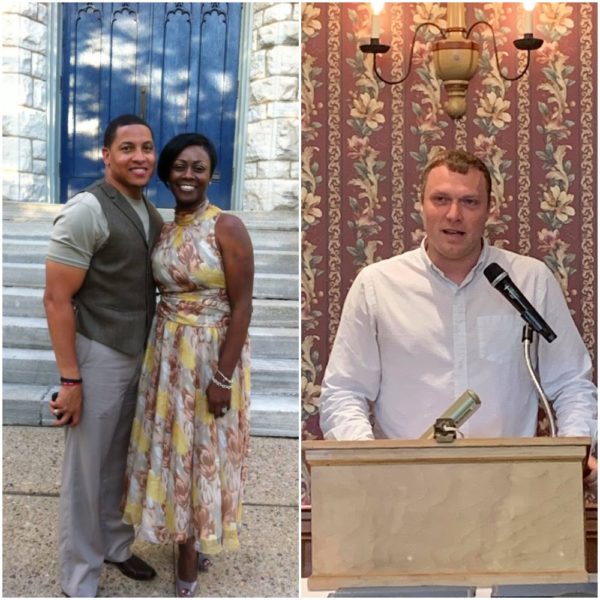
On Saturday morning, Pastor Marwyn Reeves of Christ Community Worship Center, Inc. sent the following to this author in response to the article “Reeves and Freed linked through church and WASD”.

“GM, I hope you’re well this morning. I’m sending you a message in hope that you will rescind the article you wrote implicating unethical practices between my wife, my church and Roger Freed.

Since I was included with a picture, I now take this act of ignorance personally.

Have you read the book of Proverbs.

It has great wisdom literature worth delving into.

In chapter 6, the writer highlights things that God hates and I thought to share some of them with you; a lying tongue, a heart that devises wicked imaginations, a false witness, and those that sow discord among brethren.

Based on what I have heard from others concerning you, you fulfill all of these qualities and are in a very poor place in God’s eyes.

What you have written is an assault on the vision God gave to me.

I see how you operate and am glad that I refrained from using my time to take part in your game play and politicizing.

Only a fool would publish something like this in an attempt to malign a man of God and his ministry.

Roger Freed has not been a member of our church for more than a year.

He has not served in any capacity since that time.

I don’t know what Roger is doing nor do I know where he is attending.

I’m not a part of anything he is doing and not is he a part of anything I am doing.

This alone makes your comments a stab in the dark.

Again, I’m asking you to rescind your article. I’ve only given you a bone due to your lack of research and veracity.

If you do not rescind, you will leave me no choice but to take legal action,

and you don’t want that.

I am a seeker of truth.

Anything that we (my wife & myself) do involves the truth.

We don’t build our home, our family, our faith, our Child Care Center or our lives on lies.

Scripture says be careful how you answer a fool in his folly, lest you become partaker with him. I’ve answered and choose to be removed as far away from you as possible.”


At this writing, the link to CCWC MINISTRIES on the Christ Community Worship Center, Inc. website still reflects Roger Freed in multiple capacities with the church.

So the truth is, Christ Community Worship Center, Inc. is providing misinformation to the general public.

Talkwilliamsport.com has confirmed Marwyn Reeves, Pastor of Christ Community Worship Center, Inc. was provided a detailed report of the events in Myrtle Beach by a non-family member in the days leading up to the WASD school board meeting where a motion was made for a third party investigation into that case.

That motion did not receive a second.

As a clergy member, Marwyn Reeves is a mandated reporter.

Most civil litigation involves the “discovery” process. Within that process usually includes production of items such as documents, e-mails, phone records and text messages as a few examples.

The next WASD school board meeting is Tuesday evening in the Williamsport Area High School auditorium.