L&I Warns About Emails Impersonating Workforce Development Staff 

Harrisburg, PA  The Department of Labor & Industry is advising organizations that interact with its Bureau of Workforce Development to be on the lookout for email messages impersonating staff. The messages contain links or attachments with malicious software that could infect computers or steal personal information.

“I want to emphasize that neither L&I nor the commonwealth have been compromised by hackers in any way,” said Secretary Jerry Oleksiak. “Anyone who receives a potentially suspicious message should contact our employees through a separate email or phone call to confirm that it was sent by them.”

Email “spoofing” is a common tactic used in spam and phishing attacks. The goal is to trick the recipient into believing the message is from someone they know and trust so they will provide personal information, open attachments or click on links.

While the origins of the issue are still unknown, it is believed an issue involving a third party allowed bad actors to obtain copies of legitimate email messages sent by L&I staff. The bad actors are now using the contents of these legitimate messages to construct fraudulent emails targeting L&I business partners. L&I and the Office of Administration are working with these third parties to try to identify the source of the issue.

Again, there is no evidence that any commonwealth systems or accounts have been compromised. There is also no evidence at this time of fraudulent emails being sent in relation to any unemployment compensation program administered by the department.

Although phishing emails are becoming increasingly sophisticated, there are potential warning signs to watch out for, including:

  • Asking for personal information. Legitimate organizations will never send unsolicited emails asking for your personal and sensitive information.
  • Generic Greetings. Be more cautious about email messages with a generic salutation such as “Dear customer” or “Dear member”.
  • Spoofed emails addresses and links. Use your mouse cursor to hover (do not click) over any links or email addresses. You should see a pop-up that shows the actual address.
  • Small inconsistencies. Watch for red flags such as strange email addresses or slight misspellings in hyperlinks.
  • Sense of urgency. Many phishing emails try to create a false sense of urgency in hopes that the user ignores telltale signs.
  • Bad grammar or misspellings. Messages from legitimate sources are likely to be well-written and not contain obvious mistakes.
  • Unknown sources. Never open attachments or links from people or companies that you do not know.

To learn more about how to protect yourself online, check out the Cybersecurity Guide on PA.gov at www.pa.gov/cyber.

DOH Collaborates with Centre County, Adds Testing Sites in Centre and Columbia Counties in Effort to Contain Local Spread of COVID-19

Harrisburg, PA – Secretary of Health Dr. Rachel Levine today announced beginning Friday, Sept. 25, testing clinics will be held at locations in Centre and Columbia counties to contain the rapid rise in COVID-19 cases in these counties. In addition, the department is working closely with Centre County in regard to their increase in cases over the last several weeks.

The department has signed a contract with AMI Expeditionary Healthcare (AMI) to provide testing in communities in need across Pennsylvania. AMI will be deploying teams to perform the community testing.

“Since the beginning of September, we have seen an increase of 1,109 cases in Centre County and 173 cases in Columbia County, which gives us significant cause for concern,” Dr. Levine said. “These testing sites will be open to anyone who feels they need a test. It is important that even people with no symptoms who test positive isolate and quarantine to stop the spread of COVID-19.”

The schedule for testing in both counties is 7:00 AM to 7:00 PM on:

  • Friday, September 25;
  • Saturday, September 26;
  • Tuesday, September 29;
  • Wednesday, September 30;
  • Thursday, October 1;
  • Friday, October 2; And
  • Saturday, October 3.

The address for Centre County testing is Nittany Mall, 2633 E. College Avenue, State College, PA, 16801. The address for Columbia County testing is Bloomsburg Fairgrounds, W. Fort McClure Blvd., Bloomsburg, PA, 17815.

Up to 500 registered patients can be tested per day. Testing is on a first come, first serve basis and is at no cost to those being tested. Patients are not required to show symptoms of COVID-19 in order to be tested. No appointment is necessary, but a photo-ID or insurance card is required. Registration will also be completed on-site.

Individuals who are tested should self-isolate while they await test results. For those individuals who live with other people, they should self-isolate in a private room and use a private bathroom if possible. Whoever else lives in the home with the individual awaiting test results should also stay at home. The department has additional instructions for individuals waiting for a COVID-19 test result.

In addition, Dr. Levine today offered Centre County officials assistance as they work to contain the rapid spread of COVID-19 in the county.

“I have directed my staff to assist Centre County in identifying localized containment and mitigation efforts to reduce the spread and facilitate communications between large employers, county officials and local governments,” Dr. Levine said.  “This group will work together to develop strategic recommendations tailored to this specific area to stop the spread of COVID-19.”

This will be a concentrated, short-term effort that will include focused meetings with the county representatives and municipality partners independently. Once these meetings are held, joint meetings will occur with all partners to determine the best steps to assist the county in the work they are doing to contain and mitigate the spread of the virus in their jurisdiction.

Partners in this Centre County effort will include Department of Health staff, Pennsylvania Emergency Management Agency staff, the Pennsylvania Department of Education, Centre County Commissioners, State College Borough, Penn State University, additional local elected officials, local chambers of commerce and other stakeholders.

The department intends to continue its work to assist counties seeing significant increases in new cases through efforts to determine what strategies may best assist the county.

For the latest information for individuals, families, businesses and schools, visit “Responding to COVID-19” on pa.gov.

The Wolf Administration stresses the role Pennsylvanians play in helping to reduce the spread of COVID-19:

  • Wash your hands with soap and water for at least 20 seconds or use hand sanitizer if soap and water are not available.
  • Cover any coughs or sneezes with your elbow, not your hands.
  • Clean surfaces frequently.
  • Stay home to avoid spreading COVID-19, especially if you are unwell.
  • If you must go out, you are required to wear a mask when in a business or where it is difficult to maintain proper social distancing.

Updated Coronavirus Links: Press Releases, State Lab Photos, Graphics

Congressman Fred Keller supports bill to hold rioters accountable, protect law enforcement

Says legislation aims to restore law and order in America

Washington – Today, Congressman Fred Keller (R-PA) once again showed his resounding commitment to restoring law and order in the United States, becoming an original cosponsor of the Holding Rioters Accountable Act of 2020, legislation introduced by Congresswoman Debbie Lesko (R-AZ) and Congressman Jim Jordan (R-OH).

Across the United States, liberal mayors and governors have demonstrated they are either unwilling or unable to control the lawlessness and violent mobs taking over our streets, attacking police, and destroying property.

This bill revokes federal aid, including coronavirus emergency funding, to cities and states that do not prosecute individuals who were arrested for riot-related crimes.

Recently, Congressman Keller co-sponsored H.R. 7632, the Defund Cities that Defund the Police Act, legislation that prohibits a state or local government from receiving certain grant money if they defund the police.

On the passage of the Holding Rioters Accountable Act of 2020, Congressman Keller made the following statement:

“I am proud to be an original cosponsor of this important legislation to address the unchecked lawlessness in our streets and stand up for the men and women in law enforcement who are called to carry out thankless job, risking their lives on a daily basis in the service and protection of our communities. This bill will hold Democratic-run cities accountable so they can no longer stand idly by as our police officers are victimized and attacked by violent protestors.”

Governor Wolf Announces Veterans’ Trust Fund Grant Awards

Harrisburg, PA – Governor Tom Wolf announced today that 10 Pennsylvania county Veterans Affairs Offices will receive a total of $150,000 in grants, and 18 charitable or Veteran Service Organizations will receive $650,000 in grants from the Veterans’ Trust Fund (VTF), administered by the Pennsylvania Department of Military and Veterans Affairs (DMVA).

The VTF is funded by generous Pennsylvanians who voluntarily make a $3 donation when applying for or renewing their driver’s license, photo ID or a motor vehicle registration.  Additionally, the VTF receives proceeds that come from the sale of the Honoring Our Veterans and Honoring our Women Veterans license plates, and private donations. Since the grant program began in 2013, a total of $3,732,860 has been awarded to organizations that serve Pennsylvania veterans.

“The VTF has always been an important funding resource for organizations that help Pennsylvania veterans and their families, but this year while we work through the fallout from the pandemic this program is more important than ever before,” said Gov. Wolf. “Without the VTF, Pennsylvania’s heroes would be at risk of not having shelter, an outlet for getting food, the ability to learn a job skill, help navigating our criminal justice system and so much more.”

Grantees slated to receive funding identified $428,220 in matching funds pledged toward grant-funded initiatives. Combined with the VTF grants, this will result in more than $1.2 million for veterans’ initiatives during the next two years.

“There are so many Pennsylvania veterans in need of help, especially during these disruptive times of COVID-19,” said Maj. Gen. Anthony Carrelli, Pennsylvania’s adjutant general and head of the DMVA. “That is why we are grateful for the VTF grantees and the vital work they do enhancing the lives of our veterans who earned this help with their service to our nation.”

Up to a total of $150,000 in grant funding was available for new, innovative, or expanded programs or services provided by County Directors of Veterans Affairs or the Pennsylvania Association of County Directors of Veterans Affairs. The two areas of emphasis for grantees in this category were veterans’ outreach and veterans’ courts. The grantees, the specific award amounts and the programs supported are as follows:

  • Allegheny County Office of Veterans Affairs: $20,000 to expand veterans’ outreach
  • Bucks County Office of Veterans Affairs: $14,812 to expand veterans’ outreach services
  • Juniata County and Mifflin County Office of Veterans Affairs (joint application): $28,450 to expand mobile outreach services
  • Lehigh County Office of Veterans Affairs: $10,180 to provide mental health first aid training
  • Mercer County Office of Veterans Affairs: $11,387 to expand veterans’ outreach services
  • Northampton County Office of Veterans Affairs: $20,000 to provide housing services to veterans
  • Perry County Office of Veterans Affairs: $5,171 to expand veterans’ outreach services
  • Snyder County and Union County Office of Veterans Affairs (joint application): $40,000 to support homeless veterans and provide emergency assistance.

The VTF grant also identified up to a total of $650,000 in funding available to Veteran Service Organizations with 501(c)(19) status and non-profit, 501(c)(3) charitable organizations with a mission of serving Pennsylvania veterans. Funding priorities for grants in this category were veterans’ programs focused on homelessness, behavioral health initiatives, veterans’ court initiatives or other programs addressing newly identified, unmet or emerging needs of veterans and their families. The grantees, the specific award amounts and the programs supported are as follows:

  • 3P Ride, Inc., York (York County): $50,000 for transportation services to veterans
  • American Legion Post 210, Harrisburg (Bucks County): $12,500 for outreach services to veterans
  • Central Pennsylvania Food Bank, Harrisburg (Dauphin County): $50,000 to support the MilitaryShare program
  • David’s Drive 831, Inc., Coatesville (Chester County): $20,000 to provide housing support and services to veterans
  • For the Love of a Veteran, Inc., Hanover (York County): $45,000 for care packages for deployed troops and homeless veterans
  • Greenforge, Inc (PA Veterans Farming Project), Greensburg (Westmoreland County): $4,250 to provide workforce development and recreational/therapeutic services to veterans
  • Jarett Yoder Foundation, Fleetwood (Berks County): $50,000 to provide housing and supportive services to veterans
  • Operation Homefront, Doylestown (Bucks County): $10,000 to provide financial assistance to veterans in need
  • Operation Touch of Home, Brodheadsville (Monroe County): $40,000 to provide financial assistance to veterans in need and provide care packages to deployed troops
  • Operation Troop Appreciation, McKeesport (Allegheny County): $45,000 to provide welcome home kits to at-risk veterans
  • Pennsylvania American Legion Housing for Homeless Veterans, Harrisburg (Dauphin/Cumberland Counties): $40,304 to provide housing services to veterans
  • Pennsylvania Wounded Warriors, Camp Hill (Cumberland County): $45,000 for emergency financial assistance to veterans in need
  • Second Harvest Food Bank of NW Pennsylvania, Erie (Erie County): $50,000 for its MilitaryShare program
  • Travelers Aid Society of Pittsburgh, Inc., Pittsburgh (Allegheny County): $50,000 to provide transportation assistance to veterans
  • Veteran Community Initiatives, Inc., Johnstown (Cambria County): $39,746 for its rural veterans’ outreach project
  • Veterans Helping Hand, York (York County): $38,200 to provide housing services to homeless veterans
  • Veterans Leadership Program of Western Pennsylvania, Pittsburgh (Allegheny County): $50,000 to provide housing services to homeless veterans
  • Victory Therapeutic Horsemanship, Bellwood (Blair County): $10,000 to provide equine-assisted therapy to disabled veterans

All grant awards are contingent upon the completion of a fully executed grant agreement.

The DMVA is authorized to solicit and accept donations to the VTF on behalf of the commonwealth. Tax-deductible donations can be made online at www.donate.dmva.pa.gov or mailed to: PA Veterans’ Trust Fund, Bldg. 0-47, Fort Indiantown Gap, Annville, PA 17003.

To learn more about the VTF, visit www.vtf.pa.gov or follow DMVA on Facebook at www.facebook.com/padmva.

Pennsylvania’s Unemployment Rate at 10.3 Percent in August

Total nonfarm jobs up 59,500 over the month 

Harrisburg, PA – Today, the Pennsylvania Department of Labor & Industry (L&I) released its employment situation report for August 2020.

Pennsylvania’s unemployment rate was down 2.2 percentage points over the month to 10.3 percent in August. The national rate fell 1.8 percentage points from July’s level to 8.4 percent. The commonwealth’s unemployment rate increased by 5.8 percentage points from August 2019 while the national rate was up 4.7 points over the year.

Pennsylvania’s civilian labor force – the estimated number of residents working or looking for work – was down 59,000 over the month as the unemployment count fell by 144,000 while employment increased 86,000.

Pennsylvania’s total nonfarm jobs were up 59,500 over the month to 5,577,900 in August. Jobs increased in 9 of the 11 industry supersectors. The largest volume gain was in trade, transportation & utilities, up 19,600 jobs from July.

Over the past four months, Pennsylvania has recovered 52.4% of the total nonfarm jobs lost in March and April.

Over the year, total nonfarm jobs in Pennsylvania were down 499,600 with declines in 10 of the 11 supersectors. The largest 12-month change among supersectors was a decline of 163,000 jobs in leisure & hospitality.

Additional information is available on the L&I website at www.dli.pa.gov or by following us on FacebookTwitter, and LinkedIn.

Note: The above data are seasonally adjusted. Seasonally adjusted data provide the most valid month-to-month comparison.

Editor’s Note: A breakdown of Pennsylvania’s employment statistics follows.


Current Labor Force Statistics
Seasonally Adjusted
(in thousands)
Change from Change from
August July August July 2020 August 2019
2020 2020 2019 volume percent volume percent
PA
Civilian Labor Force 6,302 6,361 6,506 -59 -0.9% -204 -3.1%
Employment 5,653 5,567 6,215 86 1.5% -562 -9.0%
Unemployment 650 794 291 -144 -18.1% 359 123.4%
Rate 10.3 12.5 4.5 -2.2 —- 5.8 —-
 
U.S.  
Civilian Labor Force 160,838 159,870 163,894 968 0.6% -3,056 -1.9%
Employment 147,288 143,532 157,895 3,756 2.6% -10,607 -6.7%
Unemployment 13,550 16,338 5,999 -2,788 -17.1% 7,551 125.9%
Rate 8.4 10.2 3.7 -1.8 —- 4.7 —-
Note: September 2020 labor force and nonfarm jobs statistics will be released October 16, 2020.


Pennsylvania Nonagricultural Wage and Salary Employment
Seasonally Adjusted
(in thousands)
Change from Change from
August July August July 2020 August 2019
2020 2020 2019 volume percent volume percent
Total Nonfarm Jobs 5,577.9 5,518.4 6,077.5 59.5 1.1% -499.6 -8.2%
 
Goods Producing Industries 804.8 801.5 864.2 3.3 0.4% -59.4 -6.9%
  Mining & Logging 24.3 23.4 28.8 0.9 3.8% -4.5 -15.6%
  Construction 244.5 240.4 261.4 4.1 1.7% -16.9 -6.5%
  Manufacturing 536.0 537.7 574.0 -1.7 -0.3% -38.0 -6.6%
Service Providing Industries 4,773.1 4,716.9 5,213.3 56.2 1.2% -440.2 -8.4%
  Trade, Transportation & Utilities 1,036.1 1,016.5 1,127.2 19.6 1.9% -91.1 -8.1%
  Information 73.4 73.6 87.3 -0.2 -0.3% -13.9 -15.9%
  Financial Activities 330.9 329.5 329.5 1.4 0.4% 1.4 0.4%
  Professional & Business Services 760.7 751.0 818.5 9.7 1.3% -57.8 -7.1%
  Education & Health Services 1,232.4 1,220.4 1,299.2 12.0 1.0% –66.8 5.1%
  Leisure & Hospitality 414.8 411.5 577.8 3.3 0.8% -163.0 -28.2%
  Other Services 224.9 220.6 262.2 4.3 1.9% -37.3 -14.2%
  Government 699.9 693.8 711.6 6.1 0.9% -11.7 -1.6%
For a more detailed breakdown of seasonally adjusted jobs data at the sector level, please contact the Center for Workforce Information & Analysis at 1-877-4WF-DATA, or visit www.paworkstats.pa.gov
Note: September 2020 labor force and nonfarm jobs statistics will be released October 16, 2020.


Congressman Fred Keller: PA Supreme Court decision undermines election integrity

Says decision casts doubt on the security of our voting system

Washington, D.C. — Today, the Pennsylvania Supreme Court sided with the Wolf Administration and the Pennsylvania Democratic Party in allowing ballots to be counted that are received up to three days after Election Day. The decision also upheld the use of satellite election offices and drop boxes.

In response, Congressman Fred Keller made the following statement:

“Today’s decision by the Pennsylvania Supreme Court has nothing to do with expanding access to voting. Instead, it is a partisan attempt to undermine our election process—casting doubt on the integrity and security of our voting system and emboldening the Wolf Administration’s continued disregard for the Constitution. This decision further degrades the foundations of our democracy and raises serious questions about our election processes.”

Gov. Wolf, Attorney General Shapiro: Pa. Supreme Court Decision is a Victory for Voters

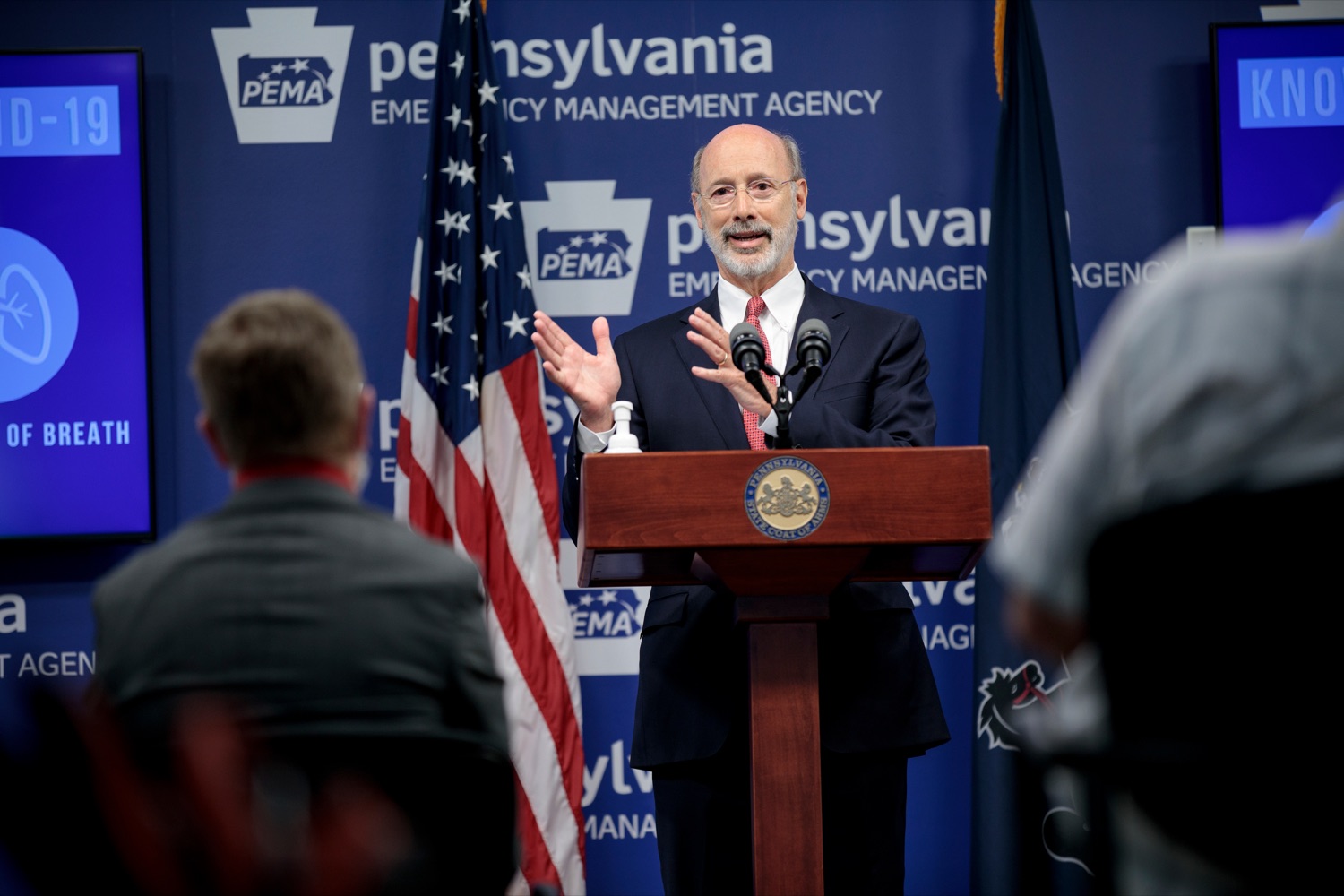
Governor Tom Wolf speaks during a press conference addressing the 2019 Novel Coronavirus (COVID-19) in Pennsylvania, inside PEMA headquarters on Wednesday, June 10, 2020.

Harrisburg, PA – Governor Tom Wolf and Attorney General Josh Shapiro issued the following statement following the Pennsylvania Supreme Court decision in favor of voters.

“This is a victory that will help ensure that every eligible voter will more easily be able to cast their ballot and have it counted fairly.

“Today’s ruling confirms that counties will be able to provide convenient secure options such as additional county election offices and drop boxes to increase accessibility for those who are voting by mail. It also means that ballots postmarked by election day and received by the Friday after the election will be counted.

“Last fall, Pennsylvania voters were the beneficiaries of historic bipartisan election reform. Chief among those reforms was the ability for every voter to cast a ballot by mail, for any reason or no reason at all. This ruling affirms that historic legislation and allows counties to implement processes that support the voting reforms.

“Today is an important day for voters’ rights in Pennsylvania. Now, we and every county election worker will continue our efforts to administer an election that is secure, fair and accessible in every way.”

Wolf Administration Signs Orders That Restaurants May Increase Indoor Occupancy to 50 Percent

Governor Wolf Order
Secretary of Health Order 

Harrisburg, PA — As part of the Wolf Administration’s ongoing efforts to ensure public health and safety and support economic recovery during the COVID-19 pandemic, Governor Tom Wolf and Health Secretary Dr. Rachel Levine today signed new orders following the recent announcement that restaurants may increase indoor occupancy to 50 percent starting Monday, September 21. The order requires that serving alcohol for on-site consumption must end at 11:00 PM starting on Monday, September 21 and all alcoholic beverages must be removed from patrons by midnight. This applies to both restaurants that do not self-certify to increase to 50 percent and those that choose to stay at 25 percent. There is no change to the requirements for the temporary sale of cocktails-to-go and take out alcohol sales from bars, restaurants or hotels with a liquor license.

“As we continue to take critical steps to continue to mitigate the spread of COVI-19, we also recognize that this pandemic has taken a significant toll on the food services industry, so we must balance public health and economic recovery,” Gov. Wolf said. “These orders give restaurants the ability to increase indoor occupancy safely while giving customers confidence when deciding to patronize a restaurant.”

The recently announced self-certification process will enable restaurants to increase indoor occupancy to 50 percent while adhering to mitigation efforts that will keep employees and customers safe. Starting September 21, restaurants can begin submitting their self-certification documents to an Open & Certified Pennsylvania database. ​

Restaurants that self-certify will appear in an Open & Certified Pennsylvania searchable online database of certified restaurants across the commonwealth and will receive Open & Certified Pennsylvania branded materials, such as window clings and other signage designating their certification, which they can display for customers and employees.

The self-certification documents and information about the Open & Certified Pennsylvania program will be available online on September 21 and will contain the following:

  • A list of requirements contained in the current restaurant industry guidance and enforcement efforts;
  • A statement that the owner has reviewed and agrees to follow these requirements;
  • The business’ maximum indoor occupancy number based on the fire code; and
  • A statement that the owner understands that the certification is subject to penalties for unsworn falsification to authorities.

Restaurants should complete the online self-certification process by October 5 when enforcement relative to 50 percent occupancy will begin. Self-certification will still be available after October 5.

Business owners should keep a copy of the self-certification confirmation they will receive by e-mail. The self-certification will be used as part of ongoing enforcement efforts conducted by Department of Agriculture and Pennsylvania State Police Bureau of Liquor Control Enforcement, and will be shared with the departments of State, Labor & Industry and Health, and other enforcement agencies.

Self-certifying will not lead to additional inspections. The occurrence of regularly scheduled or complaint-based inspections from enforcement agencies will not be affected by certification status. In fact, certifying proves that a business is committed to protecting employees and providing patrons a safe dining experience. Any health and safety violations from self-certified businesses will be handled first with warnings and education rather than fines or other penalties.

The Wolf Administration has released Frequently Asked Questions as a reference for restaurant owners and the public, along with updated restaurant guidance.

Restaurant owners with additional questions about the self-certification program can contact covidselfcert@pa.gov.

Gov. Wolf to Legislature: Provide Support to Front-line Workers in Life-Sustaining Industries

Harrisburg, PA – Governor Tom Wolf today called on the General Assembly to provide additional funding for the COVID-19 Hazard Pay Program to support front-line workers risking their health to continue working in life-sustaining industries during the COVID-19 pandemic.

“Pennsylvanians who work front-line, essential jobs during this pandemic deserve our gratitude and our respect, but even more, they deserve compensation for their hard work. The COVID-19 Hazard Pay Grant Program was created to keep front-line employees working in vital industry sectors and to compensate workers appropriately for the additional hazards their jobs entail during a pandemic,” Gov. Wolf said. “The overwhelming response we received for this program shows a clear need for additional hazard pay funding, and so I am calling on the General Assembly to allocate additional and much-needed funds so that we can further support workers who put their health on the line to keep life-sustaining services operating for all of us.”

As part of his fall legislative agenda, Gov. Wolf is calling on the General Assembly to provide an additional $225 million in federal Coronavirus Aid, Relief and Economic Security (CARES) Act funding to the state’s COVID-19 Hazard Pay Program, a reimbursement-based grant that was announced in July to help employers provide hazard pay to employees in life-sustaining occupations during the COVID-19 pandemic.

The Department of Community and Economic Development (DCED), which administered the program, received more than 10,000 applications totaling nearly $900 million, of which more than 5,000 businesses requesting $300 million were eligible. Of those, 639 employers were awarded $50 million, supporting a $3 per hour increase in pay for 41,587 workers across eligible industries.

“The COVID-19 Hazard Pay Grant Program is one way we can give back to employees in critical industries, because we know that these workers didn’t stop when COVID-19 appeared in the commonwealth. They continued to show up and help each and every day. From health care to food retail and manufacturing, security, and transportation — these are just a few examples of the industries and the people being helped by these grants,” Davin said. “However, it can’t be overlooked that thousands of Pennsylvania businesses applied for and deserved this funding. There is immense need for more resources, more assistance, more grant dollars — and the Wolf Administration is committed to finding additional avenues of support for Pennsylvania’s front-line workers.”

The governor was joined at a news conference today by the Harrisburg Regional Chamber and CREDC, as well as business advocates, business owners and elected officials.

CREDC is a DCED Certified Economic Development Organization (CEDO), which allows it to administer DCED loan programs, including the COVID-19 Hazard Pay Program. CREDC applied for the program on behalf of 25 local employers. Of those 25, three Harrisburg-area employers were awarded hazard pay funding for their employees — Facility Concierge Services, a commercial service; Mom Foods Inc., a small grocery store; and Eisenhower Inc., a convenience store.

“I want to thank the Governor for responding to the overwhelming need to add more funding to hazard pay,” said state Representative Patty Kim (D-Dauphin). “Saying ‘thank you’ with signs and social media posts are nice, but compensating workers for the risk and stress they endured is absolutely the right thing to do.”

Gov. Wolf also supports the Heroes Fund, in the bi-partisan Federal HEROES Act, which would provide $200 billion in hazard pay to life-sustaining workers.

Pennsylvania Experts Offer Foliage Tips for Residents, Travelers

 Harrisburg, PA – To celebrate the fall season in Pennsylvania, Department of Conservation and Natural Resources (DCNR) experts will be available to serve as regional advisers on fall foliage, offering tips and resources to help residents and visitors experience a colorful autumn in a variety of ways across the commonwealth.

Fall foliage typically peaks for several weeks beginning in October across Pennsylvania. Starting September 24, weekly fall foliage reports can be found online on the DCNR website and will be updated every Thursday. Visitors can get suggestions about the best spots to view fall foliage on the Penn’s Woods Fall Foliage story map and on the Pennsylvania Tourism Office website.

“Throughout the state, our foresters and park personnel look forward to recommending both the best times and locations to glimpse our autumn woodlands in all their splendor,” said DCNR Secretary Cindy Adams Dunn. “With 121 state parks and more than 2.2 million acres of state forestland, Pennsylvanians truly are blessed with an abundance of prime fall-foliage viewing areas.”

While the leaves are the star of the show, Pennsylvania is abounding with great festivals, pick-your-own farms, and unrivaled haunted attractions that make the state the obvious choice for autumn. Each year, Pennsylvania’s nearly 204 million travelers inject more than $43 billion into Pennsylvania’s economy, generate more than $4 billion in tax revenues, and are responsible for more than 500,000 jobs related to or benefitting from tourism.

“Even during these uncertain times of COVID-19, Pennsylvania’s happy travelers can safely enjoy the beauty of our commonwealth’s parks and woodlands,” said Carrie Fischer Lepore, deputy secretary of the Office of Marketing, Tourism and Film in the Pennsylvania Department of Community and Economic Development (DCED). “No matter which corner of the state you’re visiting, our fall foliage offers a breathtaking look at the splendor of Penn’s Woods.”

Regional forestry experts can discuss the chemistry of fall foliage color, as well as the projected outlook for fall foliage in their region of Pennsylvania. State experts include:  

Northeast Pennsylvania

Tim Latz, assistant district forester: Pinchot Forest District, Dalton 

Northwest Pennsylvania

Cecile Stelter, district forester: Cornplanter State Forest District, Warren 

Southeast Pennsylvania

Rick Hartlieb, assistant district forester: William Penn State Forest District, Elverson  

Southcentral Pennsylvania

Ryan Reed, natural resource program specialist, Harrisburg 

Southwest Pennsylvania

Dave Planinsek, forester: Forbes State Forest District, Laughlintown 

Northcentral Pennsylvania

Chris Firestone, wild plant program manager: Tioga State Forest District, Wellsboro

For fall-inspired festivals and experiences, go to visitPA.com or follow Visit PA on FacebookInstagramTwitter and Pinterest. Pursue your happiness and join the conversation using the hashtag #FallinPA.